
Background
Japan has long been a pioneer in hydrogen energy technology development and Fuel Cell Vehicle (FCV) deployment. Since the launch of its initial ‘Strategic Roadmap for Hydrogen and Fuel Cells,’ the government, automotive manufacturers, and energy companies have collaboratively driven technological innovation and market creation. However, FCV sales and hydrogen station installations have historically fallen short of initial targets. This updated roadmap directly addresses these challenges by establishing more realistic, yet ambitious, goals designed to overcome market stagnation. A particular emphasis is placed on FCV adoption within the commercial vehicle sector—specifically buses and trucks—recognizing its substantial potential to decarbonize logistics operations.
Key Findings
Japan’s Ministry of Economy, Trade and Industry (METI) has released an updated national hydrogen roadmap, establishing ambitious targets for significantly increasing Fuel Cell Vehicle (FCV) adoption across both passenger and commercial segments. The roadmap’s core strategy centers on fostering hydrogen mobility via robust infrastructure expansion and enhanced incentive programs for consumers and businesses. This comprehensive update underscores Japan’s steadfast commitment to its 2050 carbon neutrality objectives and delineates a clear pathway toward realizing a hydrogen society.
Technical Details
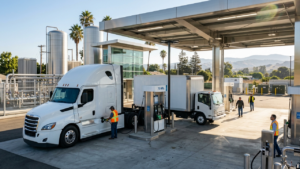
The new roadmap delves into several critical technical domains essential for FCV proliferation. These include enhancing the performance and reducing the manufacturing cost of fuel cell stacks, advancing hydrogen storage solutions, and optimizing the overall hydrogen refueling infrastructure. Quantitative targets are anticipated for substantially increasing the number of hydrogen refueling stations, specifically aimed at improving user convenience and accessibility. While current FCV technology boasts impressive range and rapid refueling capabilities, the limited availability of refueling stations has presented a significant adoption barrier. The strategy outlines plans to strategically deploy stations along major highways and within urban centers, alongside expanding the production and supply of green hydrogen from renewable sources to minimize FCVs’ lifecycle emissions.
Strategic Significance & Outlook
Building upon this new national hydrogen roadmap, the Japanese government will implement specific policy measures in close coordination with relevant ministries. These measures are projected to include significant increases in FCV purchase subsidies and hydrogen station construction grants, targeted regulatory reforms, and diplomatic initiatives aimed at establishing robust international hydrogen supply chains. Crucially, achieving the roadmap’s ambitious goals will necessitate attracting substantial private investment and accelerating public-private sector collaboration. Successful execution of this strategy promises not only to bolster Japan’s domestic energy security and hasten the realization of a decarbonized society but also to solidify its global leadership in hydrogen technology. Moreover, the revitalization of the FCV market is anticipated to stimulate growth in related industries, potentially serving as a new engine for broader economic development.
Source: #
Get our weekly technology intelligence — free
Receive an infographic that lets you judge at a glance whether each field’s analysis report is worth reading.
Subscribe Free — Weekly Tech Intelligence
By subscribing, you’ll receive Troy-Technical’s weekly technology intelligence newsletter.
- Your email and selected fields are used only to deliver the newsletter.
- We never share your information with third parties.
- You can unsubscribe anytime via the link in each email.
See our Privacy Policy for details.
Takes about a minute · Unsubscribe anytime






Comments