Background
The chemical industry stands as one of the most energy-intensive and significant carbon emitters globally, with ammonia production, given its immense scale, facing intense pressure to decarbonize. Policy frameworks such as the European Union’s ‘Fit for 55’ package are robustly mandating industries to curtail greenhouse gas emissions, identifying green ammonia as a pivotal solution to meet these objectives. Concurrently, the German government’s national hydrogen strategy emphasizes green ammonia’s role as a key energy carrier and industrial feedstock. This investment therefore aligns seamlessly with prevailing policy directives and the company’s comprehensive Environmental, Social, and Governance (ESG) strategy, signaling a profound, industry-wide transformation.
Key Findings
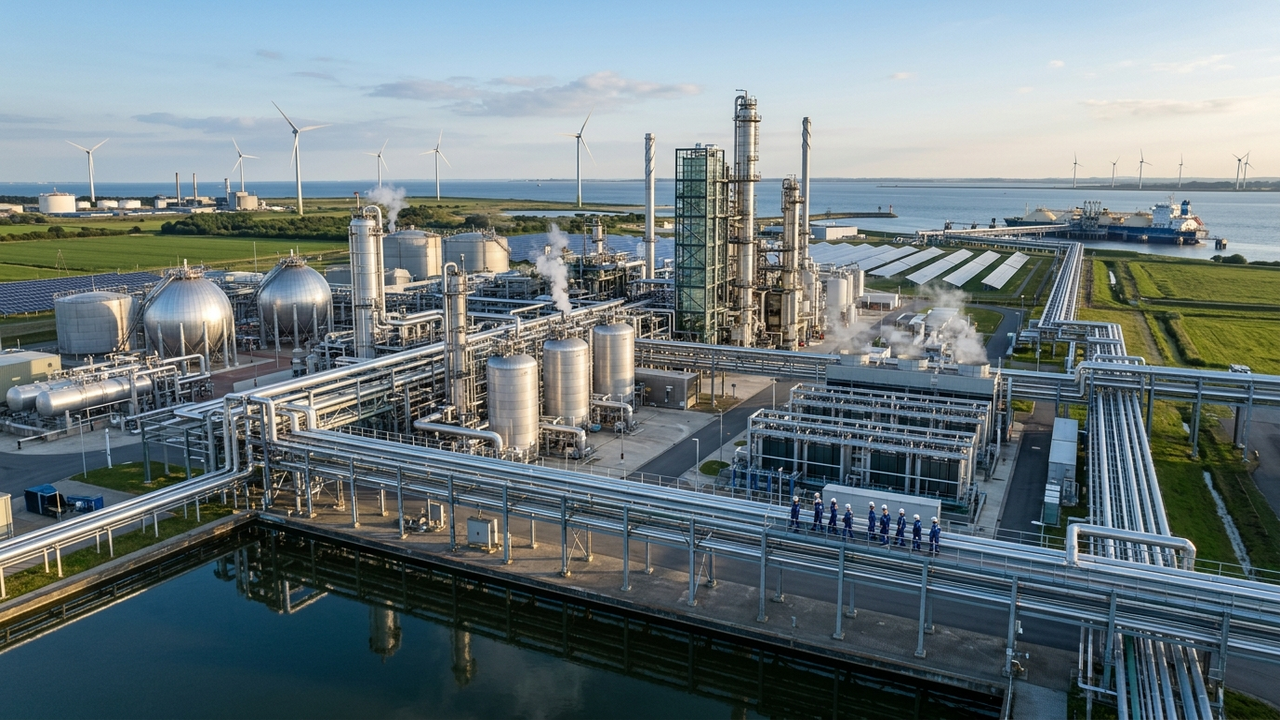
A prominent German chemical corporation has committed a substantial investment to establish a state-of-the-art green ammonia production facility. This strategic decision is foundational to the company’s ambitious sustainability agenda, specifically aimed at significantly reducing the carbon footprint associated with its conventional chemical manufacturing operations. This investment marks a pivotal step for the German chemical industry in accelerating the transition to clean energy and advancing global decarbonization.
The planned facility will leverage the well-established Haber-Bosch process, critically powered by green hydrogen generated through water electrolysis using renewable electricity. This represents a significant departure from traditional ammonia synthesis, which heavily depends on natural gas feedstock and is a major contributor to CO2 emissions. The new plant aims for near-zero operational emissions by integrating advanced electrolyzer technology with optimized, energy-efficient ammonia synthesis. While specific production capacities remain undisclosed, the facility is designed to meet substantial industrial demand. The resulting green ammonia will serve multiple critical applications, including fertilizer production, chemical intermediates, and is also being explored for its potential as a hydrogen carrier and a sustainable shipping fuel.
This substantial capital outlay is a strategic imperative for the German chemical firm, designed to accelerate its pivot towards a sustainable product portfolio and bolster its competitive edge. Although the facility’s construction will span several years, its eventual operation is projected to dramatically reduce the carbon footprint across the company’s entire supply chain and establish a stable source of green ammonia for broader chemical and industrial sectors. Longer-term, this initiative is expected to reduce the levelized cost of green ammonia, fostering wider industrial adoption and serving as an influential model for decarbonization throughout the global chemical industry. Furthermore, it is anticipated to stimulate significant follow-on investments in Germany’s renewable energy infrastructure.
Source: #
Get our weekly technology intelligence — free
Receive an infographic that lets you judge at a glance whether each field’s analysis report is worth reading.
Subscribe Free — Weekly Tech Intelligence
By subscribing, you’ll receive Troy-Technical’s weekly technology intelligence newsletter.
- Your email and selected fields are used only to deliver the newsletter.
- We never share your information with third parties.
- You can unsubscribe anytime via the link in each email.
See our Privacy Policy for details.
Takes about a minute · Unsubscribe anytime



Comments