Key Findings
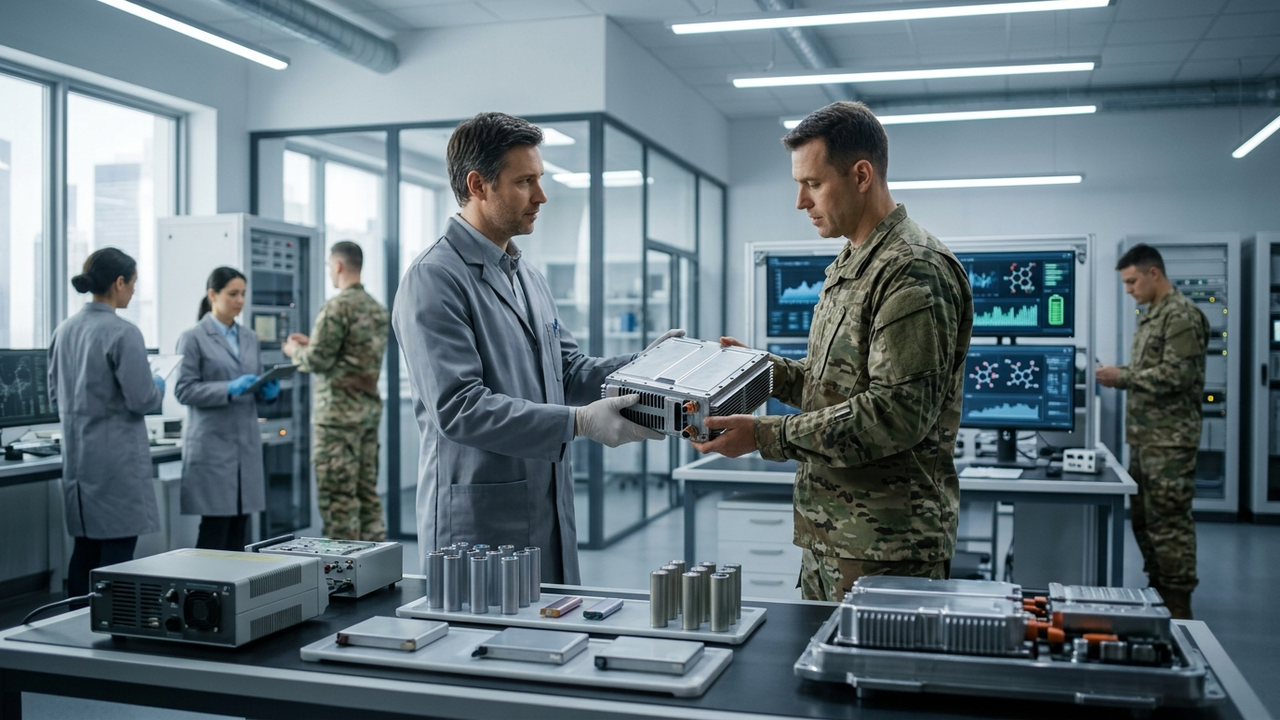
Li-S Energy (ASX: LIS), an Australian battery technology company, has delivered its first batch of groundbreaking lithium-sulfur (Li-S) battery cells to the U.S. Army. This delivery represents a pivotal advancement in energy storage technology for the defense sector, paving the way for next-generation battery solutions tailored for military applications. Li-S batteries are characterized by their significantly higher energy density and lighter weight compared to conventional batteries, promising a substantial improvement in battlefield operational capabilities.
Technical / Clinical Details
The Li-S battery technology, which employs lithium metal for the anode and sulfur for the cathode, theoretically offers nearly double the energy density of lithium-ion batteries. Li-S Energy’s cells reportedly achieve high cycle life and stability through their proprietary ‘BOHMER™’ nano-sulfur material technology and ‘LI-S TECHNOLOGY™’ which mitigates the polysulfide shuttle effect. This supply to the U.S. Army suggests that Li-S batteries are suitable for military applications where rigorous reliability and performance under harsh conditions are paramount. Specifically, these batteries hold the potential to dramatically extend the operational duration of drones requiring long flight or reconnaissance missions, as well as soldier-borne equipment such as communication devices and sensors. This will directly contribute to reducing soldier burden and enhancing mission effectiveness.
Background & Context
The defense industry has a critical need for power sources that are smaller, lighter, longer-lasting, and highly reliable. With the evolution of drones, unmanned ground vehicles (UGVs), and soldier-portable electronic devices, high-performance batteries are indispensable for sustaining the extended operation of these platforms. While lithium-ion batteries are widely adopted, their performance limits have spurred interest in Li-S batteries as a next-generation solution offering superior gravimetric energy density. Li-S Energy’s supply to the U.S. Army signifies a crucial milestone, indicating the technology’s transition from research to practical implementation.
Strategic Significance & Outlook
Should Li-S Energy’s technology perform well in U.S. Army testing, it could bolster the credibility of Li-S battery technology overall, potentially leading to widespread adoption within the defense industry. Furthermore, success in military applications often serves as a catalyst for accelerated deployment in civilian sectors, including electric aircraft, long-range EVs, and portable electronics like smartphones and wearables. Such technological progress is also vital for enhancing the international competitiveness of Australian companies in the energy storage domain.
Get our weekly technology intelligence — free
Receive an infographic that lets you judge at a glance whether each field’s analysis report is worth reading.
Subscribe Free — Weekly Tech Intelligence
By subscribing, you’ll receive Troy-Technical’s weekly technology intelligence newsletter.
- Your email and selected fields are used only to deliver the newsletter.
- We never share your information with third parties.
- You can unsubscribe anytime via the link in each email.
See our Privacy Policy for details.
Takes about a minute · Unsubscribe anytime






Comments