August 2026– date –
-

6th iPSC Drug Development Summit Focuses on Manufacturability, Regulatory Alignment, and Scalable Development Models
RegMedNet UK Overview The 6th iPSC Drug Development Summit is being held to actively discuss the clinical and commercial feasibility of iPSC therapies. The summit will focus on manufacturability, alignment with regulatory authorities, an... -
IPS HEART’s iPSC-Derived Cell Therapy ISX9-CPC Secures FDA Rare Pediatric Disease Designation, Advancing Clinical Trials for Cardiac & Rare Muscle Disorders
Facebook (IPS Heart) USA Overview IPS HEART announced that its iPSC-derived cell therapy, ISX9-CPC, received Rare Pediatric Disease Designation (RPDD) from the FDA. Targeting cardiac and rare muscle disorders, this designation positions ... -
Sickle Cell Gene Therapy Breakthrough: Broad Institute’s Base Editing Permanently Resolves Disease in 42 Patients; FDA Approval & Stanford Trial Expansion Underway
Facebook (Stanford Medicine) USA Overview In a significant advance for sickle cell disease (SCD) gene therapy, Broad Institute's base editing therapy has permanently resolved SCD in 42 patients, with 24-month follow-up data reported. Con... -
USC Initiates Phase 1 REPLACE™ Clinical Trial for Parkinson’s with Autologous iPSC-Derived Dopaminergic Neurons (RNDP-001), Aiming to Restore Motor Function
Dr. Marie Laguna's Blog USA Overview Keck Medicine of USC commenced a Phase 1 REPLACE™ clinical trial in 2026 for Parkinson's disease, utilizing autologous iPSC-derived dopaminergic neural cells (RNDP-001). This innovative therapy aims t... -
CRISPR/Cas9 Evolves into Multi-Tool: Expanding Applications from Leukemia Screening to CAR-T Cell Engineering and Epigenome Editing
NHSJS USA Overview CRISPR/Cas9 technology has significantly evolved, broadening its applications from screening leukemia mutations to enhancing CAR-T cells' cancer recognition and precisely controlling gene expression through epigenome e... -
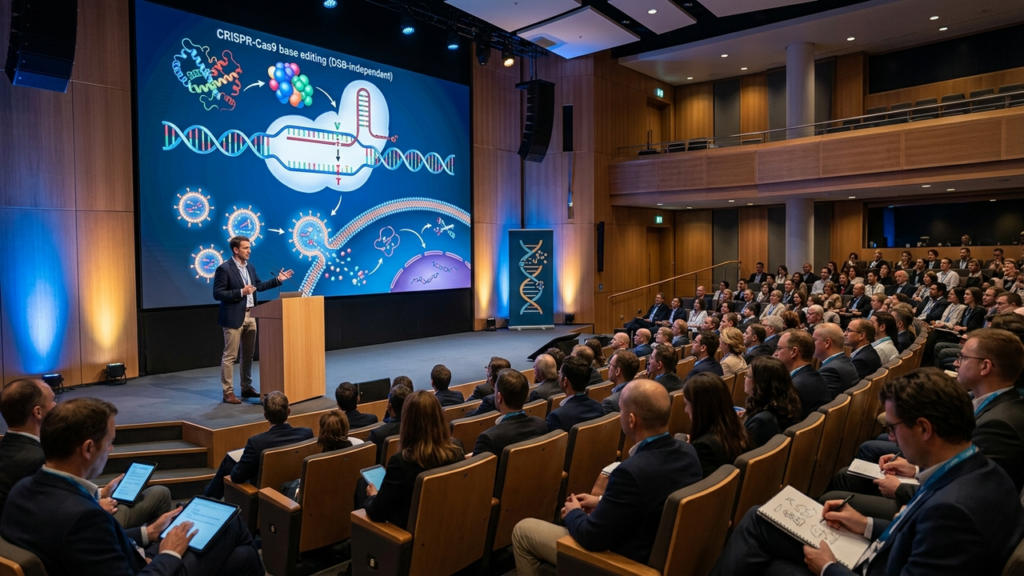
CRISPR Frontiers 2026: Innovations in DSB-Independent Editing and Delivery Systems Boost Genome Editing Precision and Stability
Addgene Blog USA Overview The 'Genome Engineering: CRISPR Frontiers 2026' conference reported significant evolution in CRISPR technology towards precise, double-strand break (DSB)-independent editing. Researchers are focusing on enhancin... -
Chinese Trial Reports 90% Heart Function Improvement in Phase 2 Heart Failure Patients Treated with iPSC-Derived Cardiomyocytes
South China Morning Post (SCMP) China Overview A Phase 2 clinical trial conducted by Nanjing Drum Tower Hospital in China, using iPSC-derived cardiomyocytes for heart failure treatment, demonstrated significant improvement in heart funct... -
iPSC 20th Anniversary: Japan Leads with Conditional Approvals, Facing Challenges of Public Trust and Universal Access
Facebook (Science Vibes) USA Overview The 20th anniversary of iPSC discovery highlights significant progress in regenerative medicine, with Japan leading globally by granting the world's first conditional approvals for iPSC-derived thera... -
Commercial-Scale iPSC Cell Therapy Production Gains Traction with US Clinical Trial Progress and Master Cell Bank Establishment
The Medicine Maker UK Overview Manufacturing challenges for commercial-scale iPSC cell therapies are being overcome, with multiple iPSC clinical trials progressing in the U.S. for indications like Type 1 Diabetes, Parkinson's disease, an... -
Next-Generation CRISPR Tools Revolutionize Precise Gene Editing, Bypassing Double-Strand Breaks for Enhanced Therapeutic Safety and Consistency
News-Medical.net USA Overview Next-generation CRISPR technologies are fundamentally transforming cell and gene therapy by enabling precise gene editing without relying on double-strand DNA breaks (DSBs). Advances in base editing, prime e...