Key Findings
The manufacturing of allogeneic cell therapies presents unique challenges compared to autologous approaches, yet it offers significant advantages including scalability, off-the-shelf availability, and superior cost-effectiveness. Critically, automated bioreactors and closed-system technologies are pivotal in maximizing these benefits for commercial-scale production.
Technical / Clinical Details
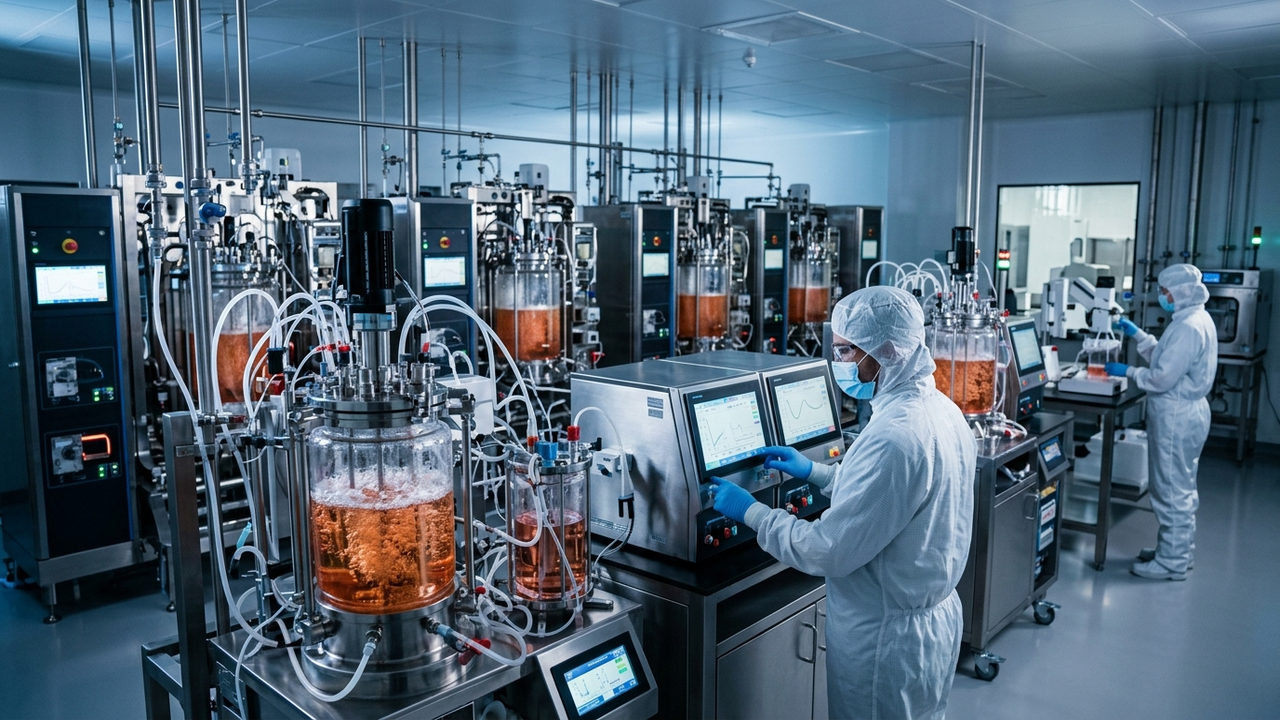
The allogeneic cell therapy manufacturing process begins with rigorous donor selection. Comprehensive screening of donors is paramount to minimizing the risk of infectious diseases and optimizing immune compatibility. After cell harvest, expansion within automated, closed-system bioreactors becomes indispensable for meeting commercial production demands. Closed systems dramatically reduce the risk of external contamination and facilitate compliance with Good Manufacturing Practice (GMP) regulations. Automated bioreactors precisely control culture conditions—such as temperature, pH, and oxygen levels—ensuring consistent cell growth and quality. This enables large-scale production of uniform cell products, minimizing batch-to-batch variability. The final products are cryopreserved and become available as ‘off-the-shelf’ items, ready for rapid deployment to healthcare facilities as needed.
Background & Context
Cellular therapies have revolutionized treatments for diseases like cancer and autoimmune disorders. However, traditional autologous cell therapies, which use individual patient cells, face challenges of high manufacturing costs, prolonged production times, and complex logistics. Allogeneic cell therapies offer a potential solution by producing large quantities of cells from a single healthy donor for multiple patients, thereby overcoming these limitations. Nevertheless, new challenges arise, including the risk of immune rejection and ensuring quality consistency in large-scale production. Advances in automated bioreactors and closed-system technologies are crucial in overcoming these technical barriers and accelerating the commercialization of allogeneic cell therapies.
Strategic Significance & Outlook
Further evolution of automated closed-system bioreactor technology is expected to significantly reduce manufacturing costs and enhance the production efficiency of allogeneic cell therapies, thereby paving the way for these innovative treatments to reach a broader patient population. This could substantially improve the cost-effectiveness of currently expensive cell therapies, alleviating the overall burden on healthcare systems while expanding treatment access. In the future, these technologies are anticipated to become standard manufacturing platforms for cell therapies, fostering further growth and diversification within the regenerative medicine sector.
Source: https://sdg.azte.co/journal/F21gxX0FE012/Allogeneic_Cell_Therapy_Manufacturing
Get our weekly technology intelligence — free
Receive an infographic that lets you judge at a glance whether each field’s analysis report is worth reading.
Subscribe Free — Weekly Tech Intelligence
By subscribing, you’ll receive Troy-Technical’s weekly technology intelligence newsletter.
- Your email and selected fields are used only to deliver the newsletter.
- We never share your information with third parties.
- You can unsubscribe anytime via the link in each email.
See our Privacy Policy for details.
Takes about a minute · Unsubscribe anytime






Comments