Key Findings
Process intensification in upstream bioreactors, notably N-1 perfusion seeding and high-density fed-batch cultures, has dramatically increased biopharmaceutical production output but simultaneously introduced new complexities for downstream purification processes. To address these challenges, continuous purification using multi-column chromatography systems is gaining traction as a solution, significantly reducing resin utilization, buffer consumption, and processing time, thus enhancing manufacturing efficiency. From a regulatory standpoint, the ICH Q13 (2023) guideline provides strong impetus for the adoption of continuous manufacturing, including continuous downstream bioprocessing.
Technical and Clinical Details
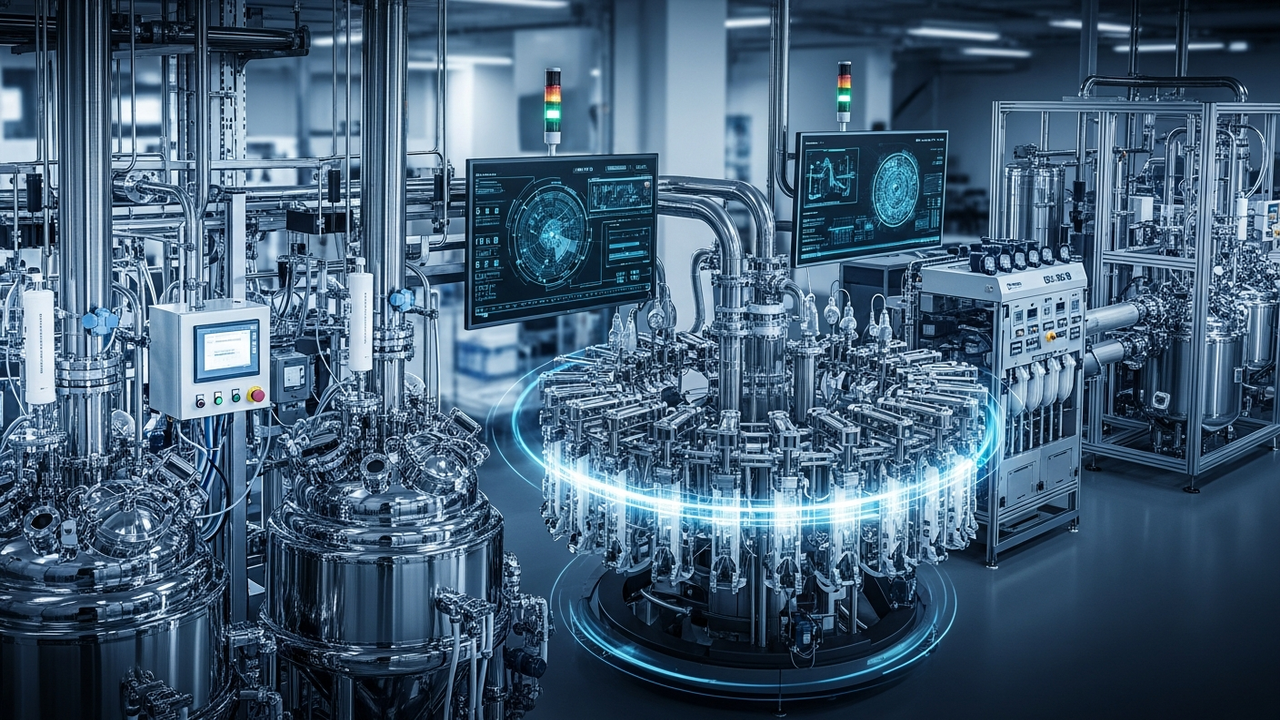
While intensified upstream cultures dramatically boost cell density and product titers, they not only increase the concentration of target molecules to be purified but also lead to a higher load of cell-derived impurities. This can overwhelm the capacity and reduce the efficiency of traditional batch-mode downstream purification processes. Continuous purification, particularly multi-column chromatography systems, addresses these issues by operating multiple chromatography columns in a sequential, continuous fashion. This allows for maximal utilization of each column’s capacity, extends resin lifespan, and reduces buffer consumption. For instance, integrated continuous chromatography systems can perform target molecule loading, washing, elution, and re-equilibration steps simultaneously on different columns, drastically cutting overall processing time. Further integration with continuous filtration technologies can enhance process efficiency and automation. The ICH Q13 guideline, focused on ‘Development and Manufacture of Continuous Manufacturing,’ provides specific guidance on the development, implementation, and change management of continuous processes based on a Quality by Design (QbD) approach, offering a clear pathway for the industry to confidently adopt these innovative manufacturing approaches.
Background and Industry Context
With the expanding biopharmaceutical market and intensifying competition, reducing manufacturing costs, accelerating time-to-market, and improving sustainability have become critical imperatives for the entire industry. Process intensification and continuous manufacturing are key strategies to meet these challenges, with their economic and operational benefits particularly noted for high-value biopharmaceuticals such as monoclonal antibodies and cell and gene therapy products. Continuous manufacturing also contributes to a smaller production footprint, reduced energy consumption, and lower waste generation, making it an environmentally conscious manufacturing approach.
Strategic Significance and Outlook
Continuous downstream purification technologies are poised for further evolution and have the potential to become the standard in biopharmaceutical manufacturing. Future developments are expected in real-time process control and optimization leveraging AI and machine learning, the development of higher-performance separation materials, and the widespread adoption of modular and flexible manufacturing platforms. Ongoing dialogue with regulatory authorities will further clarify the quality assurance and validation frameworks for continuous manufacturing processes, accelerating industry-wide adoption. This is anticipated to enable more patients to benefit from higher-quality, more accessible biopharmaceuticals.
Get our weekly technology intelligence — free
Receive an infographic that lets you judge at a glance whether each field’s analysis report is worth reading.
Subscribe Free — Weekly Tech Intelligence
By subscribing, you’ll receive Troy-Technical’s weekly technology intelligence newsletter.
- Your email and selected fields are used only to deliver the newsletter.
- We never share your information with third parties.
- You can unsubscribe anytime via the link in each email.
See our Privacy Policy for details.
Takes about a minute · Unsubscribe anytime







Comments