Key Findings
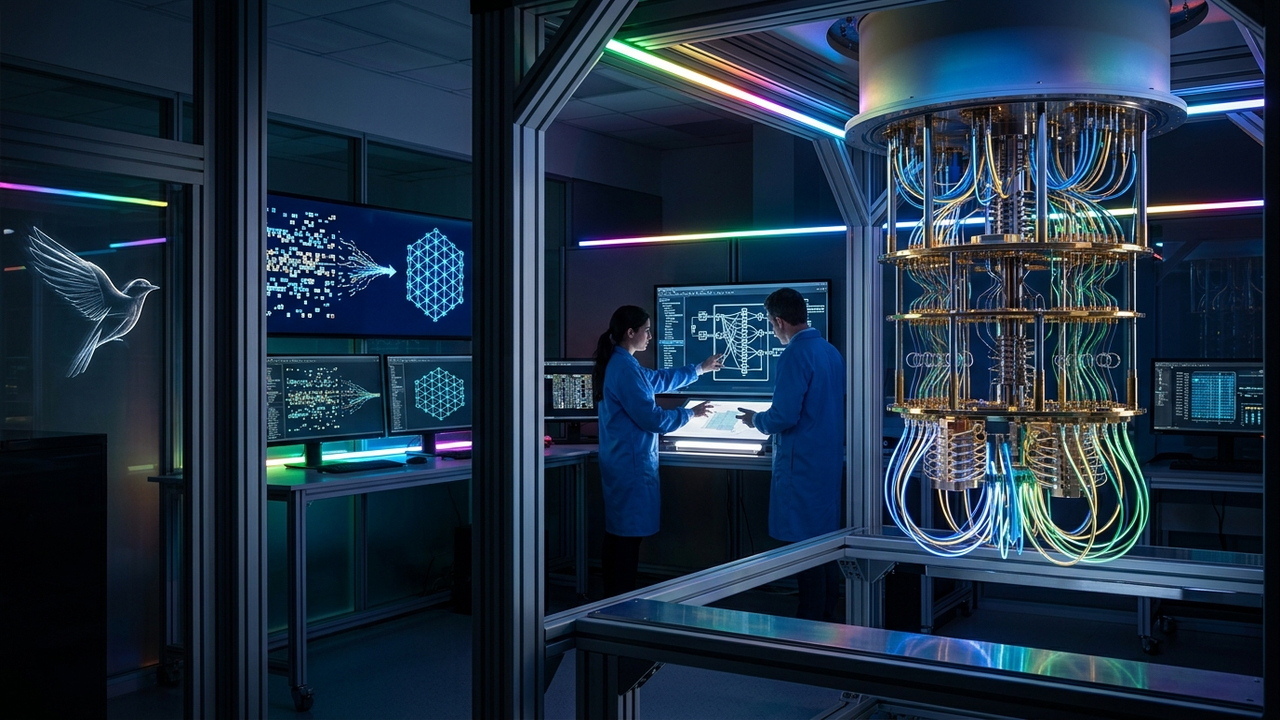
The field of quantum computing is rapidly transitioning from its laboratory phase to practical applications, driven by groundbreaking advancements in logical qubits and error correction techniques. Notably, a German research group successfully demonstrated logical qubits that reduce error rates by an astounding 1,000 times compared to physical qubits, thereby breaking a significant threshold towards scalable quantum technology.
Technical / Clinical Details
The achievement by the German research group signifies the ability to bundle multiple physical qubits to form logical qubits, which can then hold and process quantum information more stably. A 1,000-fold reduction in error rate indicates that quantum computers are becoming significantly less susceptible to external noise, enabling them to perform longer and more accurate computations. This is strong evidence of a dramatic improvement in quantum error correction efficiency and a major step towards realizing fault-tolerant quantum computing (FTQC). FTQC is indispensable for executing large-scale quantum algorithms without being hampered by noise. IBM is also actively driving this transition to the fault-tolerant era, setting a concrete goal to build a ‘Quantum Starling System’ by 2029. This system is envisioned to house 200 logical qubits and perform 100 million error-corrected operations, signaling the arrival of truly practical quantum computing beyond the limitations of the current NISQ (Noisy-Intermediate Scale Quantum) era.
- German Research Group’s Achievement: Demonstrated logical qubits with a 1,000x error rate reduction compared to physical qubits.
- IBM’s Goal: Build a ‘Quantum Starling System’ by 2029 with 200 logical qubits, capable of 100 million error-corrected operations.
- Significance: Breakthrough in scalable quantum technology, indicating a transition from the NISQ era to the fault-tolerant era.
Background & Context
The biggest challenge in quantum computing has been the fragility of qubits and their high error rates. Historically, increasing the number of qubits also led to increased error rates, creating a dilemma that hampered complex computations. The advancements in logical qubits and highly efficient error correction are key to resolving this dilemma and enabling the commercial application of quantum computing. Leading research institutions and companies worldwide are fiercely competing to achieve such breakthroughs, accelerating the pace of technological development dramatically.
Strategic Significance & Outlook
These technological advancements mean that quantum computing will begin to have practical impacts in fields requiring extremely complex calculations, such as drug discovery, materials science, financial modeling, and artificial intelligence. Specifically, the significant reduction in error rates will enable deeper and longer quantum algorithm executions, potentially leading to unprecedented scientific discoveries and industrial innovations. Investors and engineers should view this transition to fault-tolerant quantum computing as a crucial indicator of the commercial maturity of quantum technology, and significant attention will be paid to future developments in this area.
Get our weekly technology intelligence — free
Receive an infographic that lets you judge at a glance whether each field’s analysis report is worth reading.
Subscribe Free — Weekly Tech Intelligence
By subscribing, you’ll receive Troy-Technical’s weekly technology intelligence newsletter.
- Your email and selected fields are used only to deliver the newsletter.
- We never share your information with third parties.
- You can unsubscribe anytime via the link in each email.
See our Privacy Policy for details.
Takes about a minute · Unsubscribe anytime








Comments