
Key Findings
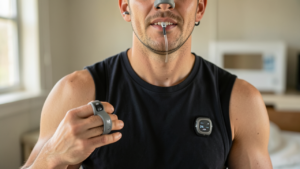
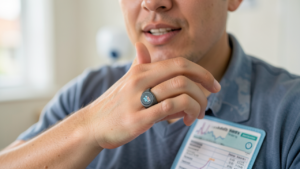
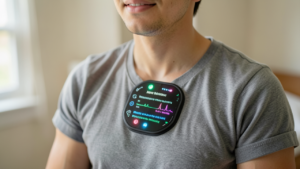
A seminal paper published in Nature Communications announces a groundbreaking, fully integrated smart ring that can measure multiple chemical biomarkers from osmotically extracted sweat, critically without the need for iontophoresis. This wearable device has been validated for daily analysis in both healthy individuals and patients with type 1 diabetes, establishing a new benchmark in non-invasive biomarker monitoring.
Technical & Clinical Details
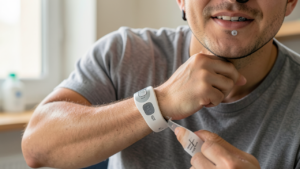
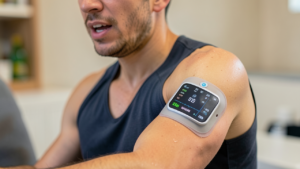
The smart ring employs a unique technology to efficiently extract sweat from the skin and continuously monitor a range of biomarkers in real-time, including glucose, creatinine, cortisol, and various electrolytes (e.g., sodium, potassium). A key innovation is that it eliminates the need for external electrical stimulation (iontophoresis), which was a common requirement for previous sweat sensors. This significantly enhances the device’s user-friendliness and wearability, enabling prolonged continuous monitoring. Clinical validation confirmed the device’s accuracy in capturing biomarker fluctuations during daily activities and at rest in both healthy subjects and type 1 diabetic patients. This opens up broad applications, including improved glucose management for diabetics, performance monitoring for athletes, and assessment of stress levels and hydration status.
Background & Context
The demand for non-invasive biomarker monitoring has been rapidly escalating with advancements in personalized and preventive medicine. Traditional blood tests are invasive and limit the frequency of sampling. Sweat-based monitoring offers a promising non-invasive approach for continuous data collection, but challenges have persisted in reliable sweat collection and accurate biomarker detection within the complex sweat matrix. This smart ring overcomes these challenges, offering the potential to provide high-precision physiological data while significantly reducing patient burden. Within the wearable technology market, it differentiates itself from existing devices like Apple Watch and Fitbit by offering more advanced biochemical monitoring capabilities.
Strategic Significance & Outlook
The introduction of this fully integrated smart ring portends the next wave of wearable diagnostic technology. Future research and development will likely focus on expanding the range of detectable biomarkers, miniaturizing the device further, and extending battery life. Moreover, the vast amount of data collected can be combined with artificial intelligence (AI) and machine learning (ML) algorithms to predict individual health states and realize the concept of a ‘digital twin’ for early disease risk identification. This is expected to empower diabetics with better self-management capabilities and enable health-conscious individuals to gain a more detailed understanding of their metabolic status, significantly contributing to the widespread adoption of preventive medicine.
Get our weekly technology intelligence — free
Receive an infographic that lets you judge at a glance whether each field’s analysis report is worth reading.
Subscribe Free — Weekly Tech Intelligence
By subscribing, you’ll receive Troy-Technical’s weekly technology intelligence newsletter.
- Your email and selected fields are used only to deliver the newsletter.
- We never share your information with third parties.
- You can unsubscribe anytime via the link in each email.
See our Privacy Policy for details.
Takes about a minute · Unsubscribe anytime




Comments