Key Findings
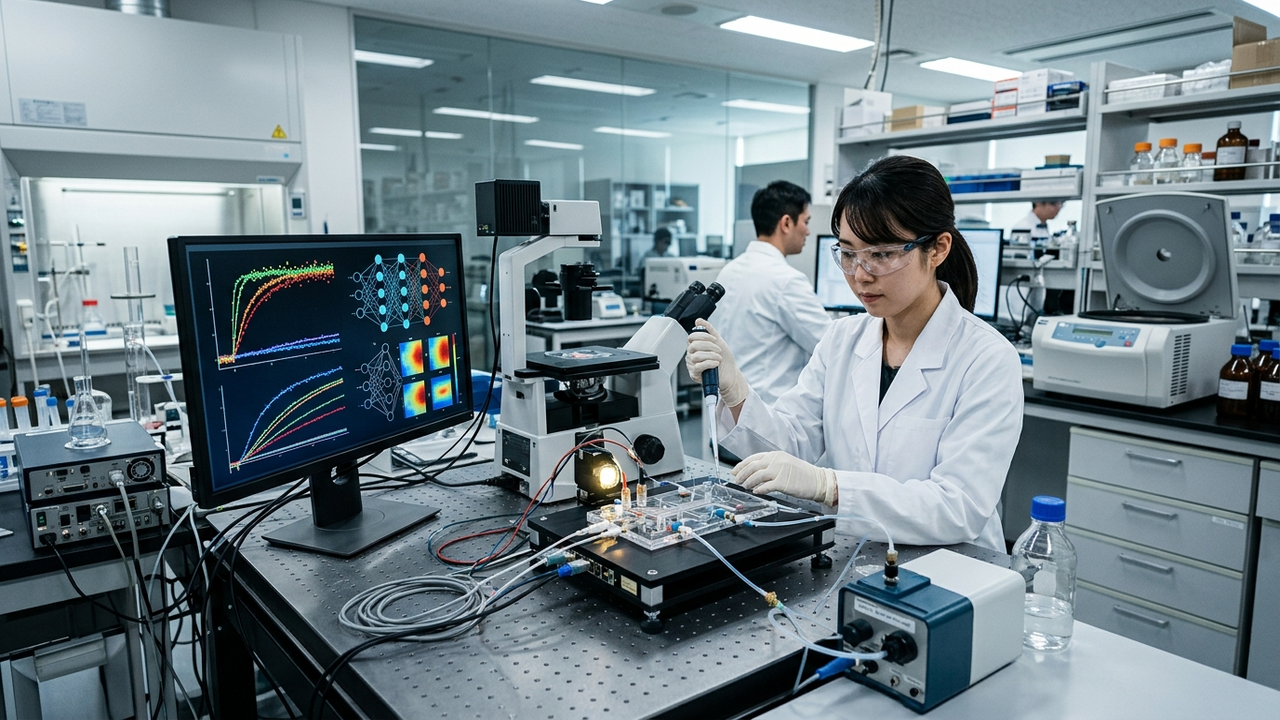
Recent research reported by Scilight Press has revealed that the integration of microfluidics and artificial intelligence (AI) is paramount to dramatically enhancing the performance of Biological Field Effect Transistors (Bio-FETs) used in Alzheimer’s disease (AD) diagnostics. This innovative approach paves the way for new possibilities in early and accurate diagnosis of AD.
Technical & Clinical Details
This study explores multiple technical approaches to maximize the sensitivity and specificity of Bio-FETs. Particularly noteworthy is the use of plasmonic ELISA (Enzyme-Linked Immunosorbent Assay) for biomarker detection. By leveraging the enhanced effects of plasmon resonance, the detection limit for AD-related biomarkers is significantly improved, allowing highly sensitive capture of even trace amounts of proteins and peptides. Furthermore, experimental investigations into dual-gate biosensors using ultrathin silicon transistors are advancing. The dual-gate structure enhances the sensor’s signal modulation and noise reduction capabilities, leading to clearer detection signals. AI plays a crucial role in analyzing complex, multidimensional data obtained from microfluidic devices, identifying subtle patterns and correlations among biomarkers, thereby improving diagnostic accuracy. This increases the potential to detect pre-symptomatic biomarker changes at very early stages of AD.
Background & Context
Alzheimer’s disease is a progressive neurodegenerative disorder affecting millions worldwide, and early diagnosis is essential for effective therapeutic intervention. However, current AD diagnostic methods, such as cognitive assessments, neuroimaging, and cerebrospinal fluid analysis, often face challenges of invasiveness, high cost, or the ability to confirm the disease only in later stages. Bio-FETs have garnered attention as a promising platform for early diagnosis of complex diseases like AD due to their high sensitivity and potential for miniaturization. The integration of microfluidics and AI dramatically enhances these sensors’ ability to process complex biological samples and detect subtle biomarker fluctuations, thereby filling critical gaps in existing diagnostic methods.
Strategic Significance & Outlook
The integrated Bio-FET technology with microfluidics and AI holds immense potential to transform the future of Alzheimer’s disease diagnosis. In the future, this technology is expected to enable ultra-early detection of AD biomarkers from non-invasive samples like blood and saliva, developing into low-cost and widespread screening tools. Eventually, integrating these devices into point-of-care testing (POCT) devices and wearable sensors will allow for continuous patient monitoring at home and rapid diagnosis in clinical settings, contributing to the development of personalized intervention strategies to slow or even prevent the onset of AD. Research in this area is a critical key to revolutionizing the diagnosis and management of neurodegenerative diseases.
Source: https://www.sciltp.com/journals/bab/articles/2608005041
Get our weekly technology intelligence — free
Receive an infographic that lets you judge at a glance whether each field’s analysis report is worth reading.
Subscribe Free — Weekly Tech Intelligence
By subscribing, you’ll receive Troy-Technical’s weekly technology intelligence newsletter.
- Your email and selected fields are used only to deliver the newsletter.
- We never share your information with third parties.
- You can unsubscribe anytime via the link in each email.
See our Privacy Policy for details.
Takes about a minute · Unsubscribe anytime








Comments