
Key Findings
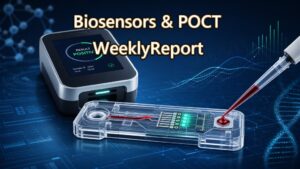
Delta Life Science has announced the successful implementation of label-free biosensing on a photonic chip using Nanophotonic Evanescent field Sensing (NES) technology. This innovative technology eliminates the need for conventional labeling, representing a next-generation biosensing platform that promises to revolutionize drug discovery and diagnostics through high sensitivity and multiplex detection capabilities.
Technical & Clinical Details
NES technology operates on physical principles similar to Surface Plasmon Resonance (SPR). Specifically, it utilizes the evanescent field present at the sensor surface to measure real-time changes in the local refractive index that occur when analyte molecules bind to the sensor surface. Since this refractive index change directly correlates with molecular binding events, cumbersome labeling procedures such as fluorescence tags or radioisotope labels are completely unnecessary. This label-free characteristic simplifies sample preparation and allows for more accurate kinetic analysis of binding. A key advantage of NES technology is its ability to achieve extremely high sensitivity and multiplexing capabilities at a low cost of ownership by building photonic integrated circuits on silicon chips. This enables the generation of clear detection signals even for small molecules like fragments, weak low-affinity interactions, and low-abundance targets present in minuscule quantities in blood or other bodily fluids. This is a crucial advantage, especially in early-stage drug discovery for lead compound screening and in early diagnosis of conditions like cancer biomarkers.
Background & Context
Biosensing technology is an indispensable tool across a wide range of life science fields, including drug discovery research, basic medicine, and clinical diagnostics. The demand for real-time analysis of molecular interactions and highly sensitive biomarker detection for early disease diagnosis has constantly driven technological innovation. Traditional label-based detection methods have faced challenges such as functional changes in molecules due to labeling, as well as cost and time constraints. While label-free technologies like SPR are widely adopted, many require expensive optical systems and complex maintenance. NES technology emerges as a new solution that leverages silicon photonics to offer performance comparable to or even superior to SPR, while significantly reducing manufacturing costs.
Strategic Significance & Outlook
NES technology is expected to profoundly impact the efficiency of drug discovery research, particularly in the development of small molecule drugs and biopharmaceuticals. High-sensitivity fragment screening will enable earlier identification of more lead compounds, contributing to shorter development times and reduced costs. In clinical diagnostics, it is anticipated to enhance the detection sensitivity of early disease biomarkers and accelerate the progress of personalized medicine. For instance, applications in devices capable of rapid and low-cost detection of trace cancer markers or infectious disease markers in blood are envisioned. Furthermore, the multiplexing capability of NES technology will enable the development of multi-analyte diagnostic platforms that can analyze multiple biomarkers simultaneously, providing a more comprehensive assessment of health status. This technology is highly anticipated to become a new research tool and diagnostic platform in the life sciences sector.
Source: https://www.deltalifescience.com/nes-technology/
Get our weekly technology intelligence — free
Receive an infographic that lets you judge at a glance whether each field’s analysis report is worth reading.
Subscribe Free — Weekly Tech Intelligence
By subscribing, you’ll receive Troy-Technical’s weekly technology intelligence newsletter.
- Your email and selected fields are used only to deliver the newsletter.
- We never share your information with third parties.
- You can unsubscribe anytime via the link in each email.
See our Privacy Policy for details.
Takes about a minute · Unsubscribe anytime







Comments