
Key Findings
CED Clinic highlighted a review published in the Journal of Pharmaceutical and Biomedical Analysis (2026) that meticulously analyzes the current status and clinical challenges of emerging cannabinoid biosensor technology for pain management. This review underscores a significant clinical gap: cannabinoid-based pain treatments currently lack the established infrastructure for concentration-response curves and Therapeutic Drug Monitoring (TDM) that guides the dosing of most other prescription medications.
Technical & Clinical Details
The review compares traditional analytical methods (e.g., Gas Chromatography-Mass Spectrometry, Liquid Chromatography-Mass Spectrometry) used for measuring tetrahydrocannabinol (THC) and cannabidiol (CBD) with emerging biosensor platforms. While traditional methods offer high accuracy, they are laboratory-based, time-consuming, and require expensive equipment and specialized expertise. Biosensors, conversely, hold the potential for rapid and portable detection but face challenges in specificity, sensitivity, and long-term stability when detecting complex molecules like cannabinoids. The review clearly identifies the primary clinical problem confronting cannabinoid-based pain treatments: the absence of a dose-response relationship and TDM infrastructure (a system that monitors drug blood concentrations to optimize therapeutic effects and safety) that exists for most other prescription drugs. This makes it difficult to set optimal dosages for individual patients and assess treatment efficacy and safety. Currently, biosensor technology has not been sufficiently validated for routine clinical use and has not yet provided reliable tools for precise drug dosage adjustment or patient monitoring.
Background & Context
Cannabinoids (THC, CBD, etc.) are attracting attention for various medical applications, including pain management, inflammation, and neuroprotection. However, their complex pharmacological properties and highly variable metabolism among individuals necessitate precise dosing and individualized monitoring for effective treatment. Regulatory frameworks also remain immature in many aspects, creating an urgent need for standardized dosing protocols and objective efficacy metrics for cannabinoid preparations. Biosensor technology is expected to bridge this gap, offering a potential solution to monitor cannabinoid concentrations in the patient’s body in real-time and enable personalized treatment.
Strategic Significance & Outlook
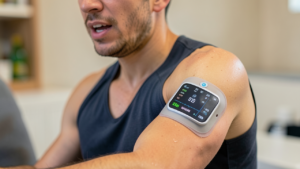
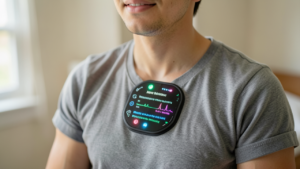
Cannabinoid biosensor technology holds significant potential to impact the field of pain management, but further research and rigorous clinical validation are essential for its adoption in routine clinical practice. Future research should focus on improving the sensitivity, specificity, and long-term stability of biosensors, as well as overcoming challenges in cannabinoid detection within complex biological matrices. Establishing the validity and reliability of biosensors through clinical trials aimed at TDM is also crucial. This will enable safer and more effective cannabinoid-based pain treatments and contribute to the advancement of personalized medicine. In the future, integration into wearable devices may allow patients to monitor their cannabinoid levels at home and collaborate with healthcare providers to adjust treatment.
Source: https://cedclinic.com/cannabinoid-biosensor-technology-pain-management/
Get our weekly technology intelligence — free
Receive an infographic that lets you judge at a glance whether each field’s analysis report is worth reading.
Subscribe Free — Weekly Tech Intelligence
By subscribing, you’ll receive Troy-Technical’s weekly technology intelligence newsletter.
- Your email and selected fields are used only to deliver the newsletter.
- We never share your information with third parties.
- You can unsubscribe anytime via the link in each email.
See our Privacy Policy for details.
Takes about a minute · Unsubscribe anytime






Comments