Key Findings
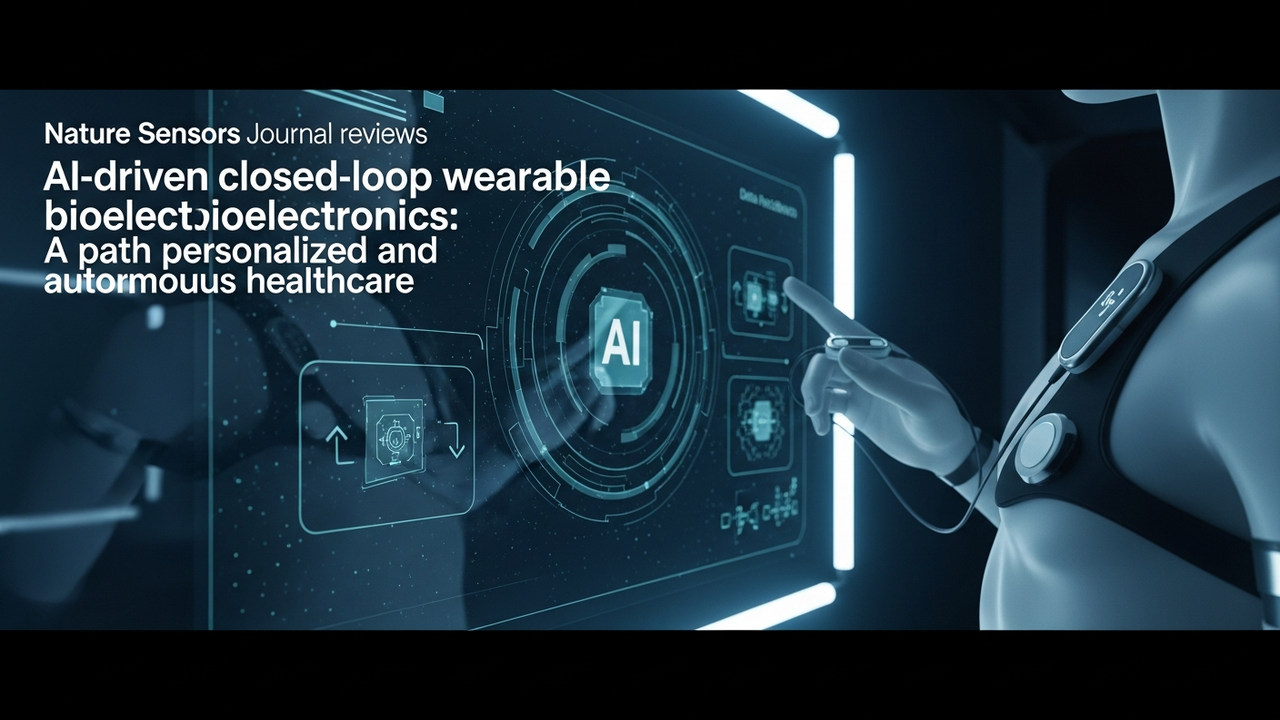
A seminal review article published in Nature Sensors thoroughly discusses how AI-powered closed-loop wearable bioelectronics hold the potential to usher in a new era of personalized and autonomous healthcare by integrating real-time biosensing with therapeutic interventions.
Technical/Clinical Details
The review focuses on the latest advancements in AI-assisted wearable biosensing devices. These devices continuously collect physiological data (e.g., heart rate, respiratory rate, body temperature, perspiration, biomolecule concentrations), which AI algorithms analyze in real-time. A closed-loop system implies that the device autonomously initiates therapeutic interventions (e.g., drug delivery, neuromodulation, environmental adjustments) based on the collected data. This capability allows for immediate responses to changes in a patient’s condition, ensuring continuous and optimal treatment. In disease diagnosis, these systems can detect subtle changes in biomarkers to identify early disease signs, while in fatigue monitoring, they provide objective metrics of stress or overwork, helping prevent burnout and performance degradation. Integration with IoT and 5G communication technologies enables secure data transmission to the cloud, facilitating remote monitoring and intervention by healthcare professionals.
Background & Context
Modern medicine is shifting from passive treatment to active prevention and personalization. Wearable technology has played a central role in this shift, yet many devices have been limited to data collection without active intervention. AI-powered closed-loop systems bridge this gap, promising to enhance patient engagement while alleviating the burden on healthcare providers. This is particularly promising for chronic disease management, where it can reduce hospital visits while ensuring continuous, high-quality care. Their high efficiency, cost-effectiveness, and accurate point-of-care diagnostic capabilities are key to transforming traditional healthcare models.
Strategic Significance & Outlook
While this technological field is still nascent, its future applications are immense. Ultimately, it could lead to ultra-personalized medicine tailored to each patient’s physiological characteristics, lifestyle, and genetic background. For example, devices might automatically play relaxation music upon detecting a sharp increase in stress levels or automatically deliver insulin at appropriate times upon detecting abnormal glucose levels. However, rigorous regulation and guideline development regarding data privacy, security, AI algorithm reliability, and ethical considerations will be essential for the successful societal implementation of this technology.
Get our weekly technology intelligence — free
Receive an infographic that lets you judge at a glance whether each field’s analysis report is worth reading.
Subscribe Free — Weekly Tech Intelligence
By subscribing, you’ll receive Troy-Technical’s weekly technology intelligence newsletter.
- Your email and selected fields are used only to deliver the newsletter.
- We never share your information with third parties.
- You can unsubscribe anytime via the link in each email.
See our Privacy Policy for details.
Takes about a minute · Unsubscribe anytime