Key Findings
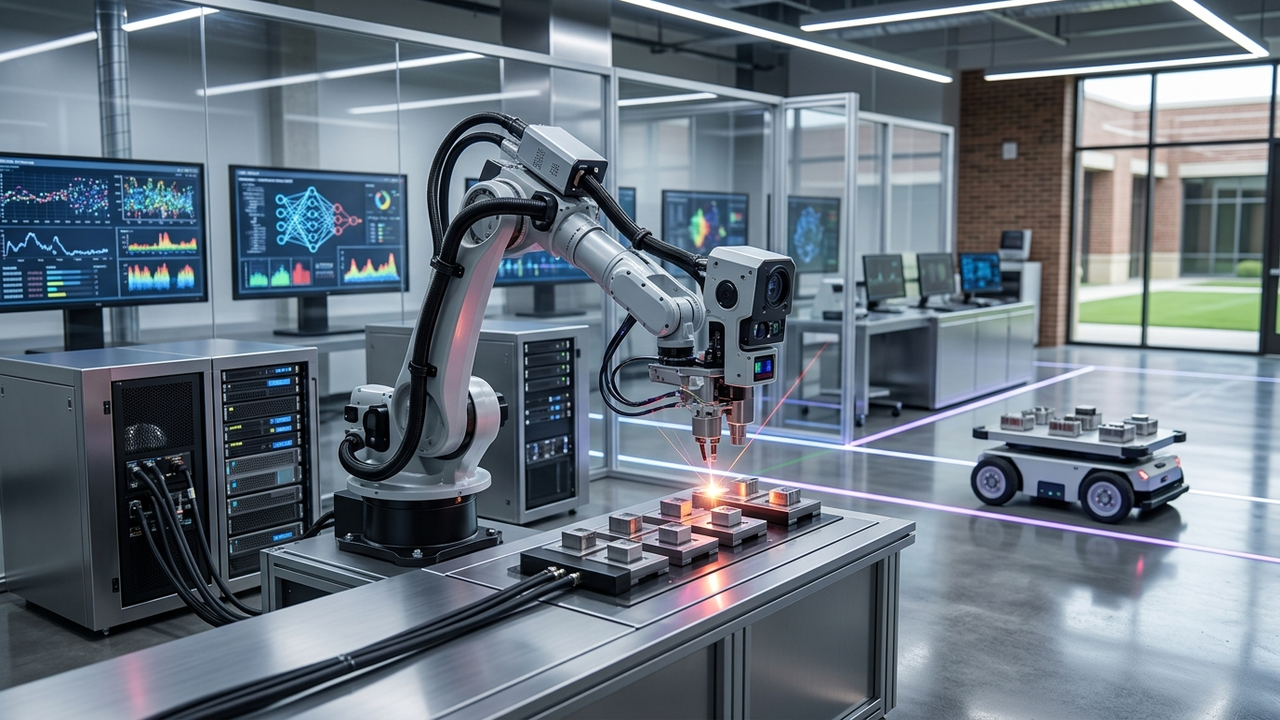
Texas A&M University has been awarded a substantial $24.9 million grant for the establishment of the Autonomous Robotic Metallurgist Materials Innovation Platform (ARM-MIP), an autonomous metal discovery lab. This cutting-edge facility aims to dramatically accelerate the materials discovery process by integrating advanced robotics and Artificial Intelligence (AI) to autonomously test and analyze new alloys around the clock. ARM-MIP represents a crucial step in revolutionizing metal materials development by expanding the application of AI beyond computer simulations into physical laboratories, thereby establishing a true ‘closed-loop’ among intelligence, experimentation, and scientific discovery.
Technical & Clinical Details
The ARM-MIP lab will employ a fully automated workflow where AI algorithms propose material designs, and robotic systems automatically synthesize, process, and test alloys based on these designs for physical properties such as strength, hardness, corrosion resistance, and thermal conductivity. The experimental data obtained will be fed back to the AI models in real-time, allowing the models to learn and optimize the next set of experimental conditions. This iterative ‘learn and experiment’ cycle will operate 24/7 without human intervention, potentially shortening materials discovery timelines from years to just months. For instance, in developing materials with specific performance targets (e.g., ultra-high strength, lightweight alloys), the AI will explore thousands of compositions and processing conditions, rapidly identifying the most promising candidates. This enables researchers to efficiently discover optimal solutions from a vast material space.
Background & Industry Context
Metal materials are indispensable foundational elements for almost all industries in modern society, including aerospace, automotive, energy, and medical devices. However, the discovery and development of new high-performance alloys are extremely time-consuming and costly, due to the need to explore an immense number of combinations of composition, microstructure, and processing conditions. On average, it takes over a decade for a new material to go from discovery to commercialization, which has been a significant bottleneck for technological innovation. The fusion of AI and robotics offers a revolutionary solution to this challenge, making the concept of ‘Self-Driving Labs’ in materials science a reality. This substantial grant from the U.S. government reflects a national priority to strengthen domestic materials science research and accelerate the development of strategically important new materials.
Strategic Significance & Outlook
The establishment of autonomous metal discovery labs like ARM-MIP will fundamentally redefine the future of materials science. This platform is not limited to metal alloys but can be applied to other material systems such as polymers, ceramics, and composites, potentially accelerating materials discovery across a wide range of fields. In the future, AI is expected to not only automate experiments but also autonomously generate scientific hypotheses, design experiments, interpret results, and ultimately discover new scientific laws. This will further shorten material development periods, bringing more sustainable and high-performance products to market rapidly. Texas A&M University’s initiative clearly demonstrates how AI is a powerful tool for transforming the process of scientific discovery itself and expanding the frontiers of human knowledge.
Get our weekly technology intelligence — free
Receive an infographic that lets you judge at a glance whether each field’s analysis report is worth reading.
Subscribe Free — Weekly Tech Intelligence
By subscribing, you’ll receive Troy-Technical’s weekly technology intelligence newsletter.
- Your email and selected fields are used only to deliver the newsletter.
- We never share your information with third parties.
- You can unsubscribe anytime via the link in each email.
See our Privacy Policy for details.
Takes about a minute · Unsubscribe anytime





Comments