Key Findings
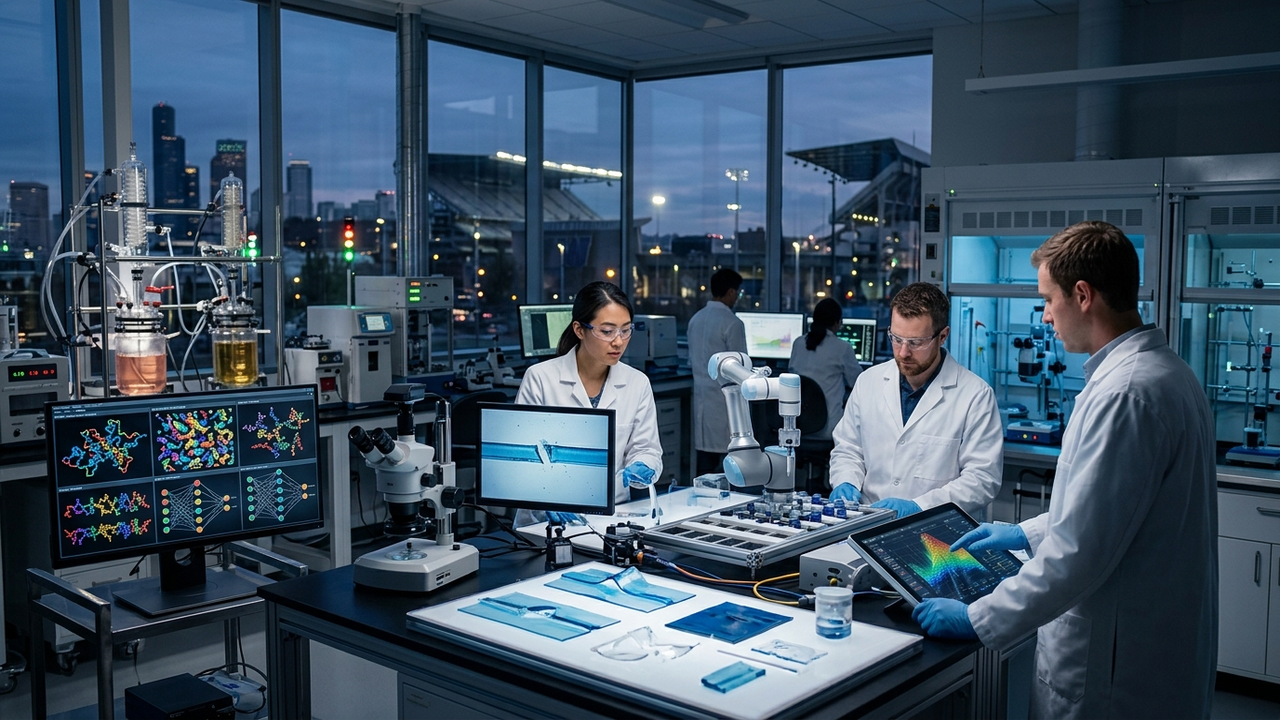
Researchers at the University of Washington have developed a groundbreaking methodology using machine learning to accelerate the design and discovery of polymer materials, demonstrating its practical utility. They constructed the “Dynamic Polymer Annotated Library (DPAL)”—a new library of dynamic polymers possessing multifunctional properties such as self-healing, responsiveness, 3D-printability, underwater adhesion, degradability, and recyclability. This work enhances the ability to validate AI-predicted novel structures at scale, paving the way to resolve bottlenecks in materials development.
Technical / Clinical Details
Central to this research is the integration of AI’s predictive capabilities with physical validation processes. The AI learns from existing polymer databases to predict novel polymer structures likely to possess desired properties (e.g., self-healing rate, responsiveness threshold, underwater adhesion strength). DPAL is a collection of dynamic polymers either synthesized based on these AI predictions or thoroughly annotated with their characteristics. By combining this with high-throughput synthesis and characterization techniques, the research team efficiently identified promising polymers from thousands of AI-generated candidates and confirmed their practical utility. This approach dramatically shortens the traditional trial-and-error development cycle, accelerating the design of complex, multifunctional polymers.
Background & Context
Polymer materials are indispensable to every aspect of our lives, used across a wide range of industries including automotive, healthcare, electronics, and construction. However, developing polymers with new functionalities has been a very time-consuming and costly process due to the vast chemical space and complex synthesis pathways. There is a growing demand for advanced polymers with properties such as environmentally conscious degradability and recyclability, or specialized characteristics like self-healing and adhesion under specific conditions. The introduction of machine learning is expected to be a powerful tool to meet these demands.
Strategic Significance & Outlook
Machine learning-assisted libraries like DPAL will accelerate the advancement of polymer informatics, contributing to the discovery of sustainable and high-performance new materials. This framework will help researchers rapidly design polymers tailored to specific application requirements, boosting the rate of innovation in materials science. In the future, AI is expected to be applied to even more material systems, leading to a highly automated materials development ecosystem where human experts can focus on more complex problem-solving and strategic design.
Source: https://www.eurekalert.org/news-releases/1142003
Get our weekly technology intelligence — free
Receive an infographic that lets you judge at a glance whether each field’s analysis report is worth reading.
Subscribe Free — Weekly Tech Intelligence
By subscribing, you’ll receive Troy-Technical’s weekly technology intelligence newsletter.
- Your email and selected fields are used only to deliver the newsletter.
- We never share your information with third parties.
- You can unsubscribe anytime via the link in each email.
See our Privacy Policy for details.
Takes about a minute · Unsubscribe anytime





Comments