Key Findings
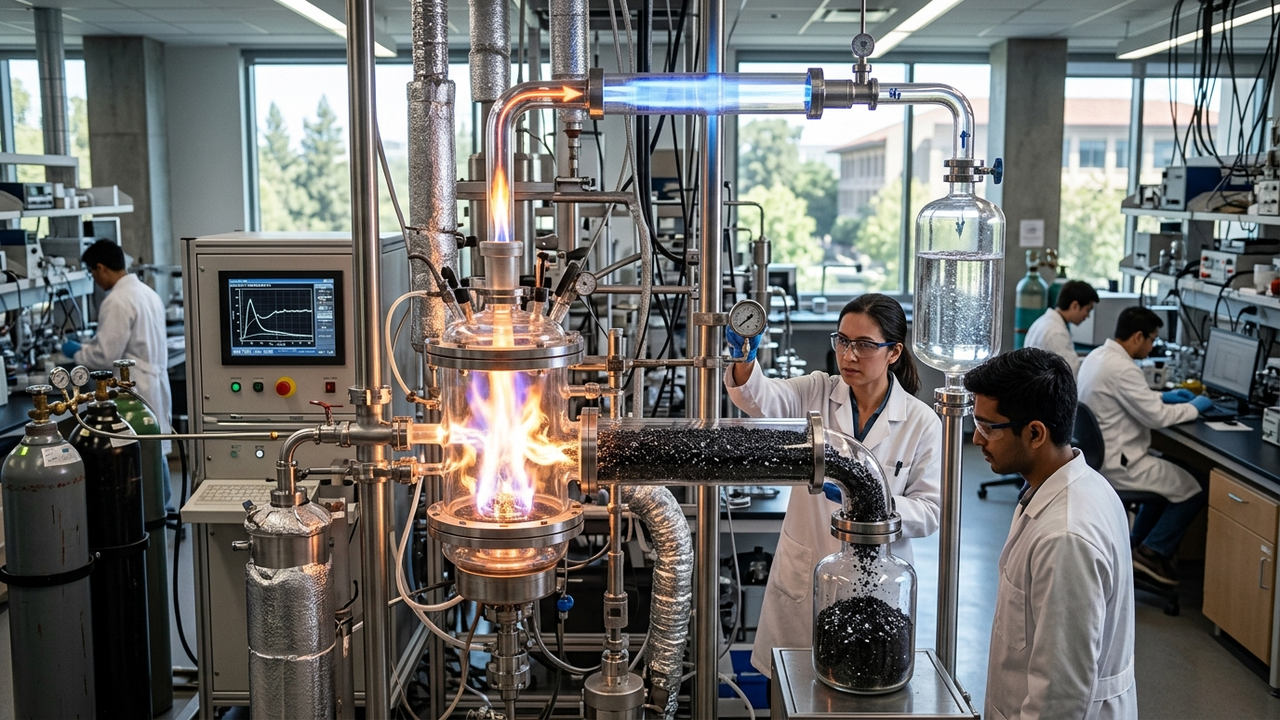
Researchers at Stanford University have pioneered a novel and highly efficient method for producing hydrogen, which drastically reduces CO₂ emissions by internally recycling a portion of the produced hydrogen for process heating. This innovative technique not only boosts energy efficiency but also generates high-quality graphite as a valuable byproduct, enhancing the overall sustainability and potential economic viability of clean hydrogen production. This represents a significant advancement in mitigating the environmental footprint of hydrogen manufacturing while creating additional market value.
Technical / Clinical Details
Traditional hydrogen production methods, particularly steam methane reforming (SMR) from natural gas, are energy-intensive and release substantial amounts of CO₂ due to the external heat required. The Stanford team’s breakthrough involves optimizing thermal processes, such as methane pyrolysis, and ingeniously redirecting a fraction of the newly generated hydrogen back into the system to provide the necessary internal process heat. This self-sustaining thermal loop substantially reduces reliance on external fossil fuel-derived energy sources, thereby dramatically lowering the overall CO₂ emissions of the manufacturing process.
A critical advantage of this process is the co-production of solid, high-quality graphite alongside hydrogen. This graphite holds significant potential as a material for battery electrodes, offering a sustainable alternative for the burgeoning electric vehicle (EV) and energy storage markets. By simultaneously producing clean hydrogen and a valuable battery material, the technology enhances the economic equation of hydrogen production, moving towards a more circular economy model. The design aims to create an energy self-sufficient hydrogen plant, offering a cost-effective and environmentally superior pathway to clean hydrogen supply.
Background & Context
Clean hydrogen is recognized as an indispensable energy carrier for achieving global decarbonization targets, yet its production cost and CO₂ footprint have been significant hurdles to widespread adoption. Even so-called ‘blue hydrogen,’ produced from natural gas with carbon capture and storage (CCS), still entails some CO₂ emissions. The Stanford research directly addresses these challenges by making the hydrogen production process itself cleaner and more efficient. The method of producing hydrogen with a solid carbon byproduct (graphite) is also known as ‘turquoise hydrogen,’ gaining attention for its ability to avoid atmospheric CO₂ release, thereby offering a more environmentally benign production route.
Strategic Significance & Outlook
The development of this novel hydrogen production process has the potential to significantly impact the commercialization and broader adoption of clean hydrogen technologies. The high energy efficiency achieved through internal hydrogen recycling, coupled with the valuable graphite byproduct, can substantially improve the economics of hydrogen production, making it more competitive with conventional fossil fuel-based processes. As this technology scales up and undergoes further cost optimization, it is expected to contribute to the realization of a more sustainable and economically viable hydrogen supply chain, thereby accelerating the energy transition. The added value of supplying graphite to the rapidly expanding battery market further strengthens the business case for this innovative hydrogen production method, positioning it as a key enabler for both clean energy and advanced materials sectors.
Source: https://news.stanford.edu/stories/2026/09/sustainable-hydrogen-production-heating-method
Get our weekly technology intelligence — free
Receive an infographic that lets you judge at a glance whether each field’s analysis report is worth reading.
Subscribe Free — Weekly Tech Intelligence
By subscribing, you’ll receive Troy-Technical’s weekly technology intelligence newsletter.
- Your email and selected fields are used only to deliver the newsletter.
- We never share your information with third parties.
- You can unsubscribe anytime via the link in each email.
See our Privacy Policy for details.
Takes about a minute · Unsubscribe anytime








Comments