Key Findings
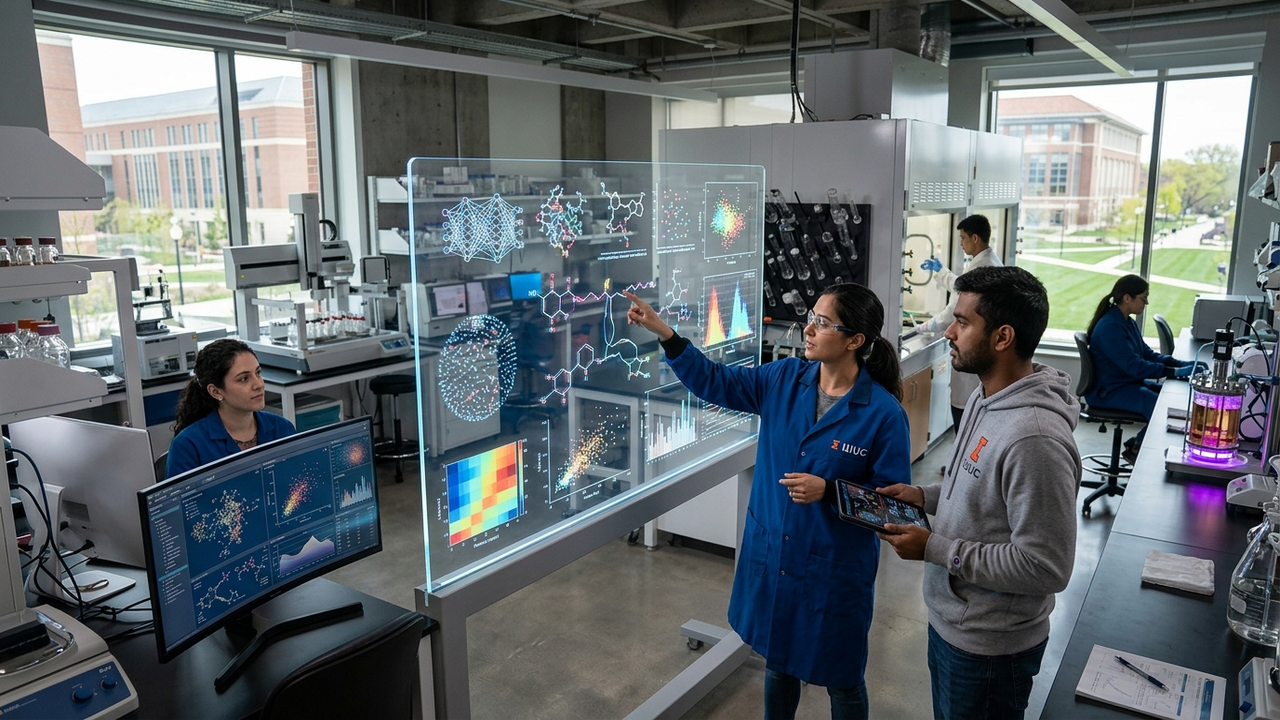
New research from the Gies College of Business at the University of Illinois Urbana-Champaign has demonstrated artificial intelligence (AI) technology’s profound potential to resolve critical challenges in clinical drug trials, including lengthy durations, exorbitant development costs, high failure rates, and insufficient patient diversity. The study highlights how AI can significantly boost efficiency by optimizing protocols, enhancing patient recruitment, and accelerating data analysis. A particularly groundbreaking aspect is AI’s ability to create virtual patient models, which could potentially obviate the need for early-stage human trials, thereby dramatically fast-tracking drug development timelines.
Technical / Clinical Details
AI’s application in clinical trials enables the design of more precise protocols, guiding optimal trial designs to maximize drug safety and efficacy. For patient recruitment, AI efficiently identifies suitable candidates from vast healthcare datasets, shortening enrollment periods. AI-driven data analytics tools process large volumes of trial data in real-time, facilitating early detection of critical trends or unforeseen side effects, leading to faster and more accurate decision-making compared to traditional statistical methods. The creation of virtual patient models involves AI integrating extensive knowledge of patient data, disease mechanisms, and drug responsiveness to predict drug candidate behavior through simulations. This allows for early assessment of drug promise and reduction of safety risks before human trials, thus potentially decreasing failure rates in later development stages.
Background & Context
The pharmaceutical industry has long grappled with the immense costs, time, and low success rates associated with new drug development. On average, bringing a new drug to market takes over a decade and costs more than $2 billion, with an ultimate approval rate of only about 10%. These challenges delay the delivery of innovative therapies to patients and impose substantial burdens on healthcare economies. AI’s introduction promises to transform this inefficient process, paving the way for a faster and more sustainable drug development model. Especially with the advent of personalized medicine, which demands more complex patient profiling and treatment strategies, AI’s data-driven approach is becoming an indispensable tool.
Strategic Significance & Outlook
The advancements in AI-powered clinical trials are set to profoundly alter the paradigm of research and development in the pharmaceutical industry. If virtual patient models and AI-driven protocol optimization become widespread, the quality of early-stage drug development decisions will improve, reducing the risk of costly failures in late-stage clinical trials. This will enable patients to access innovative therapies more quickly, while pharmaceutical companies can enhance the ROI of their R&D investments. In the future, AI is expected to be integrated across all stages of new drug development, realizing true ‘AI-driven drug discovery’ and accelerating the delivery of personalized treatments. Regulatory bodies, including the FDA with its early-stage clinical trial pilot program RFI, are actively evaluating AI integration, further supporting this shift.
Get our weekly technology intelligence — free
Receive an infographic that lets you judge at a glance whether each field’s analysis report is worth reading.
Subscribe Free — Weekly Tech Intelligence
By subscribing, you’ll receive Troy-Technical’s weekly technology intelligence newsletter.
- Your email and selected fields are used only to deliver the newsletter.
- We never share your information with third parties.
- You can unsubscribe anytime via the link in each email.
See our Privacy Policy for details.
Takes about a minute · Unsubscribe anytime









Comments