Key Findings
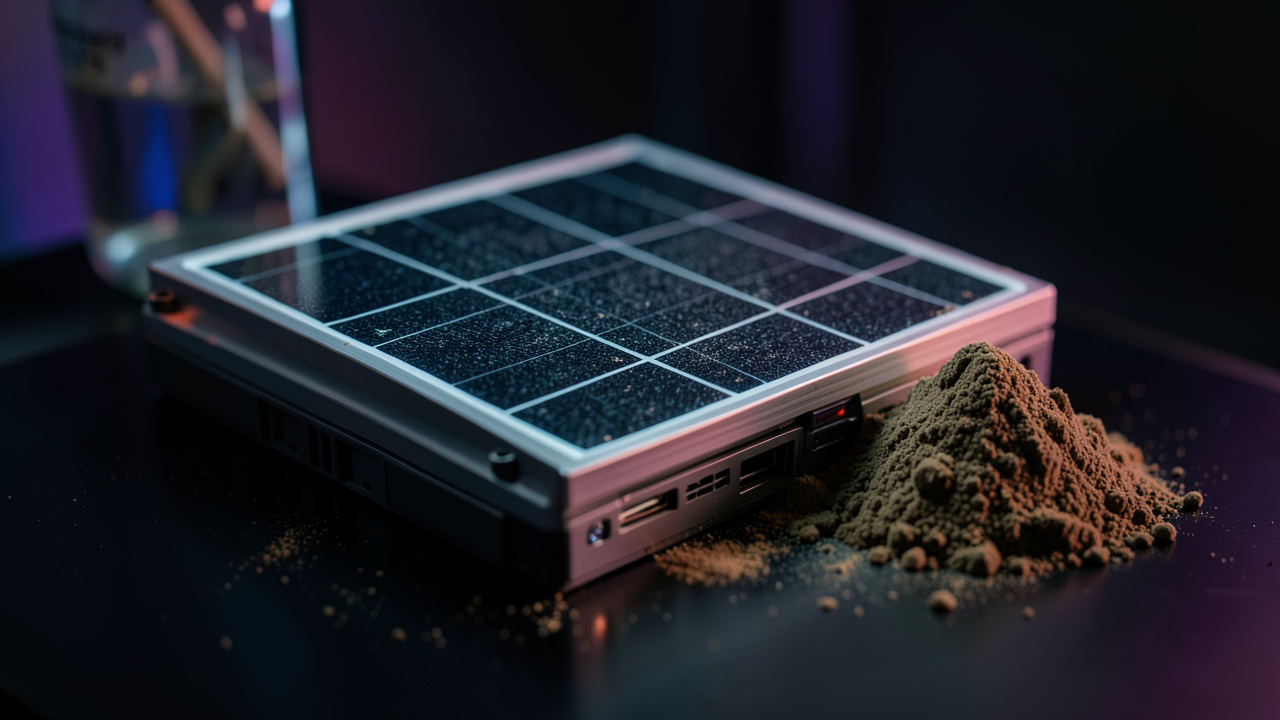
A significant breakthrough has been achieved in lead-free tin perovskite solar cells: the incorporation of chlorinated cations has dramatically enhanced their stability in ambient air. This 2D/3D hybrid perovskite solar cell not only reached a power conversion efficiency of 16.2% but also demonstrated stable operation for over 1,000 hours at 55°C in open air, directly addressing the critical issue of rapid degradation in tin-based perovskites.
Technical / Clinical Details
The research team employed an innovative strategy of integrating specific chlorinated cations into the 2D/3D perovskite structure. These cations effectively passivate defects within the perovskite crystal lattice and simultaneously protect the material from oxidative decomposition caused by oxygen and moisture. Tin-based perovskites offer the advantage of being lead-free, thus reducing environmental toxicity, but historically have suffered from the facile oxidation of tin ions (Sn²⁺ to Sn⁴⁺), leading to rapid performance degradation. The chlorinated cations effectively slow down this oxidation process, thereby dramatically improving the device’s stability. Extensive testing confirmed that this enhanced device achieved 16.2% power conversion efficiency and, more importantly, maintained its initial performance for over 1,000 hours under challenging conditions of 55°C in ambient air. This is an exceptional level of durability for unencapsulated devices in this class.
Background & Context
While perovskite solar cells hold great promise for high efficiency, many formulations contain toxic lead, prompting an urgent demand for alternative, environmentally benign materials. Tin perovskites emerged as a promising lead-free substitute, but their extreme instability in air has been the primary impediment to their practical application. This breakthrough using chlorinated cations provides a crucial answer to this long-standing challenge, significantly contributing to the commercialization of lead-free and environmentally friendly solar cells. This represents a vital technological advance in the global transition towards more sustainable societies.
Strategic Significance & Outlook
The improved open-air durability of tin perovskite solar cells via chlorinated cation incorporation is a decisive step towards the commercialization of lead-free solar technology. An efficiency of 16.2% combined with over 1,000 hours of stability suggests that this technology is robust enough for practical applications. Future efforts will likely focus on further optimizing this stabilization technique, improving efficiency, and validating its scalability for large-scale manufacturing processes. This is expected to bring a new generation of safe and environmentally sustainable solar cells to the market, opening new directions for the photovoltaic industry and accelerating green energy adoption.
Get our weekly technology intelligence — free
Receive an infographic that lets you judge at a glance whether each field’s analysis report is worth reading.
Subscribe Free — Weekly Tech Intelligence
By subscribing, you’ll receive Troy-Technical’s weekly technology intelligence newsletter.
- Your email and selected fields are used only to deliver the newsletter.
- We never share your information with third parties.
- You can unsubscribe anytime via the link in each email.
See our Privacy Policy for details.
Takes about a minute · Unsubscribe anytime

Comments