
Key Findings
Major global commercial vehicle manufacturers, including Hyundai Motor, Toyota, and Daimler Truck Holding AG, are accelerating their entry into the long-haul transport market with the deployment of heavy-duty hydrogen fuel cell (FCV) trucks and buses. Notably, Hyundai Motor has signed an MOU to expand its hydrogen mobility initiatives, outlining a concrete plan to introduce 480 hydrogen-powered buses in South Korea by 2032.
Technical / Clinical Details
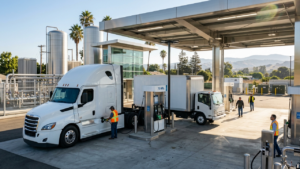
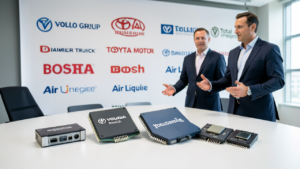
Hyundai Motor is significantly advancing the large-scale adoption of hydrogen fuel cell vehicles through collaborations with the South Korean government and related enterprises. Their commitment includes deploying 480 hydrogen buses by 2032 to contribute to urban transport decarbonization. Toyota Motor, conversely, is strengthening its partnerships with European commercial vehicle manufacturers; it will supply its advanced third-generation fuel cell systems to Sweden’s Scania and is jointly developing next-generation hydrogen fuel cell heavy-duty trucks with Italy’s Iveco. These efforts aim to apply FCV technology to diverse commercial vehicle platforms, addressing specific market needs.
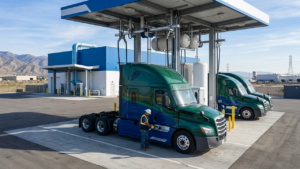
Daimler Truck is focused on the rapid commercialization of its liquefied hydrogen (LH2) powered NextGen H2 trucks, with plans to put approximately 100 units into customer operations by the end of 2026. The use of liquefied hydrogen offers high energy density and suitability for long-range travel, strongly promoting the replacement of traditional diesel engine vehicles. These developments collectively indicate the establishment of a new commercial vehicle energy strategy dubbed the ‘dual track system,’ where battery electric vehicles (BEVs) and hydrogen fuel cell electric vehicles (FCEVs) complement each other by leveraging their respective strengths.
Background & Context
The commercial vehicle sector, particularly long-haul transport, is one of the most challenging areas for emissions reduction. Growing freight volumes combined with tightening environmental regulations are driving demand for zero-emission solutions. Hydrogen fuel cell technology offers distinct advantages over battery electric vehicles for heavy-duty applications, including longer range, rapid refueling times, and minimal impact on payload capacity, making it a compelling option. The successive investments and concrete deployment plans by leading manufacturers suggest that this technology is rapidly moving into practical implementation.
Strategic Significance & Outlook
These initiatives represent a decisive step towards the full-scale expansion of the hydrogen fuel cell market for commercial vehicles. Increased technological collaborations among manufacturers and accelerated investments in infrastructure are expected to lead to the expansion of hydrogen refueling networks and reductions in fuel costs. This will enhance the economic viability of hydrogen commercial vehicles, paving the way for broader adoption. Looking towards the 2030s, a future where hydrogen plays a central role in decarbonizing long-haul transport appears increasingly within reach.
Source: https://finance.biggo.com/news/841a904d-bd9f-4212-af31-8d66d40e9084
Get our weekly technology intelligence — free
Receive an infographic that lets you judge at a glance whether each field’s analysis report is worth reading.
Subscribe Free — Weekly Tech Intelligence
By subscribing, you’ll receive Troy-Technical’s weekly technology intelligence newsletter.
- Your email and selected fields are used only to deliver the newsletter.
- We never share your information with third parties.
- You can unsubscribe anytime via the link in each email.
See our Privacy Policy for details.
Takes about a minute · Unsubscribe anytime






Comments