Key Findings
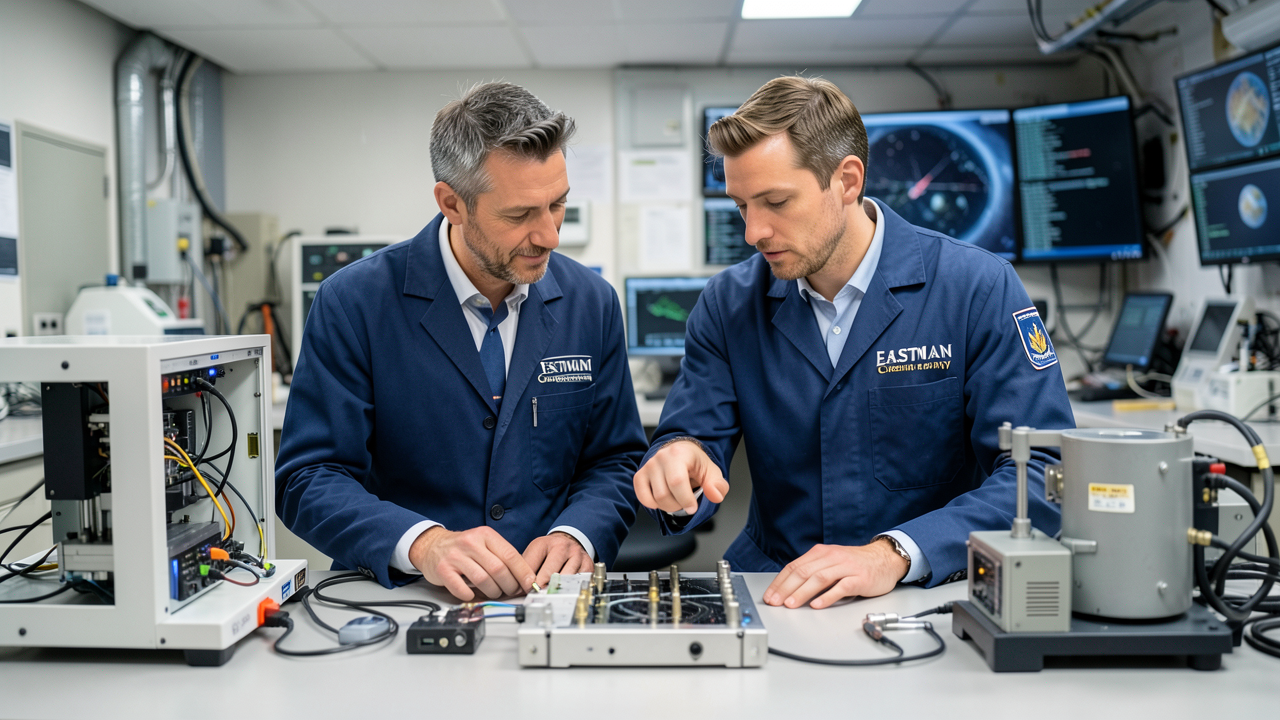
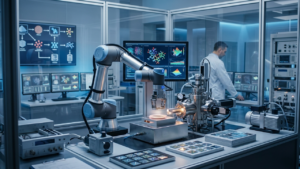
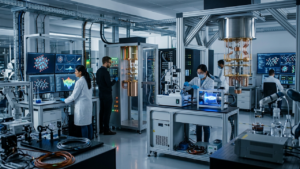
A collaborative research team from North Carolina State University, UNC Chapel Hill, and Eastman Chemical Company has built a groundbreaking closed-loop autonomous platform, leveraging Chemspeed automation systems and software, to fully automate the catalyst discovery process. This self-driving lab, through a campaign of 680 autonomous experiments, significantly enhanced catalyst performance in propylene hydroformylation, demonstrating its ability to selectively guide the reaction towards linear, branched, or tunable aldehyde products.
Technical / Clinical Details
The developed autonomous platform consistently performs catalyst preparation, pressurized reaction execution, product analysis, and automatic selection of the next experimental conditions without human intervention. This system integrates AI and machine learning algorithms to learn in real-time from experimental data, intelligently inferring optimized catalyst compositions and reaction parameters. Propylene hydroformylation is a crucial industrial chemical process where catalyst selectivity is paramount for producing various aldehydes. The autonomous lab efficiently explored catalyst systems capable of achieving desired aldehyde products (e.g., specific ratios of linear to branched aldehydes) for this reaction. The automated execution of 680 experiments enabled exploration at a speed and scale previously unimaginable in traditional R&D, confirming substantial improvements in catalyst performance.
Background & Context
Catalysts play a central role in nearly all chemical industrial processes, being indispensable for reducing energy consumption, mitigating environmental impact, and creating new chemical products. However, discovering and optimizing new catalysts has been an extremely time-consuming and costly process, requiring the exploration of a vast number of chemical compositions and reaction conditions. Traditional R&D heavily relied on human expertise and intuition, making iterative trial-and-error unavoidable. The advent of autonomous labs has the potential to resolve this bottleneck and fundamentally transform the paradigm of catalyst development. This exemplifies ‘Industry 4.0’ through the convergence of materials informatics, robotics, and AI.
Strategic Significance & Outlook
This autonomous catalyst discovery platform is applicable to various chemical reactions beyond propylene hydroformylation and is poised to revolutionize catalyst development across the board. This promises the development of more efficient and sustainable manufacturing processes in a wide range of industrial sectors, including pharmaceuticals, polymer materials, and fine chemicals. Autonomous labs will free human researchers from simple repetitive tasks, allowing them to focus on more creative problem-solving. In the long term, this technology is expected to become a powerful tool for discovering new chemical reaction pathways and exploring previously untapped areas of materials science, significantly contributing to enhanced productivity and reduced environmental impact in the chemical industry.
Source: https://www.chemspeed.com/news/catalysts-on-a-dimmer-switch-a-self-driving-lab-finds-them-on-its-own
Get our weekly technology intelligence — free
Receive an infographic that lets you judge at a glance whether each field’s analysis report is worth reading.
Subscribe Free — Weekly Tech Intelligence
By subscribing, you’ll receive Troy-Technical’s weekly technology intelligence newsletter.
- Your email and selected fields are used only to deliver the newsletter.
- We never share your information with third parties.
- You can unsubscribe anytime via the link in each email.
See our Privacy Policy for details.
Takes about a minute · Unsubscribe anytime



Comments