Key Findings
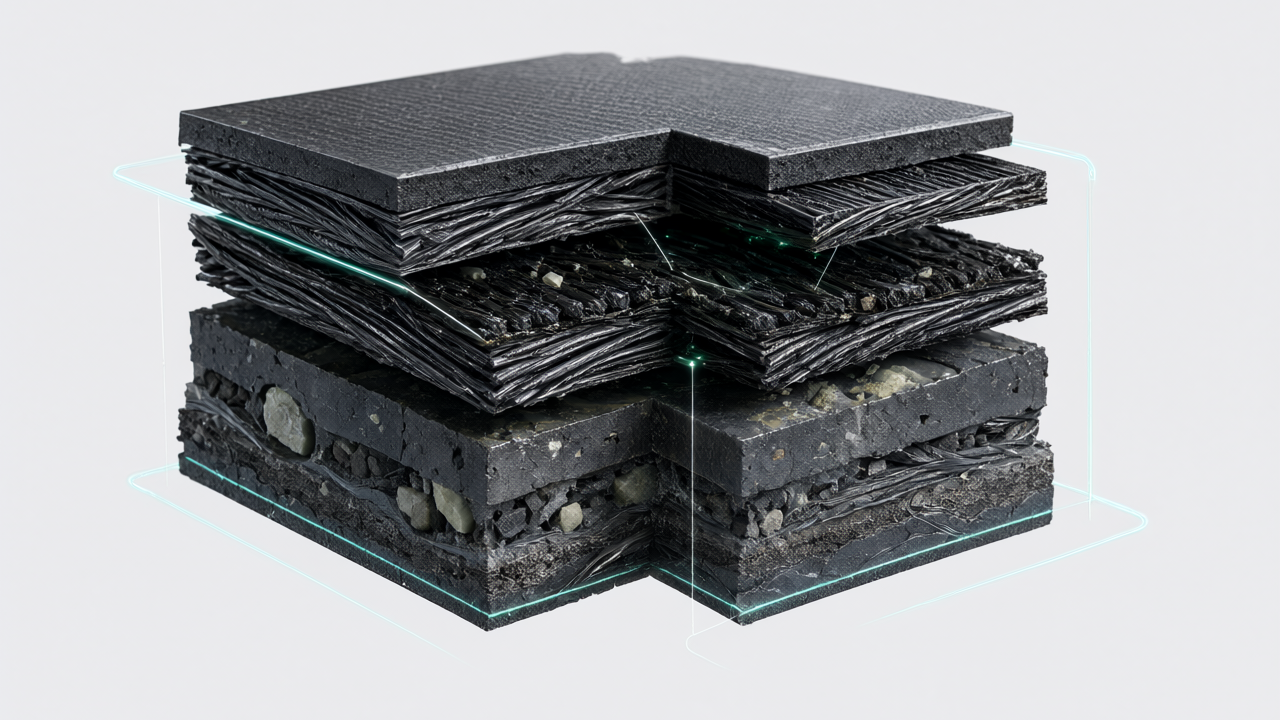
A pioneering physics-constrained inverse design system, PHICS (Physics-constrained inverse design system), has been developed for multifunctional composite materials. PHICS effectively combines the high efficiency of data-driven models with a rigorous adherence to fundamental physical laws. This system integrates physical causal graph modeling, multi-scale mechanism embedding, and multi-objective Pareto optimization to establish a closed-loop R&D paradigm spanning from microscopic design to macroscopic performance validation.
Technical / Clinical Details
PHICS addresses the challenge of designing complex composite materials by modeling the relationships between material constituents and properties using physical causal graphs. This is coupled with multi-scale mechanism embedding, allowing for design considerations across atomic to macroscopic scales. The system then employs multi-objective Pareto optimization to generate material designs that simultaneously maximize often-conflicting performance targets such as strength, lightweight properties, and thermal conductivity. Crucially, PHICS ensures that AI model predictions strictly obey fundamental physical conservation laws (e.g., mass, energy) and boundary conditions. This constraint guarantees reliable predictions and extrapolations even in data-scarce regions, overcoming a major limitation of traditional data-driven models: their tendency to propose physically implausible solutions or exhibit poor generalization outside the training data distribution.
Background & Context
Multifunctional composite materials are pivotal for innovation in various industries, including aerospace, automotive, medical devices, and sporting goods, offering enhanced performance through tailored properties. However, designing materials that optimally satisfy multiple functional requirements simultaneously has been immensely challenging due to the vast design parameter space and complex underlying physics. While data-driven AI models offer efficiency, they often risk proposing ‘non-physical’ designs, undermining reliability. PHICS bridges this gap between computational efficiency and physical reliability, providing a robust foundation for faster and more dependable development of high-performance composite materials.
Strategic Significance & Outlook
The introduction of PHICS has the potential to fundamentally transform the R&D process for multifunctional composite materials. Its capability for physically consistent predictions and efficient exploration of the design space is expected to lead to significant reductions in development time and costs. In the future, this technology could enable the creation of composite materials with unprecedented properties, designed for use in more complex environments or for applications with highly stringent requirements. This makes PHICS a critical tool for accelerating the development of next-generation materials essential for achieving a sustainable and technologically advanced society, positioning China at the forefront of this advanced materials informatics domain.
Source: https://www.eurekalert.org/news-releases/1145064
Get our weekly technology intelligence — free
Receive an infographic that lets you judge at a glance whether each field’s analysis report is worth reading.
Subscribe Free — Weekly Tech Intelligence
By subscribing, you’ll receive Troy-Technical’s weekly technology intelligence newsletter.
- Your email and selected fields are used only to deliver the newsletter.
- We never share your information with third parties.
- You can unsubscribe anytime via the link in each email.
See our Privacy Policy for details.
Takes about a minute · Unsubscribe anytime









Comments