
Key Findings
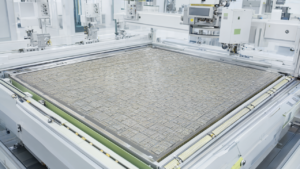
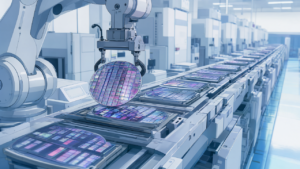
Rapidus is pioneering a unique manufacturing model for the 2nm short Turnaround Time (TAT) semiconductor market in Japan. Central to this initiative is the ‘Rapid and Unified Manufacturing Service (RUMS)’ program, which integrates advanced Gate-All-Around (GAA) technology, single-wafer processing, AI-controlled transport, sophisticated manufacturing simulations, and comprehensive integrated packaging capabilities.
Technical & Clinical Details
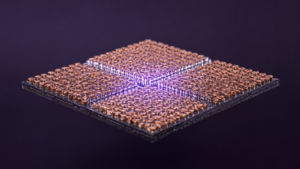
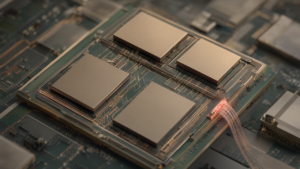
The Rapidus 2nm program is developing a manufacturing process specifically tailored for next-generation AI chips and High-Performance Computing (HPC) applications. GAA transistors are crucial for the 2nm node, offering superior electrostatic control and lower power consumption compared to traditional FinFET structures, which are vital for performance gains. RUMS aims to drastically reduce cycle times by integrating the entire value chain from design to front-end manufacturing and back-end packaging. This allows for rapid response to customer design changes and urgent production demands. Specifically, AI is leveraged to predict and optimize manufacturing bottlenecks, maximizing production efficiency. Advanced manufacturing simulations further de-risk the design phase and contribute to improved yields. This integrated approach directly addresses the market need for customization and fast time-to-market in AI chip development.
Background & Context
The rapid evolution of AI and the emergence of diverse applications demand highly customized semiconductor chips and agile supply capabilities. Conventional semiconductor manufacturing processes, often fragmented across design, front-end, and back-end stages, typically involve lengthy lead times. Rapidus’s RUMS model is designed to overcome these challenges, aiming for Japan to reclaim a significant role in the global semiconductor industry, particularly in the high-value, low-volume production of leading-edge logic. This initiative is also notable from a geopolitical perspective, emphasizing the strengthening of supply chain resilience.
Strategic Significance & Outlook
The ‘Rapid and Unified Manufacturing Service’ proposed by Rapidus holds immense potential to establish a new paradigm in 2nm semiconductor manufacturing, accelerating AI-driven manufacturing and custom chip innovation. If successful, this manufacturing model could re-establish Japan as a key player in the global advanced semiconductor supply chain, enhancing Japan’s competitiveness in sectors such as AI, HPC, and autonomous driving. In the future, this technology is expected to be applied to even more advanced process nodes, impacting a broader range of industrial sectors and accelerating the pace of AI-driven societal transformation.
Source: https://www.excite.co.jp/news/article/Dreamnews_0000363410/
Get our weekly technology intelligence — free
Receive an infographic that lets you judge at a glance whether each field’s analysis report is worth reading.
Subscribe Free — Weekly Tech Intelligence
By subscribing, you’ll receive Troy-Technical’s weekly technology intelligence newsletter.
- Your email and selected fields are used only to deliver the newsletter.
- We never share your information with third parties.
- You can unsubscribe anytime via the link in each email.
See our Privacy Policy for details.
Takes about a minute · Unsubscribe anytime





Comments