Key Findings
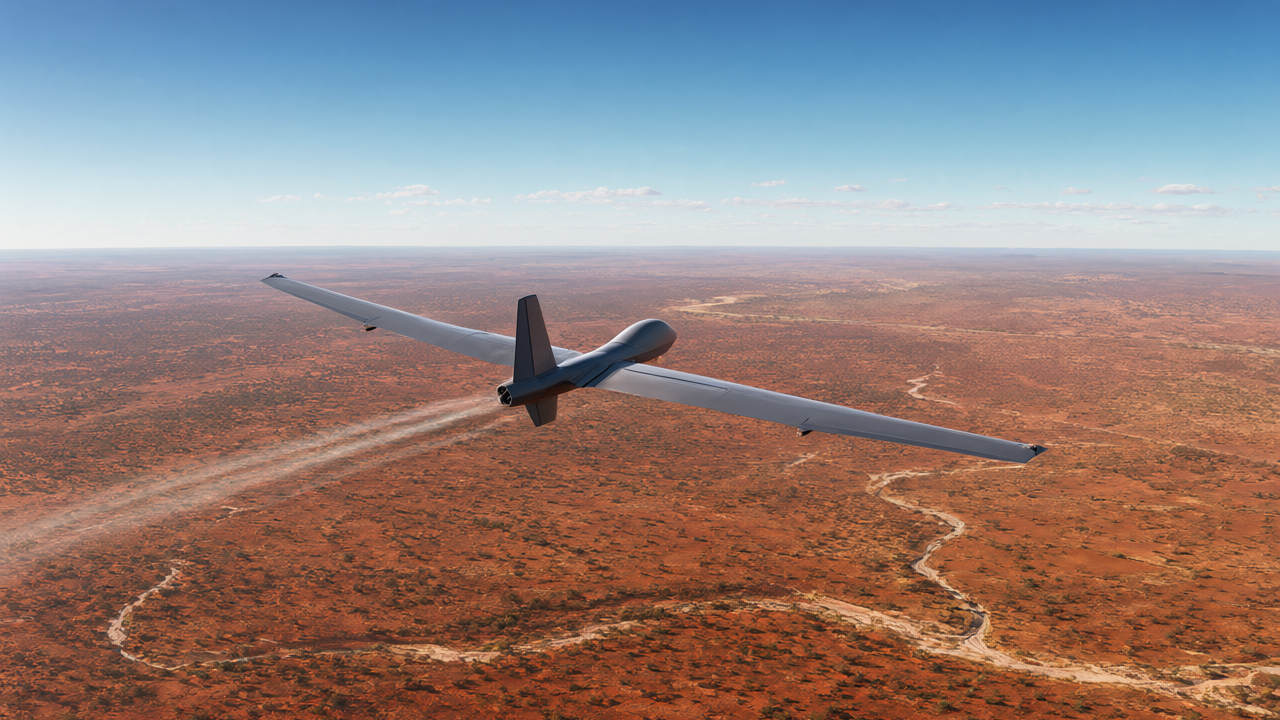
Li-S Energy (ASX: LIS), an Australian developer of lithium-sulfur (Li-S) batteries, announced that its ‘Pegasus’ drone successfully completed a test flight of approximately two hours, covering over 75km, powered by a single Li-S battery pack. This breakthrough demonstrates the company’s Li-S batteries achieve a high energy density (382 watt-hours per 1.1kg) equivalent to approximately 1.8 times that of conventional LiPo batteries, representing a significant stride towards resolving range and endurance limitations in the drone industry.
Technical Details
The core of Li-S Energy’s battery technology lies in its patented nanomaterials: Boron Nitride Nanotubes (BNNT) and Li-Nanomesh. These materials are crucial for significantly enhancing the performance of Li-S batteries, particularly in overcoming key technical challenges such as polysulfide shuttling, which has historically hindered their commercial viability. The Li-S battery cell used in the test flight weighed approximately 1.1kg and delivered 382 watt-hours of energy. This figure is notably higher than the 355 watt-hours provided by a conventional 1.85kg LiPo battery commonly used in drones. Specifically, Li-S Energy’s battery is about 40% lighter than a comparable LiPo battery while supplying equivalent or greater energy. This combination of lightweight design and high energy density enabled the ‘Pegasus’ drone to achieve its extended flight duration and range.
Background & Context
Drone technology is rapidly advancing across diverse sectors, including logistics, agriculture, surveillance, and defense. However, the widespread adoption and enhanced performance of drones have been primarily constrained by battery range and weight. Current lithium-ion batteries often present limitations for missions requiring long flight durations or heavy payloads. Li-S batteries, theoretically offering much higher energy densities than lithium-ion batteries, are considered a promising next-generation solution. Nevertheless, their commercialization has been slow due to challenges related to cycle life, safety, and cost. Li-S Energy’s recent success marks a significant breakthrough in addressing these issues, accelerating the practical application of Li-S battery technology and garnering considerable attention from the industry.
Strategic Significance & Outlook
Li-S Energy’s successful test flight could profoundly impact the future of the drone industry. Doubling the flight range would enable logistics drones to deliver across wider areas, allow surveillance drones to conduct longer patrols, and enhance the operational capabilities of defense drones. The company plans to continue product development and establish mass production capabilities, aiming to introduce Li-S batteries not only into drones but also into broader applications such as electric vehicles and aerospace. This technology is expected to accelerate the commercialization of Li-S batteries as a sustainable energy solution, contributing to the realization of a cleaner energy society.
Source: https://finance.biggo.com/news/404a6d83-7b88-403e-9129-a157aabfdee0
Get our weekly technology intelligence — free
Receive an infographic that lets you judge at a glance whether each field’s analysis report is worth reading.
Subscribe Free — Weekly Tech Intelligence
By subscribing, you’ll receive Troy-Technical’s weekly technology intelligence newsletter.
- Your email and selected fields are used only to deliver the newsletter.
- We never share your information with third parties.
- You can unsubscribe anytime via the link in each email.
See our Privacy Policy for details.
Takes about a minute · Unsubscribe anytime