Key Findings: Closed-Loop Battery Recycling Achieves Over 93% Black Mass Recovery at a Groundbreaking Cost of $0.11/kg
A new recycling process has demonstrated an astonishing efficiency in recovering black mass from electric vehicle (EV) battery modules, achieving a rate of 93.28%. This innovative custom separation line, integrating shredders, air classifiers, and vibrating screens, also achieved a 75.77% recovery rate from smartphone cells. Particularly noteworthy is the groundbreaking direct processing cost of just $0.11 per kilogram of EV battery input. The recovered black mass, rich in valuable metals such as lithium, nickel, cobalt, and manganese, holds the potential to secure a sustainable supply of battery materials through reuse, thereby making battery recycling an economically attractive proposition.
Technical Details: Efficient Physical Separation via Shredders, Air Classifiers, and Vibrating Screens
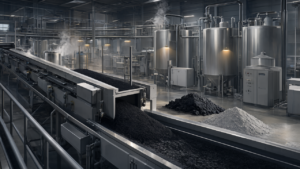
This innovative separation line primarily focuses on physical separation technologies. The process consists of the following key steps:
- Shredding: End-of-life battery modules or cells are physically crushed to separate battery materials from metal and plastic casings.
- Air Classification: The shredded materials are classified by air flow based on density and shape. This efficiently separates lighter electrode materials (black mass) from heavier metal fragments (e.g., copper, aluminum).
- Vibrating Screen: Further separation occurs based on particle size, enhancing the purity of the black mass.
This sequence of physical separation processes yields high-purity black mass, which improves the efficiency of subsequent hydrometallurgical processes for metal extraction. The high recovery rate of 93.28% from EV battery modules strongly suggests industrial practicality and economic viability. The chemical composition of the recovered black mass, including 12.3% lithium, 32.5% nickel, and 13.8% cobalt, indicates a rich source of high-value battery metals, making it a valuable feedstock for new battery manufacturing.
Background & Context: The Importance and Economic Challenges of Closed-Loop Recycling
The rapid growth of the electric vehicle (EV) market has led to an explosive increase in demand for battery materials (especially lithium, nickel, and cobalt). Concurrently, the rise in end-of-life batteries and the need to secure sustainable sources for these valuable resources have become global challenges. Closed-loop recycling is a central solution to these issues, reducing reliance on virgin mineral extraction and minimizing environmental impact. However, the complexity and cost of recycling processes have historically hindered large-scale adoption. Highly efficient and low-cost separation technologies like the one announced are crucial for transforming battery recycling into an economically viable business model.
Strategic Significance & Outlook: Realizing a Sustainable Battery Ecosystem and Enhancing Market Competitiveness
The groundbreaking direct processing cost of $0.11 per kilogram of EV battery input and a black mass recovery rate exceeding 90% will significantly impact the battery recycling industry. If widely adopted, this technology will stabilize the supply of recycled materials and contribute to reducing overall battery manufacturing costs. This provides battery manufacturers with opportunities to mitigate raw material supply risks and enhance competitiveness. Ultimately, such technological innovation is expected to play a central role in realizing a more sustainable and circular battery ecosystem, accelerating the transition to clean energy.
Get our weekly technology intelligence — free
Receive an infographic that lets you judge at a glance whether each field’s analysis report is worth reading.
Subscribe Free — Weekly Tech Intelligence
By subscribing, you’ll receive Troy-Technical’s weekly technology intelligence newsletter.
- Your email and selected fields are used only to deliver the newsletter.
- We never share your information with third parties.
- You can unsubscribe anytime via the link in each email.
See our Privacy Policy for details.
Takes about a minute · Unsubscribe anytime