Key Findings
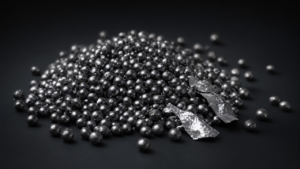
Authorities in Dongguang, Hebei Province, China, have officially approved a significant iron phosphate black mass regeneration project, with a total investment of 31.8 million RMB (approximately $4.35 million USD). This strategic development aims to enhance the region’s battery recycling capabilities by adding an annual processing capacity of 60,000 tons of iron phosphate (LFP) black mass, which will yield 58,252 tons of high-purity iron phosphate powder and 6,911 tons of sodium chloride byproduct. The project represents a substantial step towards reinforcing the LFP battery supply chain and promoting a circular economy within China’s rapidly expanding electric vehicle and energy storage sectors.
Technical / Clinical Details
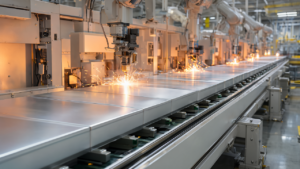
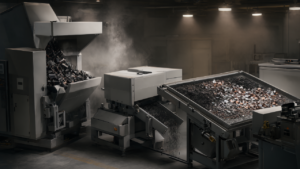
The approved project involves the dismantling of an existing alkaline refining line within the factory and the installation of new, advanced equipment, including impurity removal reactors, filter presses, and storage tanks. The black mass regeneration process specifically targets the recovery of active materials from spent lithium iron phosphate batteries. The alkaline refining step is crucial for efficiently removing organic substances and other impurities from the black mass, preparing it for subsequent purification stages. Impurity removal reactors are designed to selectively separate unwanted elements under specific reaction conditions, while filter presses perform efficient solid-liquid separation, enhancing the purity of the final iron phosphate powder. This meticulous process ensures that the recovered iron phosphate meets the stringent quality requirements for use as a cathode material in new LFP batteries, thereby closing the loop in the material lifecycle.
Background & Context
Lithium iron phosphate (LFP) batteries have gained significant traction in electric vehicles, particularly in entry-level models, and in stationary energy storage applications due to their inherent safety, longer cycle life, and lower cost compared to other lithium-ion chemistries. As LFP battery production and deployment continue to surge, the challenge of managing end-of-life batteries and recovering their valuable components has become increasingly critical. China, a global leader in LFP battery manufacturing, is strategically investing in recycling infrastructure to ensure self-sufficiency and sustainability within its battery material supply chain. Regenerating materials from black mass not only reduces reliance on primary mining, which can be environmentally intensive and resource-constrained, but also mitigates the risks associated with volatile raw material prices, contributing to national resource security.
Strategic Significance & Outlook
The operationalization of this 60,000-ton per year LFP black mass regeneration project is expected to significantly contribute to the stable supply of iron phosphate, bolstering the competitiveness of China’s domestic battery industry. This capacity will play a vital role in the regional battery recycling ecosystem, setting a precedent for similar initiatives. For investors and engineers, this project serves as a tangible example of the scaling and technological advancements in the battery recycling sector, highlighting opportunities in sustainable materials processing and circular economy solutions. Furthermore, such regeneration efforts will enhance the overall sustainability of the LFP battery lifecycle and may pave the way for broader application of recycling technologies across various battery chemistries, contributing to global efforts for a more sustainable energy future.
Get our weekly technology intelligence — free
Receive an infographic that lets you judge at a glance whether each field’s analysis report is worth reading.
Subscribe Free — Weekly Tech Intelligence
By subscribing, you’ll receive Troy-Technical’s weekly technology intelligence newsletter.
- Your email and selected fields are used only to deliver the newsletter.
- We never share your information with third parties.
- You can unsubscribe anytime via the link in each email.
See our Privacy Policy for details.
Takes about a minute · Unsubscribe anytime