Key Findings
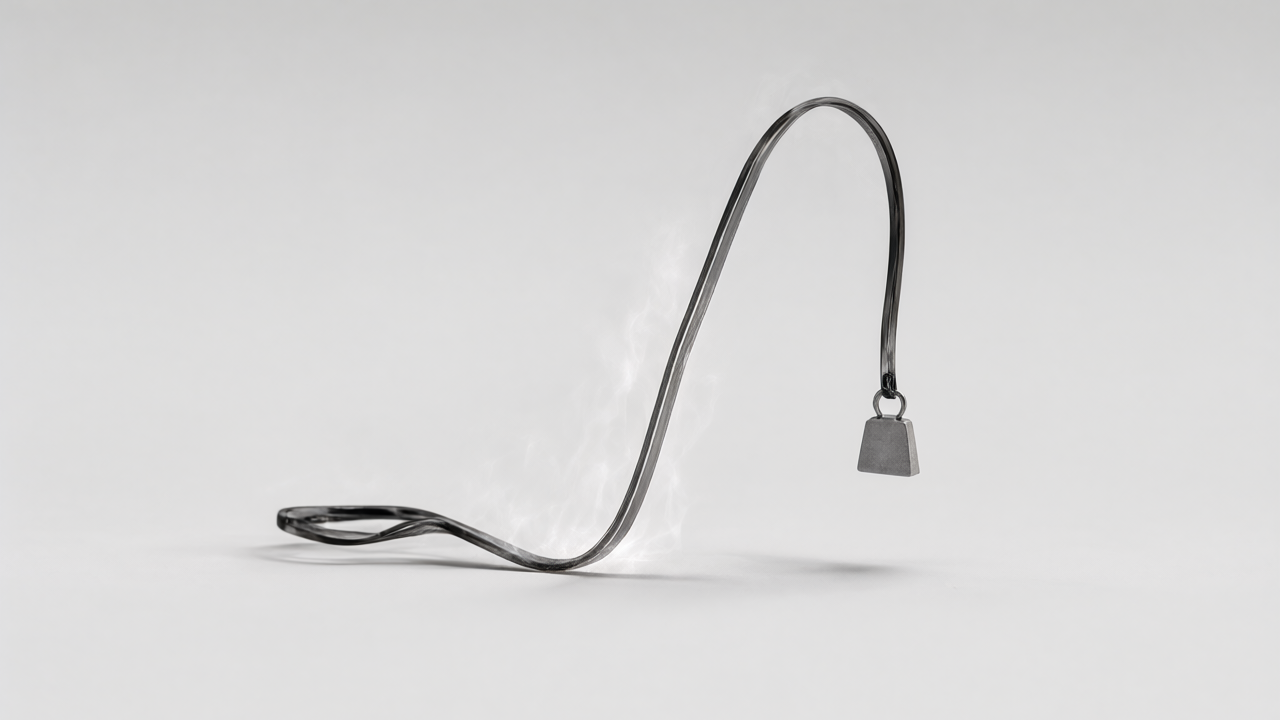
An international research collaboration, primarily involving Peking University, Jiangxi Normal University, University of Science and Technology Beijing, and the University of Bristol, has engineered a liquid crystal elastomer (LCE) actuator exhibiting an unprecedented combination of high mechanical toughness and low activation temperature. The actuator, strengthened with thiol-functionalized graphene oxide (FGO), achieves a remarkable fracture toughness of 76.5 MJ/m³ while operating effectively at approximately 40°C—near human body temperature. This achievement fundamentally overcomes a critical trade-off that has long constrained the design of advanced soft robotic materials.
Technical Details
- The developed LCE actuator incorporates thiol-functionalized graphene oxide (FGO) into its polymer matrix, significantly enhancing both its mechanical properties and thermal responsiveness.
- The addition of FGO boosts the material’s fracture toughness to 76.5 MJ/m³, a record figure for soft actuators, indicative of its exceptional resistance to crack propagation and deformation.
- Crucially, the actuator’s activation temperature is tuned to approximately 40°C, making it highly suitable for applications requiring direct interaction with biological systems and environments, such as medical devices and wearables.
- FGO acts as a robust reinforcing agent within the LCE network, effectively dissipating stress concentrations and hindering crack initiation and growth, thereby contributing to the material’s superior toughness.
- Beyond its mechanical robustness and thermal sensitivity, the material maintains rapid response rates and precise shape-shifting capabilities, essential characteristics for replicating complex biological movements in soft robotics.
Background & Context
Soft robotics holds immense promise for applications demanding safe interaction with humans and adaptable functionality in unstructured environments. However, a significant material science challenge has persisted: the difficulty of developing actuator materials that possess both high mechanical strength/toughness and the ability to operate efficiently at low, biologically relevant temperatures. This inherent trade-off has been a primary barrier to the widespread adoption of soft robots in fields such as healthcare, prosthetics, and biomimetic devices.
Graphene and its derivatives are highly regarded as reinforcing agents in advanced composites due to their extraordinary mechanical strength, electrical conductivity, and thermal properties. This research leverages the unique attributes of thiol-functionalized graphene oxide to optimize interfacial bonding within the LCE matrix, yielding a combination of properties previously unattainable in soft active materials.
Strategic Significance & Outlook
This groundbreaking achievement is poised to revolutionize the field of soft robotics, particularly in applications where direct human contact is essential. This includes surgical robots, prosthetic limbs, rehabilitation devices, smart wearables, and advanced biomimetic robots. An actuator with both high toughness and body-temperature operability enables the design and construction of safer, more reliable, and intricately functional next-generation soft robots. This material innovation sets a new benchmark for soft material design, promising to accelerate transformative innovations across a diverse array of application sectors, from advanced medical devices to intelligent human-robot interfaces.
Get our weekly technology intelligence — free
Receive an infographic that lets you judge at a glance whether each field’s analysis report is worth reading.
Subscribe Free — Weekly Tech Intelligence
By subscribing, you’ll receive Troy-Technical’s weekly technology intelligence newsletter.
- Your email and selected fields are used only to deliver the newsletter.
- We never share your information with third parties.
- You can unsubscribe anytime via the link in each email.
See our Privacy Policy for details.
Takes about a minute · Unsubscribe anytime