Key Findings
The Japanese vessel ‘Kiko Maru’ has successfully executed the world’s first demonstration voyage in Osaka Bay, operating its engine exclusively on pure hydrogen. This pioneering achievement definitively proves the technical feasibility of achieving zero-emission targets within the maritime industry and paves the way for the development of future green ships.
Technical / Clinical Details
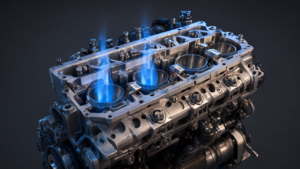
The engine installed on the ‘Kiko Maru’ was specifically designed and modified to run solely on liquid or compressed hydrogen, completely eliminating the use of conventional fuels. During the demonstration voyage, the engine’s power output, fuel efficiency, and emission characteristics were thoroughly evaluated, confirming that pure hydrogen fuel provides stable and reliable performance. Crucially, a significant reduction in greenhouse gas emissions and other air pollutants was demonstrated, promising substantial benefits for marine environmental protection. The tests gathered vital data concerning the integrated fuel supply system, safety management protocols, and engine control systems, which will form the foundation for future technological refinements and commercialization.
Background & Context
The International Maritime Organization (IMO) has set ambitious goals for significantly reducing greenhouse gas emissions by 2050, compelling the shipping industry to transition to alternative fuels. Hydrogen, as a clean fuel that emits no CO2 upon combustion, is garnering significant attention alongside ammonia and methanol. Japan has been at the forefront of establishing hydrogen fuel supply networks and developing hydrogen-related technologies; the ‘Kiko Maru’ demonstration voyage is a testament to these efforts. This success particularly brightens the prospects for early adoption of hydrogen-fueled vessels in specific operational contexts, such as island routes and domestic shipping.
Strategic Significance & Outlook
The success of the ‘Kiko Maru’ demonstrates that hydrogen fuel is a viable option for the international shipping industry’s decarbonization journey. Moving forward, accelerated research and development will focus on scaling this technology, addressing challenges related to safety, economic viability, and the necessary fuel supply infrastructure. The Japanese maritime industry is expected to leverage this achievement to advance the development and practical application of world-leading hydrogen-fueled ships, contributing to a sustainable future for shipping. International cooperation and policy support will be instrumental in further promoting the widespread adoption of this innovative technology.
Get our weekly technology intelligence — free
Receive an infographic that lets you judge at a glance whether each field’s analysis report is worth reading.
Subscribe Free — Weekly Tech Intelligence
By subscribing, you’ll receive Troy-Technical’s weekly technology intelligence newsletter.
- Your email and selected fields are used only to deliver the newsletter.
- We never share your information with third parties.
- You can unsubscribe anytime via the link in each email.
See our Privacy Policy for details.
Takes about a minute · Unsubscribe anytime