Key Findings
China achieved a significant breakthrough in on-orbit AI data processing and computing with the launch of its experimental satellite ‘PEGA-SUS1’ on September 20, 2026. This satellite successfully demonstrated integrated communication, sensing, computing, and intelligent processing capabilities, vastly enhancing ‘onboard analysis’ of remote sensing data. This allows the satellite to autonomously analyze data and extract critical information for transmission to Earth, rather than sending raw, unprocessed data.
Technical / Clinical Details
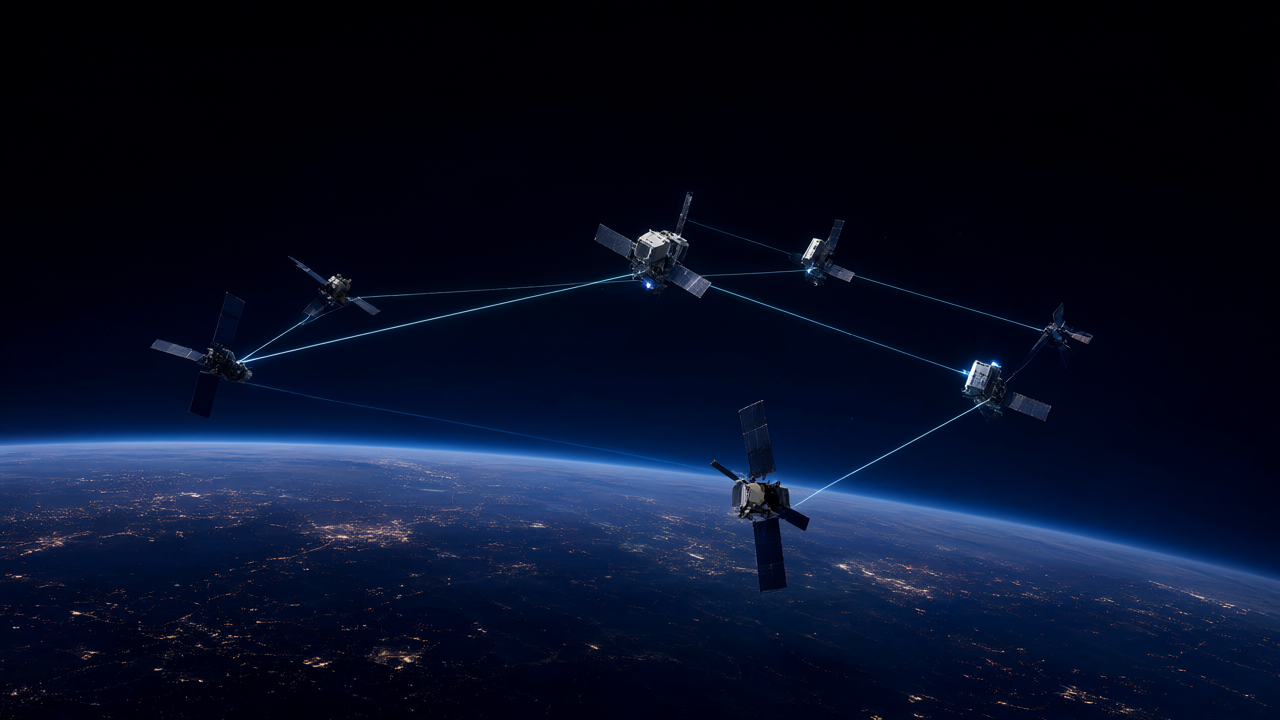
The primary function of PEGA-SUS1 is to autonomously analyze raw remote sensing imagery directly in orbit, performing intelligent processing tasks such as detecting forest fires and estimating their affected areas. This capability dramatically reduces the data transmission load to Earth and shortens the time from data acquisition to analysis and decision-making. Conventional satellite systems necessitate transmitting vast amounts of raw data to Earth for processing; PEGA-SUS1’s on-orbit execution drastically improves operational efficiency and responsiveness. Additionally, China’s ‘Tiansuan’ satellite constellation-based space computing cloud recently commenced regular on-orbit experimental services, showcasing the ability of multiple satellites to collaborate on large-scale computing tasks.
Background & Context
The demand for AI infrastructure is expanding beyond terrestrial data centers into space, particularly as the sheer volume of data from Earth observation satellites increasingly challenges traditional processing methods for real-time analysis. On-orbit computing is emerging as a promising solution to this ‘data flood,’ enabling satellites to autonomously process data and make critical information available more rapidly and efficiently. China is strategically integrating its space industry with AI technology, and the success of PEGA-SUS1 underscores the nation’s technological leadership in this domain.
Strategic Significance & Outlook
The launch and success of PEGA-SUS1 represent a pivotal milestone for the commercialization of on-orbit computing and space AI. This technology has the potential to support real-time decision-making across various sectors, including disaster monitoring, environmental surveillance, smart agriculture, and national defense. Furthermore, the development of space-based cloud computing infrastructures like the Tiansuan constellation could foster new business models, eventually offering AI services from space to users worldwide. China’s advancements in this area are expected to intensify global competition in space AI and data processing, significantly influencing international space development trends.
Source: https://global.chinadaily.com.cn/a/202610/02/WS6abf2044e4b06d4aa0561365.html
Get our weekly technology intelligence — free
Receive an infographic that lets you judge at a glance whether each field’s analysis report is worth reading.
Subscribe Free — Weekly Tech Intelligence
By subscribing, you’ll receive Troy-Technical’s weekly technology intelligence newsletter.
- Your email and selected fields are used only to deliver the newsletter.
- We never share your information with third parties.
- You can unsubscribe anytime via the link in each email.
See our Privacy Policy for details.
Takes about a minute · Unsubscribe anytime