Key Findings
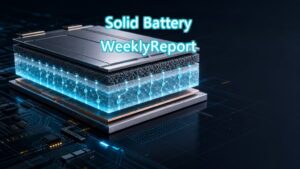
ProLogium, a Taiwanese battery manufacturer, has launched its fourth-generation (Gen4) solid-state battery, branded as ‘Superfluidized Inorganic Next-Generation Lithium Ceramic Battery,’ and solidified its strategic alliance with Mercedes-Benz, granting the automaker priority access to these advanced cells. The Gen4 battery incorporates a proprietary SF-Ceramion electrolyte, a 100% silicon anode, and a 100% ceramic separator, with a strong emphasis on manufacturability using existing ceramic production lines. Demonstrating its capabilities, ProLogium’s preceding Gen 3.5 Lithium Ceramic Battery cells achieved impressive performance metrics in third-party TÜV tests, reporting 381 Wh/kg gravimetric and 903 Wh/L volumetric energy density for a 185.4 Ah cell, marking a significant step towards high-performance, mass-producible solid-state solutions.
Technical / Clinical Details
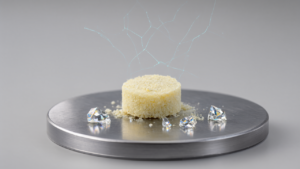
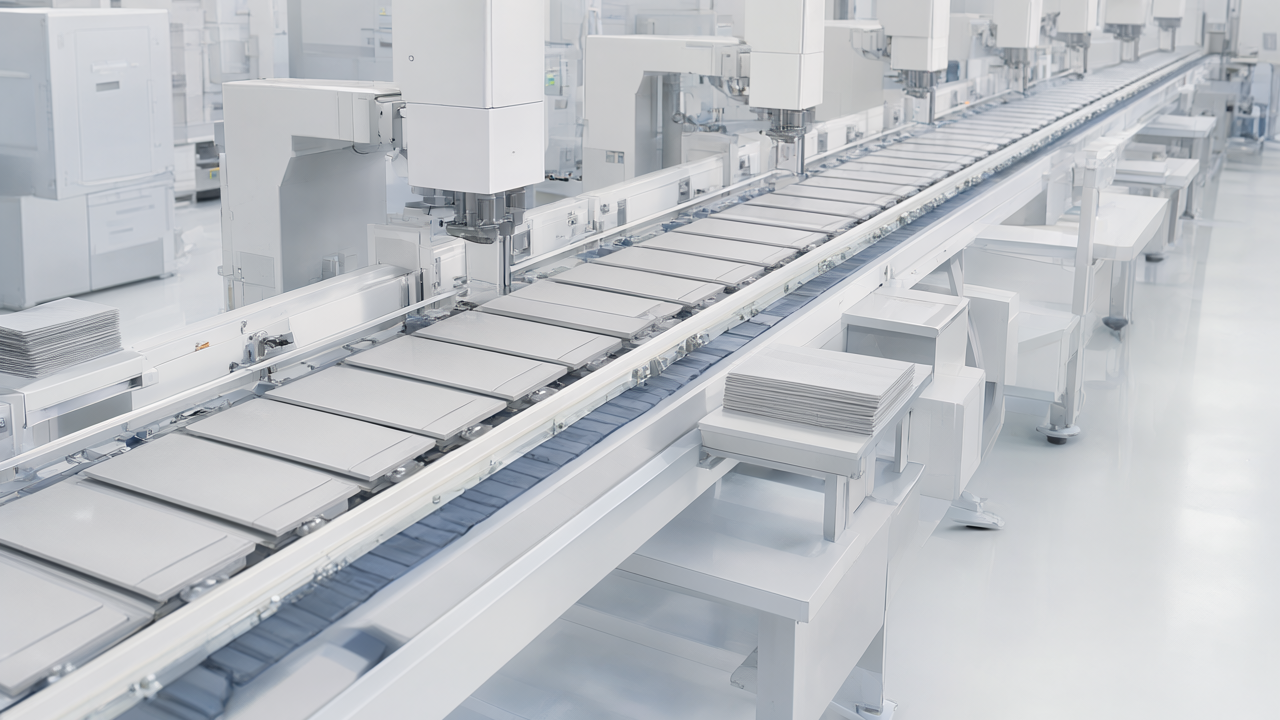
The core innovation in ProLogium’s Gen4 battery lies in its patented SF-Ceramion electrolyte, designed to provide high ionic conductivity and excellent stability. This technology directly addresses the persistent challenge of high interfacial resistance between solid electrolytes and electrodes, a common impediment in solid-state battery development. The utilization of a 100% silicon anode dramatically increases theoretical energy density compared to traditional graphite anodes, as silicon can store approximately ten times more lithium ions. Concurrently, the 100% ceramic separator enhances safety by providing superior thermal stability and mechanical strength, preventing dendrite formation and internal short circuits. A key strategic advantage is the battery’s compatibility with existing ceramic manufacturing infrastructure, which is crucial for cost-effective and scalable production. This integration of advanced materials and scalable manufacturing processes is what has enabled the mass production of Gen 3.5 cells at ProLogium’s Taiwan Giga-level facility and the verified high energy density figures.
Background & Context
The electric vehicle (EV) industry is intensely pursuing next-generation battery technologies to overcome the limitations of current lithium-ion batteries regarding range, charging speed, safety, and cost. Solid-state batteries are widely recognized as the most promising solution, offering the potential to deliver all these improvements simultaneously. Ceramic electrolytes, in particular, are favored for their inherent safety and robust mechanical properties, though challenges like brittleness and high interfacial resistance have historically limited their application. ProLogium has positioned itself as a leader in ceramic solid-state battery technology, and its deepening partnership with Mercedes-Benz signifies a critical validation of its technology’s readiness for demanding automotive applications. This collaboration not only accelerates the transition to advanced EVs but also represents a potential shift in the global battery supply chain dynamics.
Strategic Significance & Outlook
Mercedes-Benz gaining priority access to ProLogium’s Gen4 cells is a strategic move that could significantly accelerate the adoption of solid-state batteries in its future EV lineup. The focus for ProLogium now shifts to further enhancing Gen4 performance and establishing massive production capabilities beyond its current Giga-level facility. Success in scaling this technology would allow ProLogium to set a new industry standard for EV batteries, characterized by high energy density, superior safety, and efficient manufacturability. This innovation is not confined to passenger vehicles; it also holds immense promise for applications requiring high-performance power solutions, such as drones, electric aircraft, and large-scale energy storage systems. For investors and automotive manufacturers, the progression of ProLogium’s technology and its collaboration with Mercedes-Benz will serve as a crucial benchmark for evaluating the future trajectory of the EV market and advanced energy storage solutions.
Source: https://www.insidedeeptech.com/prologium-gen4-ceramic-electrolyte-cells-full-guide/
Get our weekly technology intelligence — free
Receive an infographic that lets you judge at a glance whether each field’s analysis report is worth reading.
Subscribe Free — Weekly Tech Intelligence
By subscribing, you’ll receive Troy-Technical’s weekly technology intelligence newsletter.
- Your email and selected fields are used only to deliver the newsletter.
- We never share your information with third parties.
- You can unsubscribe anytime via the link in each email.
See our Privacy Policy for details.
Takes about a minute · Unsubscribe anytime