Key Findings
A high-performance enzyme-free glucose sensor based on carbon nanotubes (CNTs) and cobalt oxide (Co3O4) nanocomposites has been developed. This innovative sensor achieves groundbreaking results by detecting glucose in sweat with exceptionally high sensitivity, while also offering improved stability and cost-effectiveness due to the absence of enzymes.
Technical / Clinical Details
This new sensor maximizes its electrochemical active surface area and enhances reactivity with glucose molecules by compositing multi-walled carbon nanotubes (MWCNTs) with cobalt oxide nanoparticles. The enzyme-free nature eliminates challenges associated with enzyme stability and storage, allowing for a more robust and practical device design. In terms of detection performance, the sensor achieves a remarkably high sensitivity of 18.47 mA/mM/cm² and a glucose detection limit of 0.1 mM. This accuracy is sufficient to cover physiologically relevant glucose concentration ranges. More importantly, the sensor demonstrates excellent long-term stability, maintaining over 96% of its detection performance 30 days after fabrication. This stability is a crucial factor for continuous wearable monitoring devices.
Background & Context
Continuous glucose monitoring is indispensable for diabetes management, but conventional enzyme-based glucose sensors have faced challenges such as enzyme instability, dependence on specific pH and temperature conditions, and manufacturing costs. Research into enzyme-free glucose sensors has thus gained significant attention as a key approach to overcome these issues. Non-invasive monitoring via sweat is a major target for wearable healthcare devices due to its potential to significantly reduce patient burden. The sensor utilizing carbon nanotube and cobalt oxide nanocomposites represents a substantial advancement in both performance and stability within the field of enzyme-free glucose sensors.
Strategic Significance & Outlook
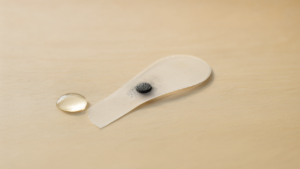
This highly sensitive and stable enzyme-free glucose sensor holds immense potential as a next-generation technology for wearable glucose monitoring devices. In the future, integrating this technology into smartwatches, dermal patches, or other smart wearables is expected to enable diabetes patients to accurately and non-invasively monitor their glucose levels on a daily basis. This will enhance patients’ quality of life and facilitate more proactive self-management. Furthermore, the potential for simplified manufacturing processes and cost reduction will drive the widespread adoption of this technology. Further research aims at improving selectivity and integrating multi-sensing capabilities with other biomarkers, marking a crucial step towards the realization of personalized healthcare.
Get our weekly technology intelligence — free
Receive an infographic that lets you judge at a glance whether each field’s analysis report is worth reading.
Subscribe Free — Weekly Tech Intelligence
By subscribing, you’ll receive Troy-Technical’s weekly technology intelligence newsletter.
- Your email and selected fields are used only to deliver the newsletter.
- We never share your information with third parties.
- You can unsubscribe anytime via the link in each email.
See our Privacy Policy for details.
Takes about a minute · Unsubscribe anytime