Key Findings
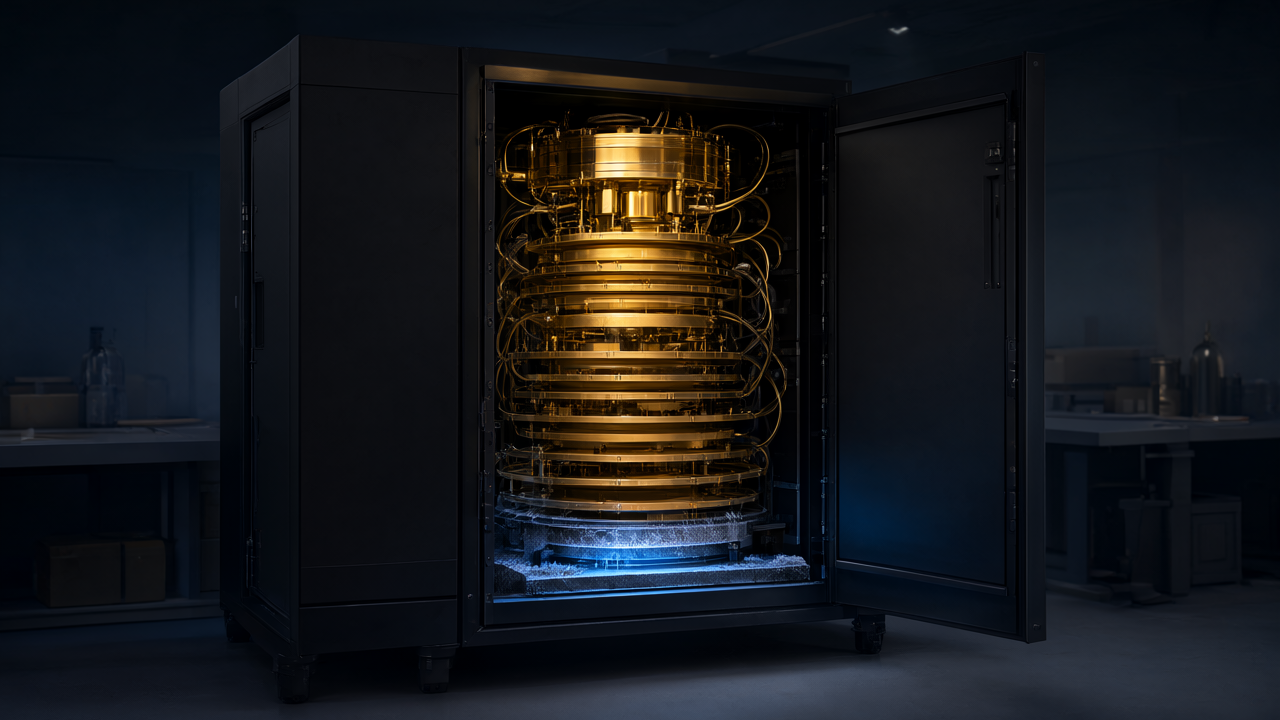
D-Wave has introduced a groundbreaking technology called ‘Quantum Error Awareness’ for its quantum annealing machines. This innovation integrates a dual-rail architecture with real-time quantum-classical control, enabling precise localization and efficient mitigation of errors as they occur. The company anticipates that this approach will reduce the physical qubit resources needed for fault-tolerant quantum computing by up to a factor of 10 compared to conventional error correction methods.
Technical / Clinical Details
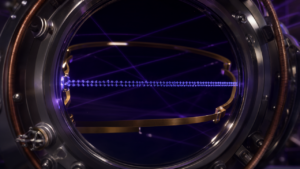
Quantum Error Awareness employs a dual-rail architecture where each qubit’s information is redundantly encoded across two physical qubits. This redundancy allows for error detection and correction even if an error affects one of the physical qubits. Crucially, D-Wave’s expertise in real-time quantum-classical control is leveraged to identify and rectify localized errors swiftly before they propagate across the system. The company projects that this methodology can achieve a remarkably low logical error rate of 10^-6 by allocating just 100-200 physical qubits per logical qubit. This represents a significant improvement in resource efficiency over other quantum error correction schemes that typically demand thousands of physical qubits per logical qubit, such as surface codes in gate-model architectures.
Background & Context
One of the most formidable challenges in quantum computing is mitigating errors induced by environmental noise and decoherence. Traditional Quantum Error Correction (QEC) schemes often require an enormous number of physical qubits, rendering the construction of practical fault-tolerant quantum computers exceedingly complex and resource-intensive. D-Wave’s Quantum Error Awareness offers a distinct path by substantially improving the resource efficiency of QEC within its quantum annealing paradigm. This approach diverges from the error correction strategies pursued by gate-model quantum computer developers like IBM and Google, providing a specialized solution tailored to the strengths of quantum annealing for optimization and sampling problems.
Strategic Significance & Outlook
This new technology from D-Wave has the potential to dramatically accelerate the realization of fault-tolerant quantum computing. By significantly lowering the physical qubit overhead, it makes large-scale, reliable quantum computations more feasible with less hardware, thereby expanding the complexity and scope of problems that quantum annealing can address. This will make quantum computing applications more realistic across diverse industrial sectors, including logistics, materials science, and financial modeling. D-Wave intends to further develop and position this technology as a core component of its next-generation quantum annealing machines, potentially offering a competitive edge in the rapidly evolving quantum hardware landscape, particularly in areas where annealing solutions demonstrate clear advantages over gate-model counterparts.
Get our weekly technology intelligence — free
Receive an infographic that lets you judge at a glance whether each field’s analysis report is worth reading.
Subscribe Free — Weekly Tech Intelligence
By subscribing, you’ll receive Troy-Technical’s weekly technology intelligence newsletter.
- Your email and selected fields are used only to deliver the newsletter.
- We never share your information with third parties.
- You can unsubscribe anytime via the link in each email.
See our Privacy Policy for details.
Takes about a minute · Unsubscribe anytime