Key Findings
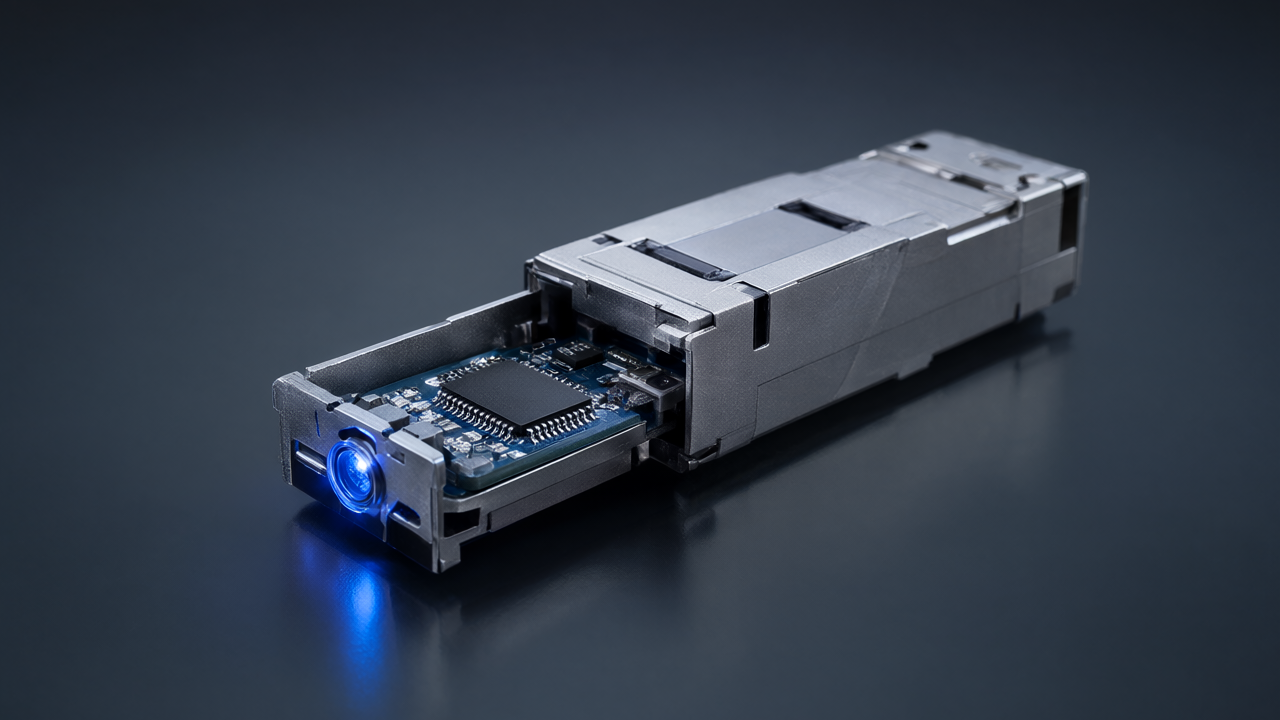
Texas Instruments (TI) asserts that optical communication is the definitive driver for the future of data center networking and is significantly accelerating its investments in this sector. Optical transceiver technology has undergone remarkable evolution, with current market designs already achieving a fourfold increase in speed, progressing from 400 gigabits per second (G) to 1.6 terabits per second (T). TI further anticipates the realization of 12.8T (12.8 trillion bits per second) data transfer capabilities for optical transceivers, a crucial step to meet the explosive demand from data-intensive applications like AI and machine learning.
Technical / Clinical Details
Current data center infrastructure faces inherent bottlenecks with electrical signal transmission, encountering limitations in power consumption, latency, and transmission distance. Optical transceivers overcome these challenges by converting electrical signals into optical signals for transmission over fiber optic cables. The advent of 1.6T transceivers delivers unprecedented bandwidth and efficiency for interconnects between servers, switches, and storage within data centers. This capability will enable faster AI model training times and enhance real-time analytics.
The core of this technology lies in the fusion of high-precision analog circuits, digital signal processing (DSP), and advanced integrated photonics. TI leverages its particular strengths in analog front-end (AFE) and DSP technologies to contribute significantly to the performance enhancement of optical transceivers. Future advancements in Co-Packaged Optics (CPO) and silicon photonics technologies are expected to further accelerate the development of ultra-high-speed transceivers like 12.8T.
Background & Context
The proliferation of cloud computing, AI, and big data has dramatically increased the demands on data centers. Global data center power consumption is a significant concern, making improvements in energy efficiency a pressing priority. Optical communication is positioned as a promising solution to this challenge, capable of transmitting large volumes of data with significantly lower power consumption compared to electrical communication. Hyperscale data center operators such as Google, Meta, and Microsoft are actively making substantial investments in optical communication technologies.
Strategic Significance & Outlook
TI’s roadmap indicates a decisive shift in data center networking towards optical-based architectures. The realization of 12.8T capabilities will vastly exceed current data center capacities, laying the groundwork for next-generation AI factories and edge computing environments. This will enable a dramatic increase in processing power while reducing the physical footprint of data centers, contributing to the construction of sustainable and scalable digital infrastructure. This technological evolution is poised to create new business opportunities and competitive advantages for telecommunication providers, cloud service providers, and AI developers alike, marking a new era of data connectivity.
Get our weekly technology intelligence — free
Receive an infographic that lets you judge at a glance whether each field’s analysis report is worth reading.
Subscribe Free — Weekly Tech Intelligence
By subscribing, you’ll receive Troy-Technical’s weekly technology intelligence newsletter.
- Your email and selected fields are used only to deliver the newsletter.
- We never share your information with third parties.
- You can unsubscribe anytime via the link in each email.
See our Privacy Policy for details.
Takes about a minute · Unsubscribe anytime