Key Findings
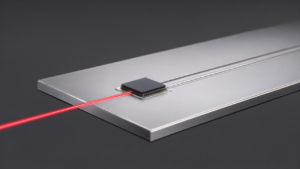
Significant strides have been made in thin-film lithium niobate (TFLN) technology, with HyperLight announcing a collaboration with UMC and Wavetek to boost volume production of its TFLN modulators. Simultaneously, a research team from Huazhong University of Science and Technology has achieved a new record for covering a broad spectrum with a single TFLN modulator. These developments underscore TFLN’s physical advantages, particularly in bandwidth, temperature independence, and low power consumption for pluggable optical components.
Technical Details
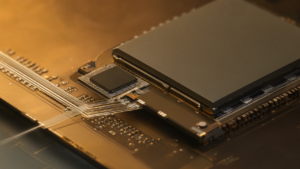
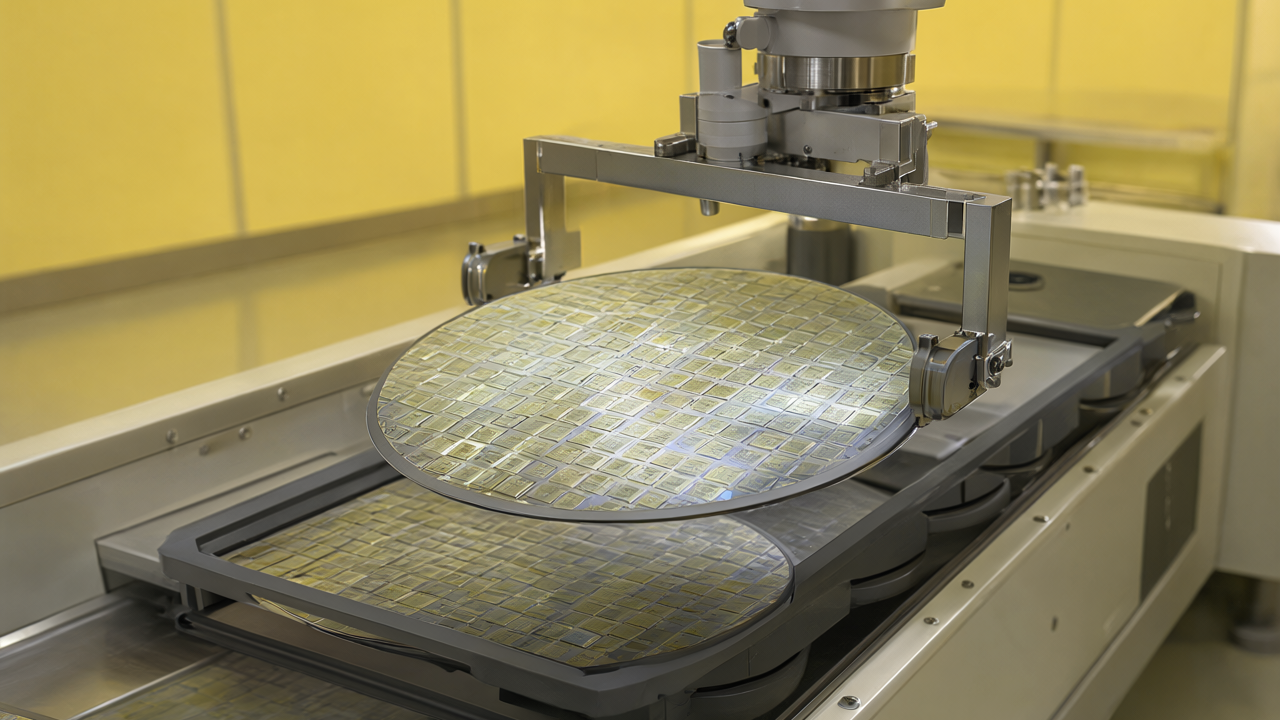
The partnership between HyperLight, UMC, and Wavetek aims to enhance TFLN’s industrial manufacturing capabilities, which is crucial for delivering high-performance and cost-effective optical modules demanded by data centers and communication networks. The Huazhong University research, on the other hand, demonstrates that a single TFLN modulator can achieve broadband signal modulation previously deemed impossible, potentially revolutionizing the capacity and flexibility of optical communication systems. TFLN, compared to conventional silicon photonics and bulk lithium niobate, exhibits superior electro-optic coefficients and low-loss characteristics, positioning it as a critical material for next-generation co-packaged optics (CPO) and near-packaged optics (NPO).
Background & Context
With the explosive growth of AI and high-speed data traffic, data center interconnects face increasing challenges in power consumption and thermal management. TFLN, due to its exceptional physical properties, has emerged as a promising material to address these issues. In pluggable optical modules, low power consumption and high thermal stability directly translate to reduced operational costs and improved reliability. However, despite these technical advancements, the author, Goyal, cautions that industrial-scale volume production still confronts “three walls”: material cost, manufacturing process complexity, and supply chain establishment.
Strategic Significance & Outlook
TFLN technology’s performance potential is widely recognized, and it is expected to become an indispensable component for next-generation optical communication systems and co-packaged optics in AI accelerators. If the challenges of volume production can be overcome, TFLN will dramatically improve optical interconnect performance, serving as a core technology to support the further evolution of data-driven societies.
Source: https://www.simpletechtrend.com/en/post/tfln-optical-cpo-opportunity-walls-2026-en
Get our weekly technology intelligence — free
Receive an infographic that lets you judge at a glance whether each field’s analysis report is worth reading.
Subscribe Free — Weekly Tech Intelligence
By subscribing, you’ll receive Troy-Technical’s weekly technology intelligence newsletter.
- Your email and selected fields are used only to deliver the newsletter.
- We never share your information with third parties.
- You can unsubscribe anytime via the link in each email.
See our Privacy Policy for details.
Takes about a minute · Unsubscribe anytime