

Key Findings
Catalytic pyrolysis of automotive plastic waste significantly outperforms thermal pyrolysis in terms of liquid yield. While thermal pyrolysis alone produced an average oil yield of 41%, the use of a modified clay catalyst increased the average yield to approximately 68%. The peak oil yield of 78.6% was achieved at a temperature of approximately 416°C with a catalyst loading of about 24% by weight.
Technical Details
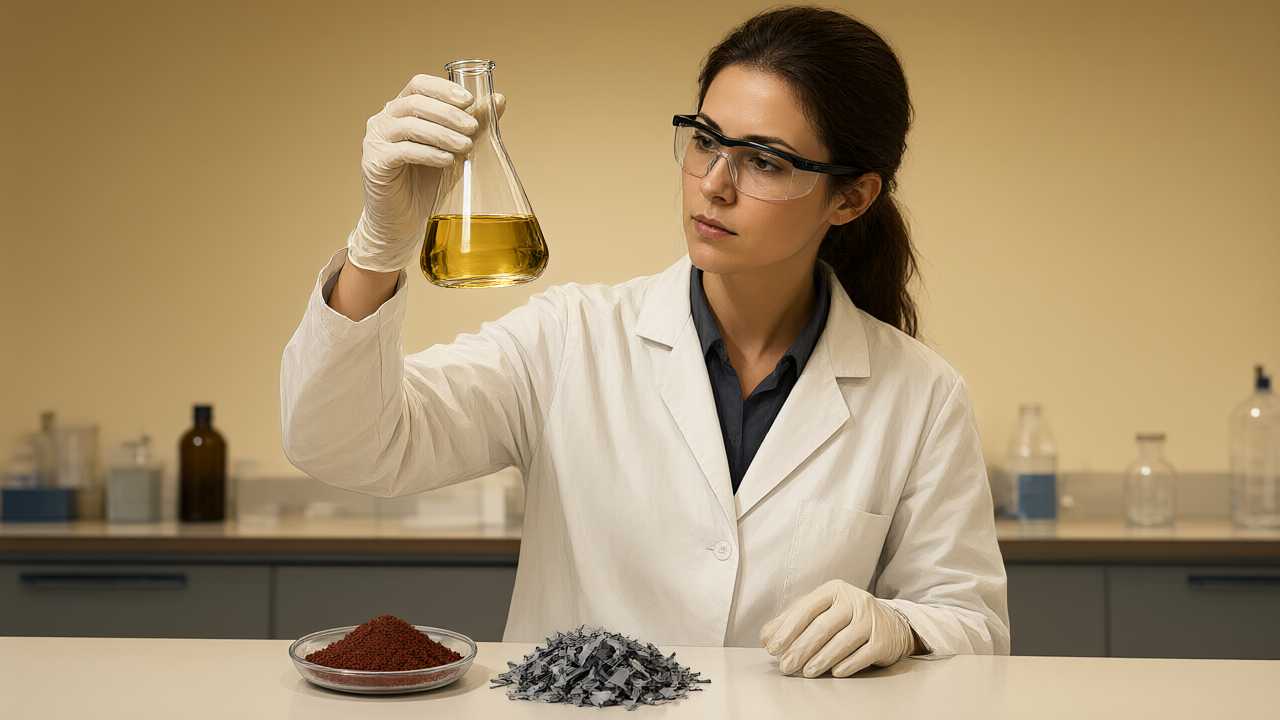
The study utilized feedstock recovered directly from end-of-life vehicle components—primarily front and rear bumpers, which accounted for 86.6% of the sample weight. The material composition included acrylonitrile butadiene styrene (ABS), high- and low-density polyethylene (HDPE and LDPE), polypropylene (PP), polystyrene (PS), and fiberglass. To optimize the process, researchers used bentonite clay modified through iron pillaring to alter surface acidity and pore structure.
Experimental parameters ranged from temperatures of 350°C to 521°C and catalyst loadings of 6% to 34% by weight. The findings indicate that while the catalyst increased the volume of liquid produced, temperature was the primary driver of product composition. Temperatures above 450°C resulted in heavier, waxier oil, whereas lower temperatures favored diesel-range organics.
Fuel Properties and Specifications
The produced oil demonstrated several properties comparable to commercial diesel, including a flash point of 113°C, total aromatics of 3.55% by area, and a calorific value of 49.85 MJ/kg. The oil was dominated by branched heptenes and heptanes. However, density and viscosity exceeded standard diesel specifications due to the presence of long-chain hydrocarbon fractions.
Significance and Outlook
Pyrolysis offers a promising route for the circular use of automotive plastics, moving beyond the study of heterogeneous automotive shredder residue to direct component recovery. To meet commercial diesel specifications, the researchers suggest further processing via distillation and centrifugation, or optimizing reaction conditions through longer residence times and lower temperatures to reduce heavier fractions.
Get our weekly technology intelligence — free
Receive an infographic that lets you judge at a glance whether each field’s analysis report is worth reading.
Subscribe Free — Weekly Tech Intelligence
By subscribing, you’ll receive Troy-Technical’s weekly technology intelligence newsletter.
- Your email and selected fields are used only to deliver the newsletter.
- We never share your information with third parties.
- You can unsubscribe anytime via the link in each email.
See our Privacy Policy for details.
Takes about a minute · Unsubscribe anytime