


Key Findings
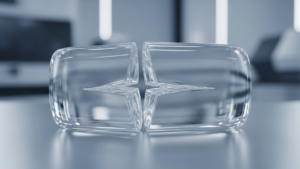
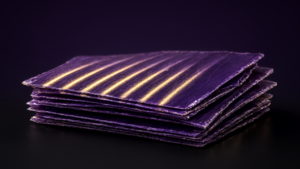
BioPykrete is a high-performance composite that achieves strength levels approaching those of concrete. According to a study published in Colloids and Surfaces B: Biointerfaces, the material is 10 times stronger than standard ice and demonstrates a significantly higher capacity for energy absorption, absorbing 70 times more energy before failure. Unlike regular ice, which shatters suddenly, BioPykrete deforms gradually.
Technical Details
The material is engineered at the molecular level to control the connection between its components. The researchers utilized cellulose nanocrystals—the primary structural material in plants—which act as microscopic strengthening agents to prevent the spread of cracks. To bond these nanocrystals to the ice, the team employed a specific protein called CBM3a-AFPIII. This protein is a combination of an antifreeze protein (AFP) and a carbohydrate-binding module (CBM), functioning as a molecular glue to maintain the structural integrity of the composite.
Background & Context
The development is an evolution of Pykrete, a material used in British Royal Navy experiments during the Second World War. While the original Pykrete used wood pulp to create reinforced ice for a proposed aircraft carrier, BioPykrete replaces large, disordered fibers with refined nanocrystals and recombinant protein design to optimize the material’s properties.
Significance & Outlook
BioPykrete is intended for use in remote, cold environments such as the Arctic and Antarctic, where conventional steel and concrete construction is difficult. Because it relies on ice and plant-based cellulose, it offers a low carbon footprint and is biodegradable, addressing the environmental impact of the global construction industry. While current results are based on small-scale proof-of-concept tests, future research will focus on long-term durability, crack propagation mechanisms, and the optimization of freezing protocols and AFP-CBM variants to further increase strength. This approach may eventually extend to applications in packaging and other structural engineering fields.
Get our weekly technology intelligence — free
Receive an infographic that lets you judge at a glance whether each field’s analysis report is worth reading.
Subscribe Free — Weekly Tech Intelligence
By subscribing, you’ll receive Troy-Technical’s weekly technology intelligence newsletter.
- Your email and selected fields are used only to deliver the newsletter.
- We never share your information with third parties.
- You can unsubscribe anytime via the link in each email.
See our Privacy Policy for details.
Takes about a minute · Unsubscribe anytime