
Key Findings
AI-driven adaptive control is significantly improving bioreactor performance by addressing the gap between static process parameters and real-time cellular needs. Cellcraft reported that its AI-powered operating system, Cellcraft IQ, achieved a 90% reduction in overshoot, a 45% reduction in settling time, and a reduction in steady-state error of more than 99% compared to conventional control methods. In separate continuous fermentation trials, Pow.Bio and Bühler reported protein output three times higher than equivalent fed-batch processes, with a projected reduction in cost of goods sold exceeding 50%.
Technical Details
Current advancements focus on integrating multi-sensor data to eliminate “black box” operations:
- Adaptive Control: Cellcraft IQ utilizes real-time measurements of pH, dissolved oxygen, temperature, agitation, and gas flow to adjust processes dynamically. It includes an advisory mode allowing operators to approve software-recommended changes.
- Advanced Monitoring: The University of Nottingham is developing BioSee AI, a platform combining machine learning with ultrasonic and optical measurements to detect cell aggregation, contamination, and process drift.
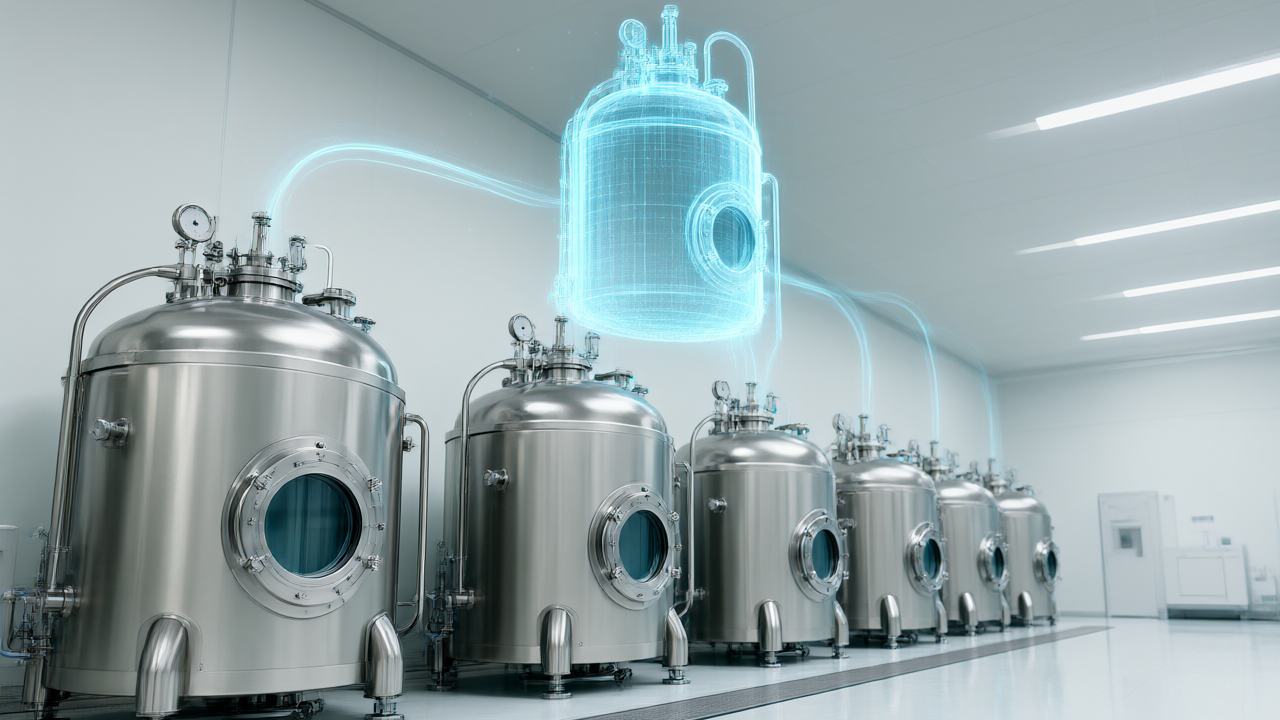
- Digital Twins: Pow.Bio utilizes a digital twin to account for site-specific differences in oxygen transfer and evaporation, allowing the AI layer to apply real-time feed strategies and operational adjustments.
Background & Context
Traditional control systems often treat sensor signals in isolation to maintain setpoints, which can lead to batch failure as cells shift metabolic activity during a run or when scaling from laboratory to industrial production. Process Analytical Technology (PAT) is being employed to provide deeper visibility into the vessel, as biological failures can occur even when pH and temperature remain within specified ranges.
Significance & Outlook
The shift toward autonomous and continuous biomanufacturing allows for higher equipment utilization without significant CapEx increases. Pow.Bio estimates that at least 70% of existing fermentation infrastructure could be reused. Further industry collaboration is evident in the Dutch ECOFERM consortium, which is investigating continuous precision fermentation with in-situ biomass retention.
Source: https://www.proteinproductiontechnology.com/post/who-controls-the-bioreactor
Get our weekly technology intelligence — free
Receive an infographic that lets you judge at a glance whether each field’s analysis report is worth reading.
Subscribe Free — Weekly Tech Intelligence
By subscribing, you’ll receive Troy-Technical’s weekly technology intelligence newsletter.
- Your email and selected fields are used only to deliver the newsletter.
- We never share your information with third parties.
- You can unsubscribe anytime via the link in each email.
See our Privacy Policy for details.
Takes about a minute · Unsubscribe anytime