

Key Findings
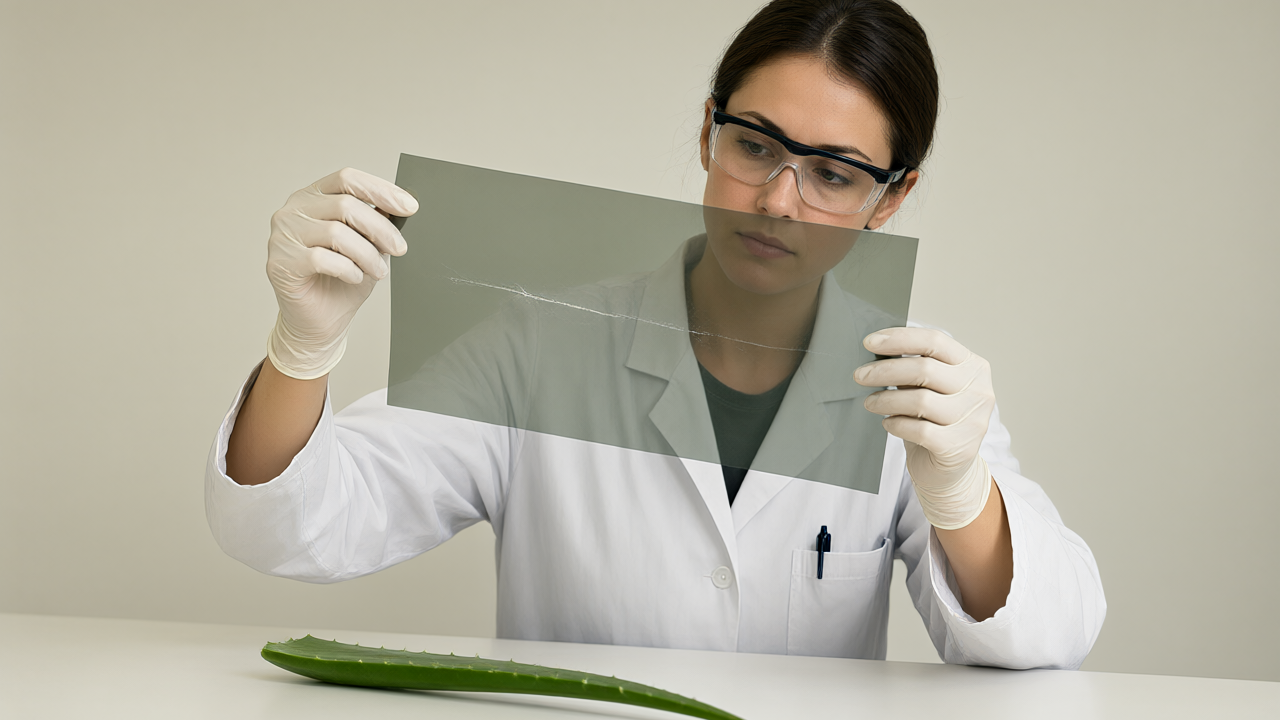
The study identifies a critical trade-off between material rigidity and self-healing efficiency. The PAGGN formulation, containing 0.012 grams of graphene oxide, 0.012 grams of graphene nanoplatelets, and 2 weight percent aloe vera powder, achieved a near-complete recovery of 99.5% of its original properties. In contrast, the PAG1 formulation (0.012 grams of graphene oxide and 3 weight percent aloe vera) exhibited the highest hardness at 502.71 megapascals and an elastic modulus of 3.76 gigapascals, but its self-healing capacity dropped to 51.00%.
Technical Details
The research utilized a Taguchi-based multi-response optimization and the TOPSIS decision-making method to determine optimal mixtures. Mechanical performance varied significantly across the three primary formulations:
- PAGGN: Hardness of 238.38 megapascals; elastic modulus of 2.54 gigapascals.
- PAGN2: (0.024 grams graphene nanoplatelets, 2 weight percent aloe vera) Hardness of 209.00 megapascals; elastic modulus of 2.41 gigapascals; 89.02% healing.
- PAG1: Hardness and elastic modulus were approximately 22-fold and 19-fold higher, respectively, than a reference film containing only aloe vera in PVA.
The self-repair mechanism is driven by hydrogen bonding between the hydroxyl groups of PVA and the oxygen-containing functional groups in graphene oxide and aloe vera polysaccharides, such as acemannan. These dynamic bonds act as sacrificial crosslinks that re-form across damaged interfaces without external catalysts or heat.
Background & Context
While PVA is valued for biocompatibility and film-forming ability, it is typically soft and sensitive to humidity. Graphene derivatives increase stiffness but often reduce flexibility. The addition of aloe vera powder acts as a molecular bridge, allowing lower loadings of carbon nanomaterials to provide significant gains in strength and repairability.
Significance & Outlook
By elevating aloe vera from a passive filler to an active chemical participant, the study demonstrates a sustainable approach to high-performance composites. The findings are applicable to both dry films for flexible electronics and hydrogels for drug delivery and wound care.
Get our weekly technology intelligence — free
Receive an infographic that lets you judge at a glance whether each field’s analysis report is worth reading.
Subscribe Free — Weekly Tech Intelligence
By subscribing, you’ll receive Troy-Technical’s weekly technology intelligence newsletter.
- Your email and selected fields are used only to deliver the newsletter.
- We never share your information with third parties.
- You can unsubscribe anytime via the link in each email.
See our Privacy Policy for details.
Takes about a minute · Unsubscribe anytime