


Key Findings
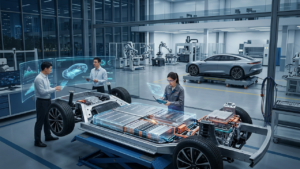
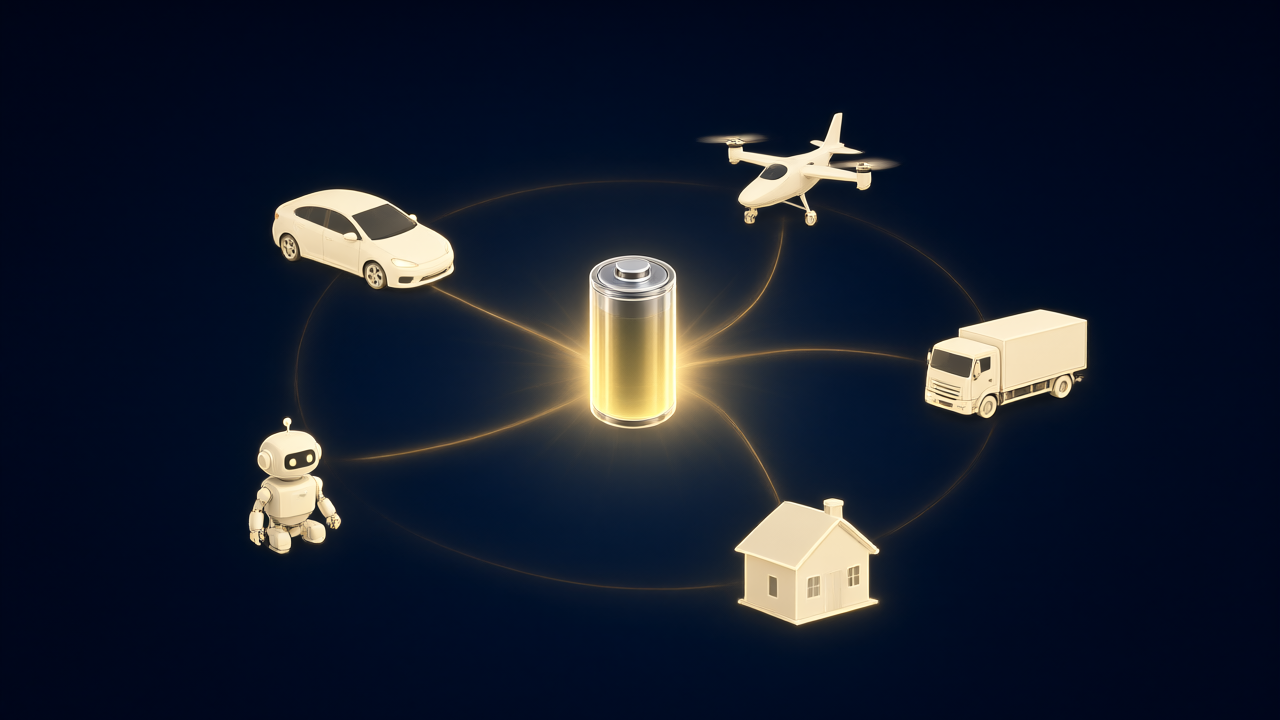
Toyota is scaling its “Arene” software platform to cover 50 vehicle models and approximately 10 million units by 2030. By 2035, the company intends to deploy this platform beyond its own fleet to include vehicles from partner companies. Simultaneously, Toyota is targeting 2027–2028 for the practical application of all-solid-state batteries, focusing on high-output electric vehicles (EVs), electric vertical take-off and landing (eVTOL) aircraft, and large commercial vehicles.
Technical Details: Arene Platform
Arene serves as a software foundation comprising a vehicle OS, data collection infrastructure, and development/evaluation tools. In the RAV4, the platform has already reduced the evaluation period for advanced driver assistance systems (ADAS) by 70%. Toyota will sequentially deploy Arene across all models, including the Lexus ES sedan. Beyond automotive use, Arene will function as a data foundation for AI robots and housing, evolving into an “integrated AI platform” that enables data linkage across different industries.
Technical Details: Battery Technology
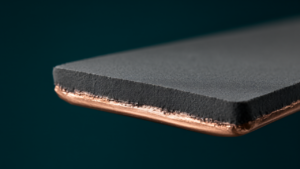
Toyota has addressed the challenges of all-solid-state batteries—which use solid electrolytes instead of liquids—by utilizing unique material development and structural design to suppress expansion and contraction during charging and discharging. This technology aims to achieve higher energy density per volume, resulting in smaller footprints, shorter charging times, extended cruising ranges, and higher output.
Additionally, Toyota is developing a high-performance version of the prismatic liquid lithium-ion battery (LiB). By optimizing wiring, the company reduced cell height by 20% and improved installation efficiency by 20% compared to current products. This allows for lower vehicle floors and innovative designs by challenging the convention that EVs must have high vehicle heights.
Significance and Outlook
Through the integration of the Arene platform and next-generation battery chemistry, Toyota aims to enhance its competitiveness in electrification and intelligence. The transition to a cross-industry data platform and the deployment of high-density batteries represent a strategic shift toward software-defined vehicles and diversified electric mobility.
Source: https://newswitch.jp/p/50559
Get our weekly technology intelligence — free
Receive an infographic that lets you judge at a glance whether each field’s analysis report is worth reading.
Subscribe Free — Weekly Tech Intelligence
By subscribing, you’ll receive Troy-Technical’s weekly technology intelligence newsletter.
- Your email and selected fields are used only to deliver the newsletter.
- We never share your information with third parties.
- You can unsubscribe anytime via the link in each email.
See our Privacy Policy for details.
Takes about a minute · Unsubscribe anytime