


Key Findings
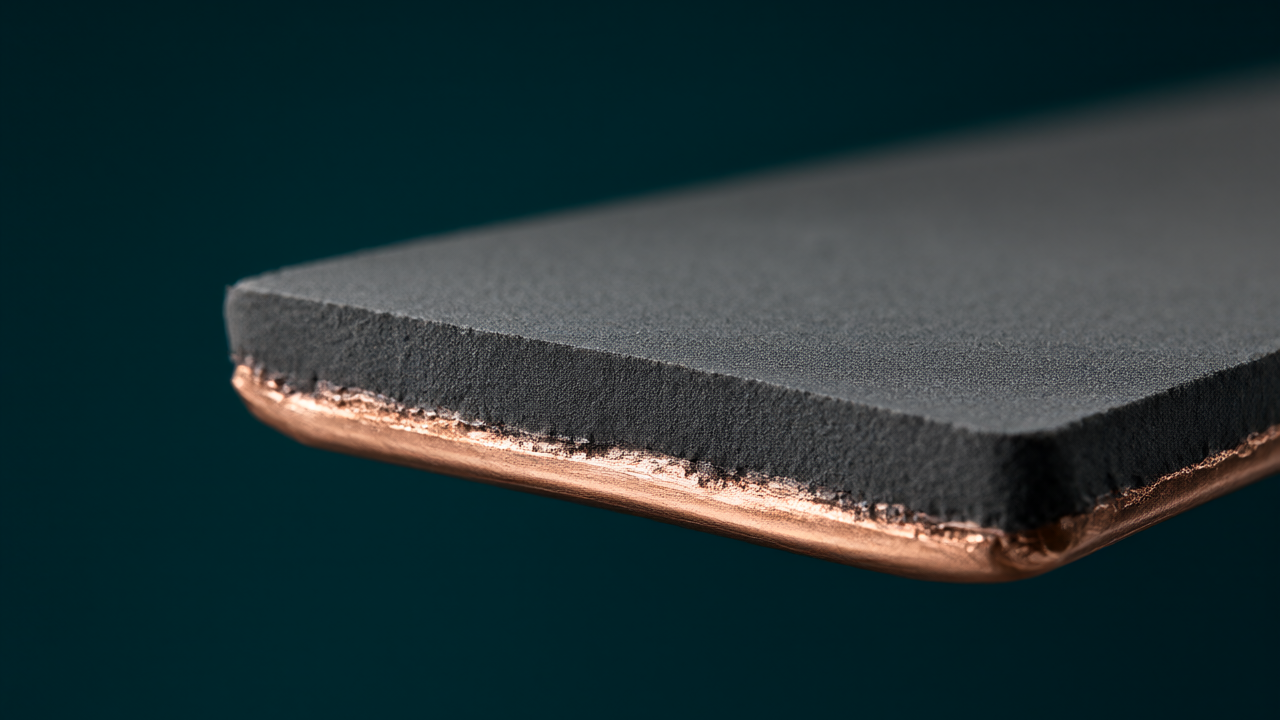
A research team at Gachon University proposes a co-design strategy that integrates silicon materials, electrode architecture, interfacial chemistry, and processing technology. The team asserts that optimizing active materials alone is insufficient; instead, every component—including binders and electrolyte additives—must be treated as an active design parameter to move silicon anodes from the laboratory to factory production.
Technical Details
The co-design approach addresses several critical engineering challenges:
- Structural Stability: To manage the 300 percent volume swelling of silicon, the Gachon team developed graphene nanoribbon-based conductive networks and 2D structured graphite frameworks to maintain inter-particle connectivity.
- Active Components: The team proposes multifunctional network binders with crosslinked frameworks to prevent electrode cracking. Additionally, polyanion-assisted ionic-electronic conductive agents are used to preserve electrical pathways and facilitate electrolyte penetration.
- Processing and Chemistry: Dry electrode processing is highlighted as a way to mitigate solvent-induced binder migration common in wet-based processing. To stabilize these matrices, chemical modifiers like carboxy silanes are used to ensure stable operation at high areal capacities of 3.5 milliampere-hours per square centimeter.
Background & Context
Silicon is a highly desirable anode material due to its theoretical capacity of over 3,600 milliampere-hours per gram, nearly ten times that of graphite, which stores 372 milliampere-hours per gram. However, silicon’s mechanical “breathing” pulverizes particles and ruptures the solid electrolyte interphase, leading to rapid capacity decay. While nanostructuring and graphene coatings have shown laboratory success, many of these methods rely on low areal loadings below 1 milliampere-hour per square centimeter and flooded electrolyte conditions, creating a gap in industrial feasibility.
Significance & Outlook
By bridging material innovation with scalable electrode engineering, this co-design philosophy aims to resolve the discrepancy between lab performance and factory constraints. This integrated approach is particularly critical for all-solid-state batteries, where reinforced crosslinked binders can alleviate contact-loss issues at solid-solid interfaces.
Get our weekly technology intelligence — free
Receive an infographic that lets you judge at a glance whether each field’s analysis report is worth reading.
Subscribe Free — Weekly Tech Intelligence
By subscribing, you’ll receive Troy-Technical’s weekly technology intelligence newsletter.
- Your email and selected fields are used only to deliver the newsletter.
- We never share your information with third parties.
- You can unsubscribe anytime via the link in each email.
See our Privacy Policy for details.
Takes about a minute · Unsubscribe anytime