Key Findings
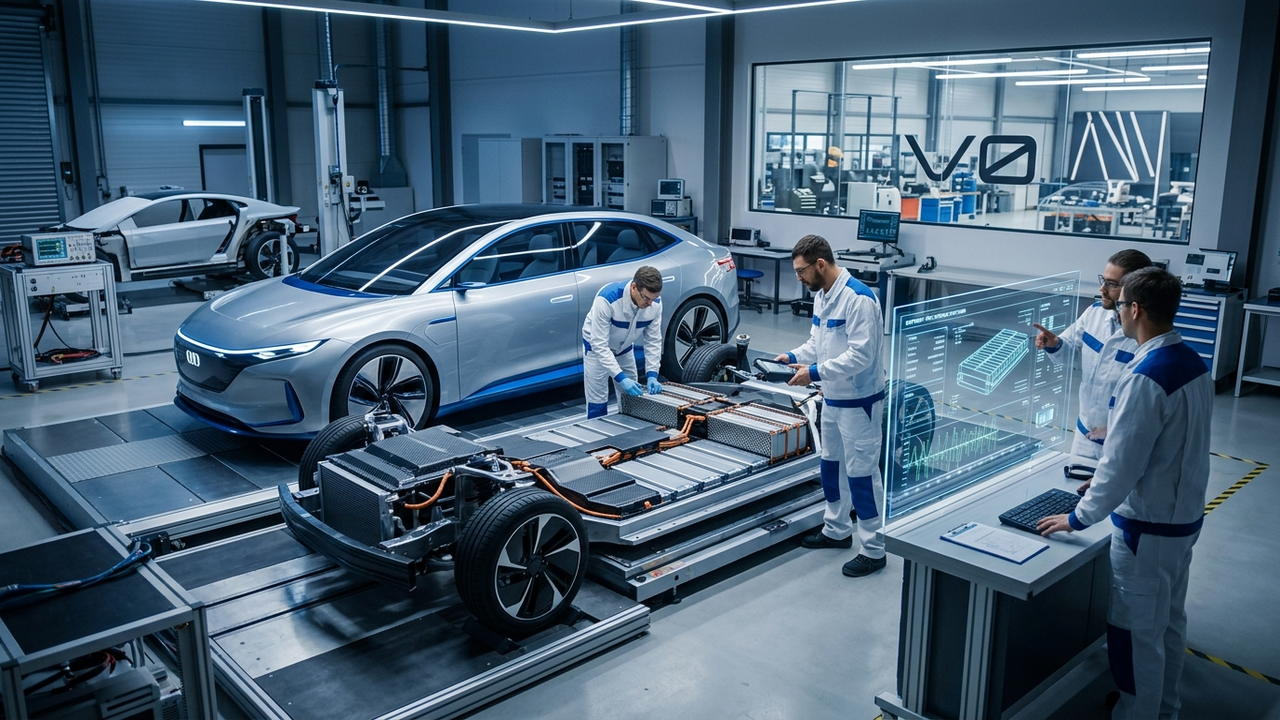
Chinese automotive giant Geely Auto has announced it will commence real-world road validation for its next-generation solid-state batteries, boasting an energy density of 500 Wh/kg, starting in 2026. The company aims for pilot deployment in its leading EV brands by 2027. This ambitious timeline underscores Geely’s commitment to pushing the boundaries of electric vehicle performance, targeting a driving range exceeding 1,000 km on a single charge and an impressive battery lifespan of up to 1 million km. Strategic material partnerships, including with Dow Chemical, are already in progress, paving the way for eventual mass production.
Technical and Clinical Details
The solid-state battery technology under development by Geely is characterized by significantly higher energy density compared to conventional liquid-electrolyte lithium-ion batteries. The 500 Wh/kg figure represents roughly double the energy density of current mainstream liquid-electrolyte cells, enabling smaller, lighter, and more energy-dense battery packs. This not only offers greater design flexibility for vehicles but also substantially mitigates fire risks associated with flammable liquid electrolytes. Geely plans to integrate this technology across various brands within its holding group, aiming to establish a competitive edge in the rapidly evolving EV market.
Background and Industry Context
Solid-state batteries are widely recognized as the most promising next-generation battery technology, with extensive research and development efforts globally. Traditional lithium-ion batteries face safety concerns due to the flammability of their liquid electrolytes and the risk of dendrite formation leading to short circuits. Solid-state batteries are expected to overcome these challenges, offering superior safety, energy density, and cycle life. Geely’s announcement positions Chinese EV manufacturers as potential leaders in the practical application of solid-state technology, intensifying competition with established players like Japan’s Toyota and South Korea’s Samsung SDI.
Strategic Significance and Outlook
Should Geely successfully implement its solid-state batteries in EVs by 2027, it could fundamentally reshape the electric vehicle landscape. The prospect of extended driving ranges becoming commonplace and reduced dependence on extensive charging infrastructure could accelerate global EV adoption. However, significant challenges remain in solid-state battery mass production, including cost, scalability, and long-term durability. How Geely addresses these hurdles and transitions to full commercialization will be closely watched by the entire automotive industry, with profound implications for future electric mobility.
Get our weekly technology intelligence — free
Receive an infographic that lets you judge at a glance whether each field’s analysis report is worth reading.
Subscribe Free — Weekly Tech Intelligence
By subscribing, you’ll receive Troy-Technical’s weekly technology intelligence newsletter.
- Your email and selected fields are used only to deliver the newsletter.
- We never share your information with third parties.
- You can unsubscribe anytime via the link in each email.
See our Privacy Policy for details.
Takes about a minute · Unsubscribe anytime





Comments