Key Findings
Researchers have developed a novel gel electrolyte for multi-layer anode-free pouch cells, achieving groundbreaking results in terms of high-temperature stability and abuse tolerance. This gel electrolyte demonstrated its ability to withstand severe conditions, such as intense drilling, without experiencing thermal runaway, paving the way for more robust and safer battery designs.
Technical & Clinical Details
- The developed gel electrolyte is specifically optimized for multi-layer anode-free pouch cells. Anode-free batteries are a next-generation technology that aims to enhance energy density while circumventing the safety challenges associated with lithium metal itself, by eliminating the need for a pre-lithium metal anode.
- This new gel electrolyte significantly improved stability under high-temperature environments. Conventional electrolytes often degrade at elevated temperatures, negatively impacting battery performance and lifespan, but this gel electrolyte overcomes this limitation.
- Most notably, its abuse tolerance is exceptional. Even during aggressive drilling tests, the battery maintained stability without initiating thermal runaway, unlike traditional batteries. This is a critical indicator for evaluating battery safety and offers significant advantages for applications in consumer products and electric vehicles.
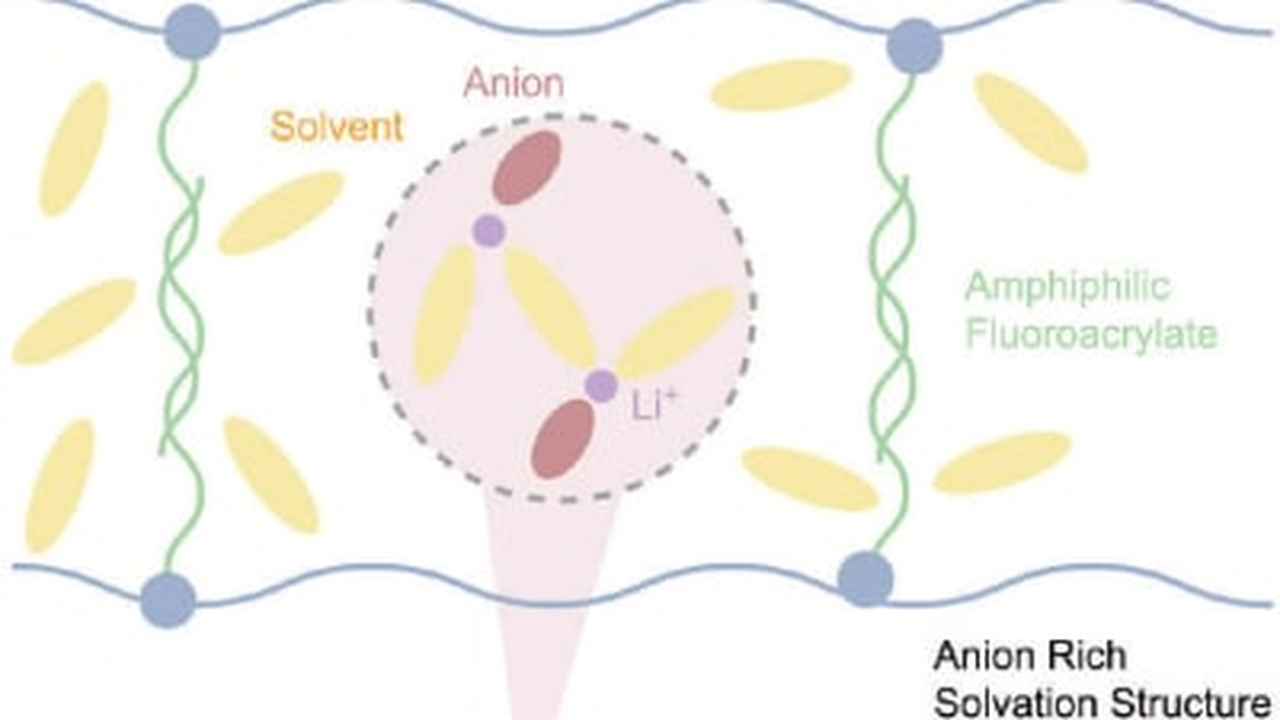
- This achievement is based on a novel design principle for gel electrolytes, which cleverly utilizes polymer scaffold chemistry to engineer nanoscale solvation structures. This optimizes the conduction pathways for lithium ions, enhancing the overall performance and stability of the electrolyte.
Background & Context
With the widespread adoption of electric vehicles (EVs) and portable electronic devices, there is a growing demand for batteries with high energy density, fast charging capabilities, and, above all, superior safety. Anode-free batteries are considered strong candidates for next-generation batteries, as they can leverage the potential benefits of lithium metal anodes while mitigating issues like dendrite formation and volume changes. However, electrolyte safety and performance have remained factors hindering their practical application. The development of this gel electrolyte offers a practical solution to the safety challenges associated with this technology.
Strategic Significance & Outlook
The development of this new gel electrolyte holds significant potential to accelerate the practical implementation of anode-free batteries. Particularly, its high-temperature stability and excellent abuse tolerance will bolster its adoption in applications requiring high safety and reliability, such as electric vehicle batteries and large-scale energy storage systems. Future efforts will focus on scaling up the manufacturing process and reducing the cost of this gel electrolyte, as well as its integration into actual EV battery packs. This technology is expected to play a crucial role in paving the way for a future where more powerful and safer batteries are widely accessible.