

Key Findings
The study demonstrates that MEW PCL scaffolds designed to imitate marrow trabeculae structures significantly enhance the production of cultured red blood cells (cRBCs). These scaffolds showed a 74% increase in supernatant cell numbers compared to liquid suspension controls using identical cell seeding numbers and media volumes. Furthermore, high-cell-density scaffolds exhibited increased metabolism and the endogenous production of self-supportive cytokines.
Technical Details
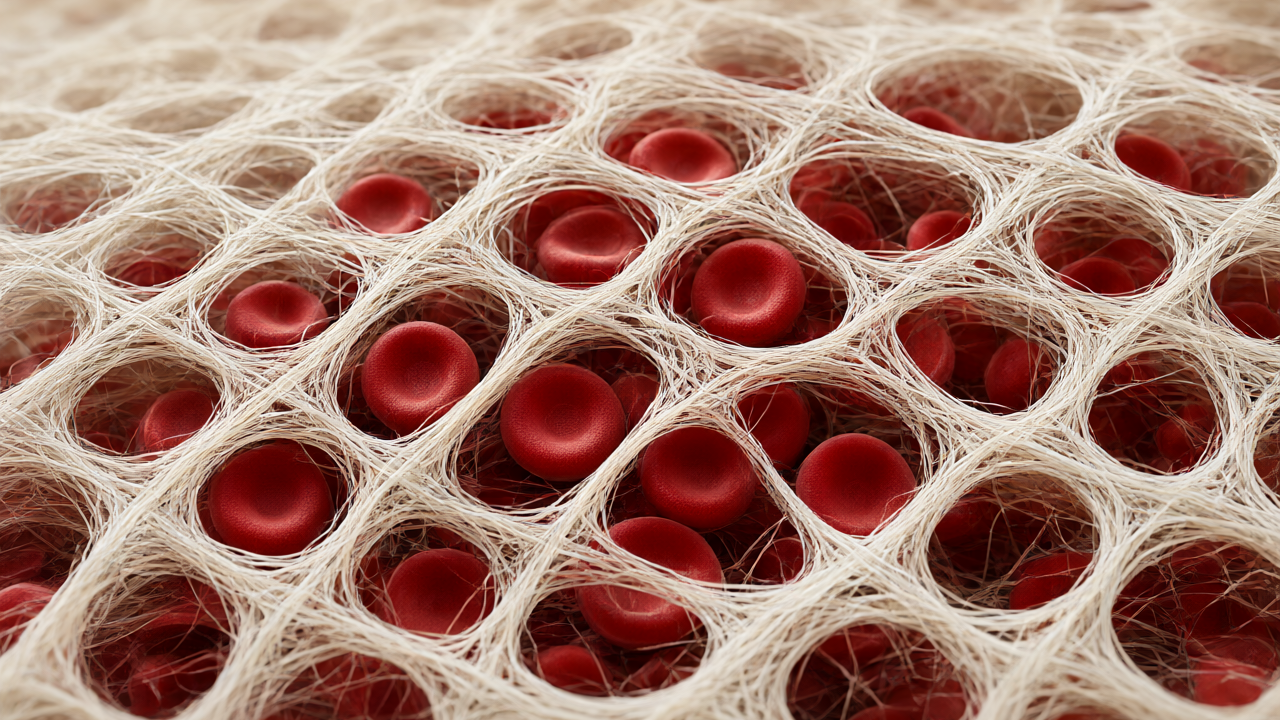
The researchers engineered MEW PCL scaffolds in geometries mimicking marrow trabeculae, which were then plasma-treated to facilitate the attachment of peripheral blood mononuclear cells (PB MNC). The biological process occurred in the following stages:
- PB MNC monocytes adhered to the scaffold and differentiated into CD68+ macrophage-like cells.
- These macrophage-loaded scaffolds then adhered CD71+ erythroblasts.
- Under erythrogenic culture conditions, erythroblasts grew from 10% to 25% between days 4 and 8.
- CD235a+ erythroid cells were produced by day 20.
Comparison of geometries revealed that trabecular-like designs provided greater surface area, adhered more macrophages, and generated more erythroblasts than traditional MEW crosshatch geometries.
Background & Context
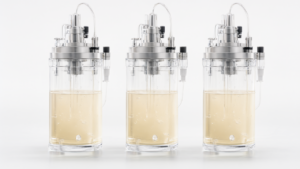
While biomanufactured cell therapies represent a step-change in medicine, the exorbitant costs of producing the trillions of RBCs required for a single blood transfusion have limited widespread adoption. Current manufacturing costs are driven by the need for large volumes of media and expensive growth factors.
Significance & Outlook
By mimicking the high-density environment of the bone marrow, this culture platform reduces the concentration of expensive growth factors required per cell. The ability of the scaffolds to selectively adhere PB MNCs to create macrophage-coated supports provides both physical and paracrine support for cRBC production. This high-cell-density approach may offer cost-saving opportunities through future media optimization in cell therapy biomanufacturing protocols.
Source: https://doi.org/10.64898/2026.10.23.761469
Get our weekly technology intelligence — free
Receive an infographic that lets you judge at a glance whether each field’s analysis report is worth reading.
Subscribe Free — Weekly Tech Intelligence
By subscribing, you’ll receive Troy-Technical’s weekly technology intelligence newsletter.
- Your email and selected fields are used only to deliver the newsletter.
- We never share your information with third parties.
- You can unsubscribe anytime via the link in each email.
See our Privacy Policy for details.
Takes about a minute · Unsubscribe anytime