

Key Findings
In March 2026, the Japanese government granted conditional and time-limited manufacturing and sales approval for two iPS cell-derived products targeting severe heart failure (ischemic cardiomyopathy) and Parkinson’s disease. While this marks a transition from clinical trials to real-world implementation, the high cost and instability of manual manufacturing remain primary barriers to widespread clinical use.
Technical Details
The iPS Cell Research Foundation is pursuing two complementary strategies to provide cells to patients:
- Allogeneic iPS Cells: Utilizing the “iPS Cell Stock Project,” the foundation provides cells from healthy donors to minimize immune rejection. The two recently approved products were developed using these stocks.
- Autologous iPS Cells: The “my iPS Project” creates cells from the patient’s own body to further reduce rejection risks.
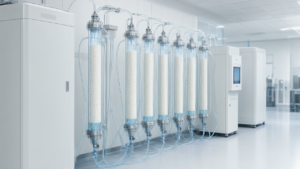
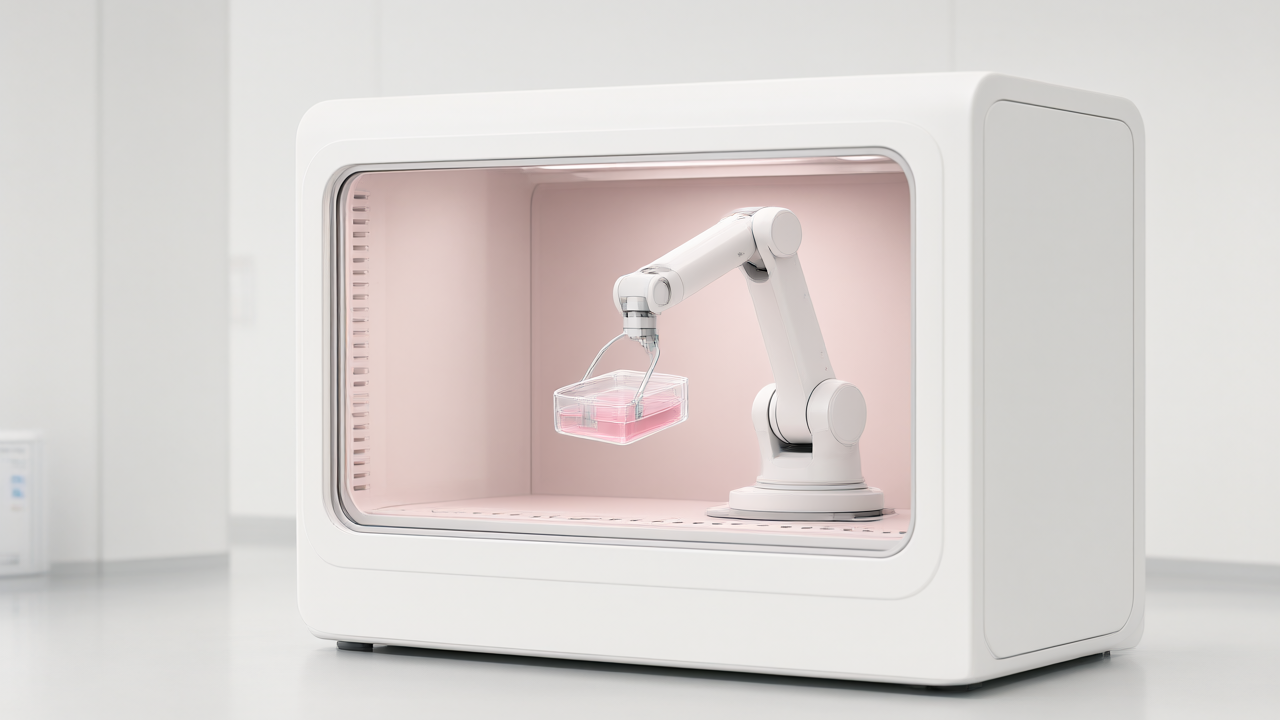
To address the cost of autologous cells—currently estimated at 50 million yen per patient—the foundation is implementing “closed automated cell culture devices.” This automation reduces reliance on skilled technicians, minimizes contamination risks, and allows a single researcher to manage multiple patients simultaneously. By simplifying processes—such as reducing the strict cell-screening required for allogeneic stocks—the foundation targets a cost reduction to approximately 1 million yen per person.
Background & Context
Current manufacturing relies heavily on the manual dexterity of experts, as slight variations in the speed of medium exchange or the force of liquid contact can alter cell properties. The foundation is currently working to standardize these processes to absorb variations caused by different patient ages and health conditions.
Significance & Outlook
The foundation expects to finalize the autologous iPS cell manufacturing process by early 2027, with the goal of starting clinical trials at medical institutions during fiscal year 2028. Long-term goals include decentralizing manufacturing to locations closer to hospitals and integrating AI, sensors, and image analysis to automate research and experimental design.
Source: https://toyokeizai.net/articles/-/957125
Get our weekly technology intelligence — free
Receive an infographic that lets you judge at a glance whether each field’s analysis report is worth reading.
Subscribe Free — Weekly Tech Intelligence
By subscribing, you’ll receive Troy-Technical’s weekly technology intelligence newsletter.
- Your email and selected fields are used only to deliver the newsletter.
- We never share your information with third parties.
- You can unsubscribe anytime via the link in each email.
See our Privacy Policy for details.
Takes about a minute · Unsubscribe anytime