
Key Findings
The researchers successfully validated a complete production chain that transforms Wharton’s jelly-derived MSCs into clinical-grade EVs. The process yielded a mean particle concentration of 2.01 × 10¹⁰ particles per milliliter with a median size of 146.2 nanometers. Functional potency was confirmed via CD73 enzymatic activity, which catalyzes the conversion of proinflammatory AMP into anti-inflammatory adenosine, and the inhibition of stimulated T cell proliferation.
Technical Details
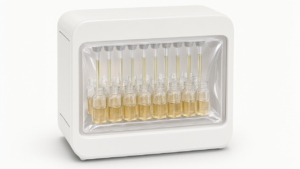
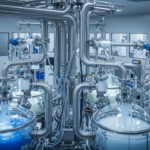
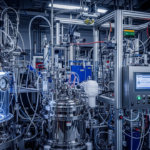
The upstream process utilizes a single-use 0.5-liter stirred-tank bioreactor with GMP-grade polystyrene microcarriers and a chemically defined, serum-free medium. Over seven days, cells expanded from 1.8 × 10⁷ to an average of 7.1 × 10⁷, maintaining viability above 70 percent. To monitor metabolic activity and compensate for cell–microcarrier aggregates, the team used lactate levels as a surrogate for cell enumeration.
Downstream processing consists of two primary stages:
- Concentration: Tangential flow filtration (TFF) using a 750-kDa hollow-fiber cartridge achieved a volumetric concentration factor of approximately 31 and a protein concentration factor of about 16.
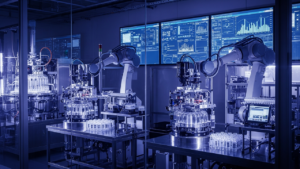
- Purification: Automated size-exclusion chromatography (SEC) via an ÄKTA go system with two HiLoad Superdex 200 columns. A predefined UV threshold of 10 mAU triggered the automatic collection of EV-enriched fractions.
Final quality attributes were verified using bead-based flow cytometry for tetraspanins (CD9, CD63, CD81) and MSC markers (CD90, CD105, HLA-ABC), and cryogenic transmission electron microscopy to confirm bilayer-enclosed vesicles.
Background & Context
EVs are nanosized, lipid-enclosed particles that offer advantages over whole cells, including a lack of tumor formation and lower immunogenicity. While MSC-derived EVs show promise for treating ischemic injury after myocardial infarction, clinical translation has been hindered by a lack of standardized, scalable, and regulatory-compliant manufacturing processes.
Significance & Outlook
By eliminating animal-derived components and implementing semi-automation, this platform reduces contamination risks and operator-introduced variability. The microcarrier-based bioreactor configuration specifically supports future scale-out, providing a viable roadmap for the commercial production of EV-based therapeutics.
Get our weekly technology intelligence — free
Receive an infographic that lets you judge at a glance whether each field’s analysis report is worth reading.
Subscribe Free — Weekly Tech Intelligence
By subscribing, you’ll receive Troy-Technical’s weekly technology intelligence newsletter.
- Your email and selected fields are used only to deliver the newsletter.
- We never share your information with third parties.
- You can unsubscribe anytime via the link in each email.
See our Privacy Policy for details.
Takes about a minute · Unsubscribe anytime