Background
Cell-cultivated meat is garnering global attention for its potential to mitigate the environmental impacts of conventional livestock farming (e.g., greenhouse gas emissions, land and water usage), enhance animal welfare, and bolster food security. However, its commercialization faces formidable hurdles, including high production costs, scalability challenges, consumer acceptance, and, crucially, the establishment of clear and harmonized regulatory frameworks. Singapore has emerged as a global frontrunner, being the first nation to approve the sale of cultivated chicken, thereby setting an international precedent. Conversely, within the US, fragmented state-level responses, such as sales bans in states like Alabama and Florida, complicate nationwide market penetration. Major Asian economies, including China, Japan, and South Korea, are actively developing their own regulatory frameworks, recognizing the transformative potential of this innovative technology.
Key Findings
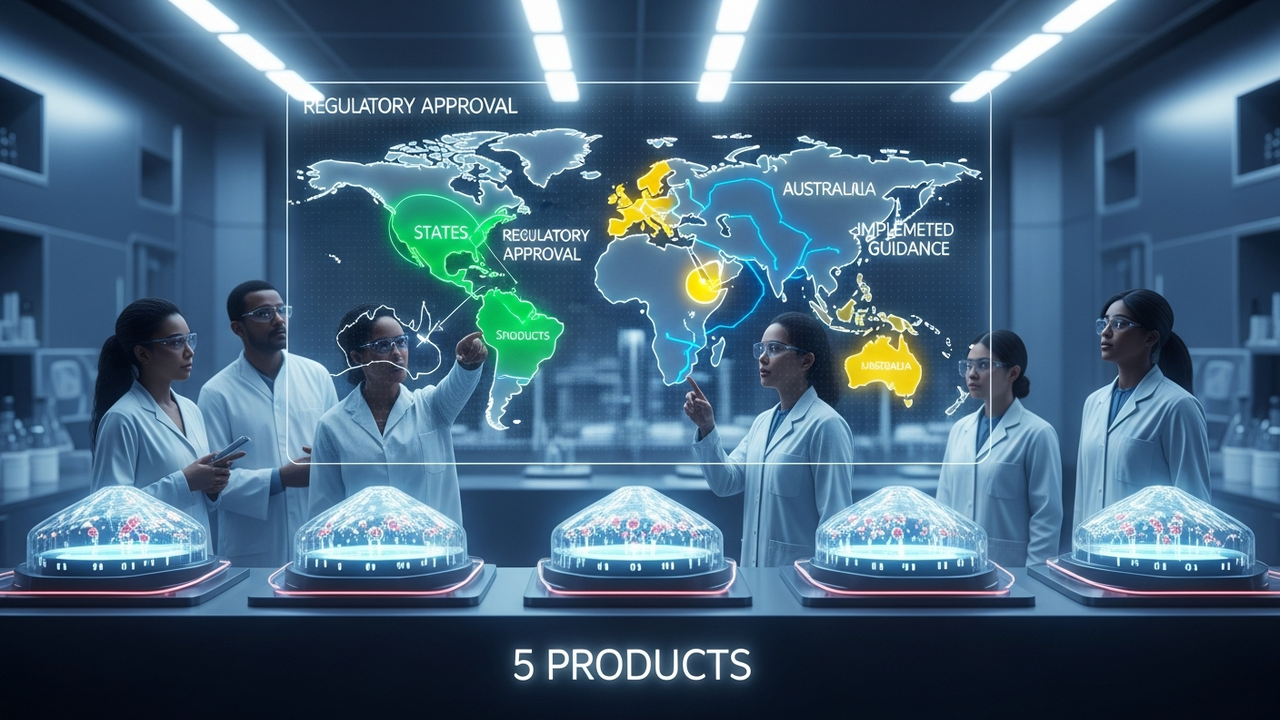
The global regulatory landscape for cell-cultivated meat is rapidly taking shape. In the United States, five cultivated meat products have successfully navigated federal review, signaling readiness for market entry. Australia and New Zealand enacted comprehensive food standards for cell-cultured foods in June 2025, providing a clear approval pathway. Concurrently, the UK’s Food Standards Agency (FSA) and Food Standards Scotland (FSS) have issued detailed guidance for cultivated meat businesses, covering hygiene requirements, production methodologies, microbiology, and taste trials to facilitate market authorization. These synchronized efforts highlight an accelerating international drive to introduce cell-cultivated foods to market safely and transparently.
Technical / Clinical Details
The production of cell-cultivated meat involves culturing small samples of animal cells in bioreactors, facilitating their proliferation and differentiation. This process necessitates careful selection of culture media, optimization of growth factors, and the implementation of scalable bioreactor technologies for industrial-scale production. Regulatory bodies worldwide are imposing stringent assessment criteria on aspects such as cell origin, media components, final product safety profiles, nutritional value, and compositional integrity. For instance, the US employs a dual-agency oversight model, with the Food and Drug Administration (FDA) regulating cell proliferation and differentiation, and the Department of Agriculture (USDA) jointly overseeing harvesting, processing, and labeling. The UK’s guidance further emphasizes product identity, allergen management, and the crucial role of taste trials in assessing consumer acceptance, underscoring a holistic approach to product quality and safety beyond mere production techniques.
Strategic Significance & Outlook
For the cell-cultivated meat industry to achieve sustainable growth and become a viable consumer option, global regulatory harmonization is paramount. Unified safety standards and labeling requirements would not only streamline international trade but also reduce regulatory uncertainty for companies engaged in product development and market entry. Future developments will likely focus on addressing state-level legal challenges in the US, progressing through the ‘novel food’ authorization processes in the EU, and the solidification of specific regulatory frameworks in Asian nations. Technologically, continued efforts to reduce production costs, optimize nutritional profiles, and diversify product offerings will remain critical. An ongoing dialogue among regulatory bodies, industry stakeholders, and consumers, fostering ethical and science-based consensus, is indispensable for accelerating the societal integration of cultivated meat.
Source: https://articles.mercola.com/sites/articles/archive/2026/07/24/cell-cultured-meat-regulations.aspx
Get our weekly technology intelligence — free
Receive an infographic that lets you judge at a glance whether each field’s analysis report is worth reading.
Subscribe Free — Weekly Tech Intelligence
By subscribing, you’ll receive Troy-Technical’s weekly technology intelligence newsletter.
- Your email and selected fields are used only to deliver the newsletter.
- We never share your information with third parties.
- You can unsubscribe anytime via the link in each email.
See our Privacy Policy for details.
Takes about a minute · Unsubscribe anytime