

Key Findings
Nitrogen plasma treatment provides the most dramatic increases in lap-shear strength for certain materials. When using a two-component epoxy, nitrogen plasma increased the bond strength of PVC from 2.1 ± 0.3 MPa to 12.8 ± 2.3 MPa and PP from 0.5 ± 0.1 MPa to 11.6 ± 0.7 MPa, resulting in substrate failure in both cases. While nitrogen plasma achieved lower water contact angles than argon, the study found that the lowest contact angle did not reliably predict the strongest joint. For example, argon plasma yielded higher bond strengths than nitrogen for PP using Soudal Fix All Flexi (0.8 MPa vs 0.3 ± 0.05 MPa) and for PET using Loctite 4860 (2.4 ± 0.5 MPa vs 2.0 ± 0.1 MPa).
Technical Details
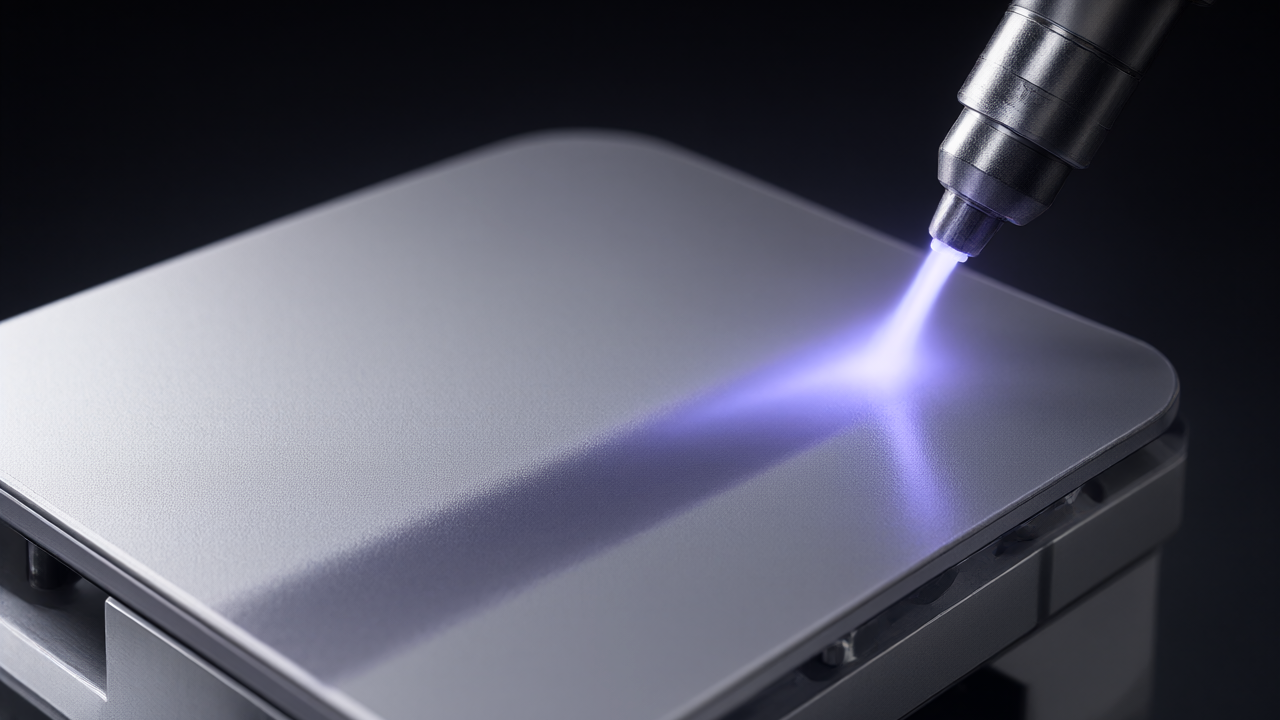
The study tested five plastics: polypropylene (PP), high-impact polystyrene (HIPS), poly(vinyl chloride) (PVC), polycarbonate (PC), and polyethylene terephthalate (PET). Treatments were applied using a FARI PM-G13A atmospheric rotating cold plasma head at 529 ± 1 W with gases at 3.5 bar. Head speeds ranged from 100 to 2000 mm/min, with a nozzle-to-surface distance of 5 mm. Nitrogen plasma caused visible surface degradation, such as burning, at speeds below 500 mm/min for PP and 250 mm/min for PVC and HIPS. Argon plasma produced higher contact angles than nitrogen but caused no visible surface damage across the investigated range.
Background and Context
Engineering thermoplastics are often difficult to bond due to chemically inert, low-energy surfaces. Untreated PP is particularly challenging, with a surface free energy of 29–31 mJ/m² and a water contact angle of 95–105°. The research compared argon and nitrogen plasma to determine how different activation mechanisms—ion bombardment and etching for argon versus chemical functionalization for nitrogen—affect real-world lap-shear strength according to ISO 4587 standards.
Significance and Outlook
The results demonstrate that while plasma treatment is essential for structural adhesive applications on low-energy plastics, the choice of gas depends on the specific polymer and adhesive. The discrepancy between wettability and bond strength suggests that complex plasma mechanisms, which a single water contact angle cannot disentangle, dictate final adhesion quality.
Get our weekly technology intelligence — free
Receive an infographic that lets you judge at a glance whether each field’s analysis report is worth reading.
Subscribe Free — Weekly Tech Intelligence
By subscribing, you’ll receive Troy-Technical’s weekly technology intelligence newsletter.
- Your email and selected fields are used only to deliver the newsletter.
- We never share your information with third parties.
- You can unsubscribe anytime via the link in each email.
See our Privacy Policy for details.
Takes about a minute · Unsubscribe anytime