
Key Findings
A research team including Hai-bo Chen, Chun-hai Fan, Fei Wang, Zhao-guo Wang, Ming-yu Wu, and Jia-bin Wang from the Jiashan Xiangfu Laboratory has developed AutoDNA, an AI-native autonomous biomolecular experimental platform. The system can translate natural language requirements into executable experimental workflows, autonomously coordinating more than 20 types of instruments. In a representative DNA data storage and retrieval experiment, AutoDNA executed 11,382 steps over approximately eight days to encode and read a specific phrase into DNA sequences, requiring human intervention only for hardware maintenance and the replenishment of reagents and 108 pipette tips.
Technical Details
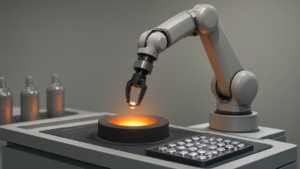
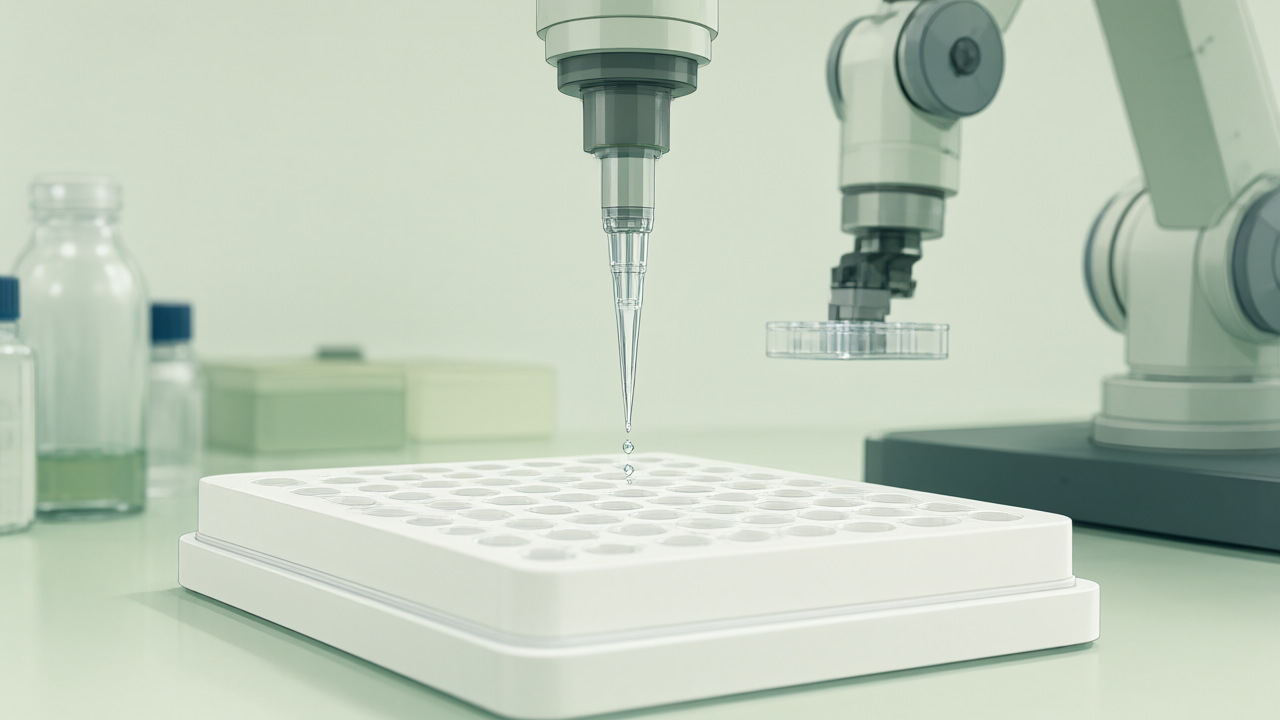
Unlike traditional automation that adds AI to existing systems, AutoDNA utilizes a multi-agent architecture designed from the ground up to be AI-native. This architecture enables a closed-loop “design-experiment-optimization” workflow. The platform integrates common nucleic acid experimental instruments and uses robotic arms for sample transport. The system is capable of performing core operations including nucleic acid synthesis, amplification, transcription, and sequencing, and can autonomously adjust protocols based on experimental feedback.
Background & Context
While AI is commonly used for “dry lab” tasks such as data analysis and prediction, “wet lab” operations involving biological materials typically require significant manual labor and precision. Professor Hai-bo Chen noted that creating a “self-driving lab” for molecular biology is particularly challenging due to the complexity of workflows and the high precision required for coordinating multiple instruments. AutoDNA aims to move beyond systems where AI only handles a single segment of a process, instead managing the entire lifecycle of an experiment.
Significance & Outlook
The team validated AutoDNA across four applications: nucleic acid detection, enzymatic DNA synthesis optimization, DNA data storage and reading, and tumor-related mutation detection. The research, published in Nature on November 4, 2026, provides a blueprint for “Science as a Service,” potentially accelerating biological discovery in fields such as synthetic biology and information storage.
Source: https://news.qq.com/rain/a/20261105A06PUP00
Get our weekly technology intelligence — free
Receive an infographic that lets you judge at a glance whether each field’s analysis report is worth reading.
Subscribe Free — Weekly Tech Intelligence
By subscribing, you’ll receive Troy-Technical’s weekly technology intelligence newsletter.
- Your email and selected fields are used only to deliver the newsletter.
- We never share your information with third parties.
- You can unsubscribe anytime via the link in each email.
See our Privacy Policy for details.
Takes about a minute · Unsubscribe anytime