

Key Findings
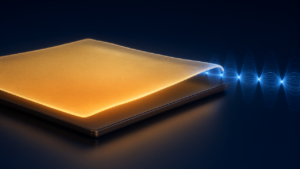
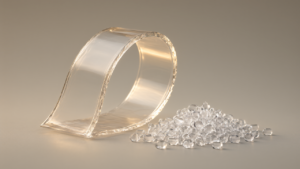
A research team led by Kim Dae-yoon at KIST has created the world’s first ceramic fiber capable of blocking roughly 99 percent of thermal neutrons at a thickness of 1.62 millimeters. Unlike previous radiation-shielding materials that were too rigid or heavy for mobile equipment, this BNNT-based fiber is flexible enough to be tied in knots and woven into both flat and cylindrical fabrics.
Technical Details
The fiber is composed of boron nitride nanotubes (BNNTs), utilizing boron’s high neutron-absorbing properties. To prevent the clumping and fracturing typical of BNNTs, the team employed a manufacturing technique that uniformly mixes BNNTs with carbon nanotubes and aligns them in a single direction via a narrow nozzle. This process achieved a BNNT content of approximately 80 percent. The resulting material exhibits the following specifications:
- Tensile Strength: Exceeds 1 gigapascal.
- Thermal Stability: Stable above 1,000 degrees Celsius.
- Thickness: 1.62 millimeters for 99 percent thermal neutron shielding.
- Production Scale: Over 3.5 kilometers of fiber have been produced using standard industrial weaving equipment.
Background and Context
In space environments, secondary neutrons—created when high-energy radiation hits spacecraft hulls—pose significant risks to human health and electronic hardware. While BNNTs offer the necessary heat resistance and mechanical performance, their resistance to melt processing previously made it difficult to spin them into usable fibers. The KIST team’s method overcomes these barriers without requiring specialized machinery, facilitating large-area production.
Significance and Outlook
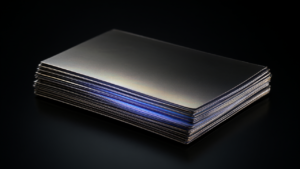
The flexibility of the material makes it ideal for high-movement joints in spacesuits, such as elbows and knees, and shielding performance can be further increased by stacking layers. Potential applications extend to spacecraft interiors, crewed habitats, nuclear facilities, and radiation treatment rooms. The team intends to verify long-term stability using CubeSats or space station external platforms to accelerate the development of an independent Korean spacesuit. The findings were published in Nature Communications.
Source: https://biz.heraldcorp.com/article/10923919
Get our weekly technology intelligence — free
Receive an infographic that lets you judge at a glance whether each field’s analysis report is worth reading.
Subscribe Free — Weekly Tech Intelligence
By subscribing, you’ll receive Troy-Technical’s weekly technology intelligence newsletter.
- Your email and selected fields are used only to deliver the newsletter.
- We never share your information with third parties.
- You can unsubscribe anytime via the link in each email.
See our Privacy Policy for details.
Takes about a minute · Unsubscribe anytime