

Key Findings
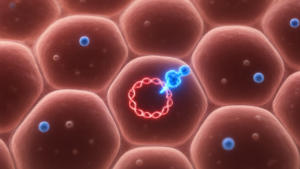
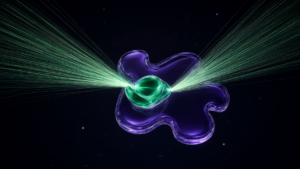
The study demonstrates that siRNA transfer from lipid nanoparticles (LNPs) across endosomal membrane mimics can occur without the detectable dissipation of the transmembrane pH gradient or membrane rupture. Using a cell-free system, the researchers found that acidification promotes LNP-membrane association and lipid redistribution, enabling siRNA translocation into the receiving lumen while maintaining the membrane’s barrier function.
Technical Details
To dissect the mechanism of delivery, the researchers employed giant unilamellar vesicles (GUVs) with a lipid composition mimicking early endosomes. The following technical observations were made:
- Imaging: Cryo-electron tomography revealed local interfacial lipid reorganization but no detectable membrane rupture.
- Diffusion: Fluorescence correlation spectroscopy showed heterogeneous diffusion of translocated siRNA, indicating the presence of both free and lipid-associated species.
- Complexes: Pre-formed RNA-lipid complexes exhibited pH-dependent dissociation and heterogeneous diffusion, suggesting that lipid association is a likely cause of slower luminal diffusion.
- Inhibitors: Preincubation with serum or apolipoprotein-E was found to reduce the translocation of siRNA into the GUV lumen.
Background & Context
Endosomal escape is a primary limiting factor in RNA delivery via LNPs. Previous concerns suggested that if escape requires membrane rupture, productive delivery would be intrinsically linked to membrane damage and subsequent cellular toxicity. This research sought to determine if siRNA transfer could occur while the membrane barrier remains intact.
Significance & Outlook
These findings support a model where siRNA-lipid association facilitates the crossing of the membrane without sustained loss of barrier function. By establishing this cell-free platform, the researchers provide a method to dissect LNP-mediated RNA delivery and develop new formulations that improve delivery efficacy while limiting potential membrane damage.
Source: https://www.biorxiv.org/content/10.64898/2026.11.02.763664v1
Get our weekly technology intelligence — free
Receive an infographic that lets you judge at a glance whether each field’s analysis report is worth reading.
Subscribe Free — Weekly Tech Intelligence
By subscribing, you’ll receive Troy-Technical’s weekly technology intelligence newsletter.
- Your email and selected fields are used only to deliver the newsletter.
- We never share your information with third parties.
- You can unsubscribe anytime via the link in each email.
See our Privacy Policy for details.
Takes about a minute · Unsubscribe anytime