


Key Findings
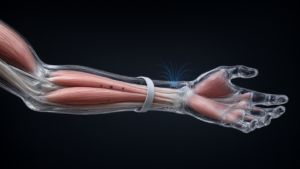
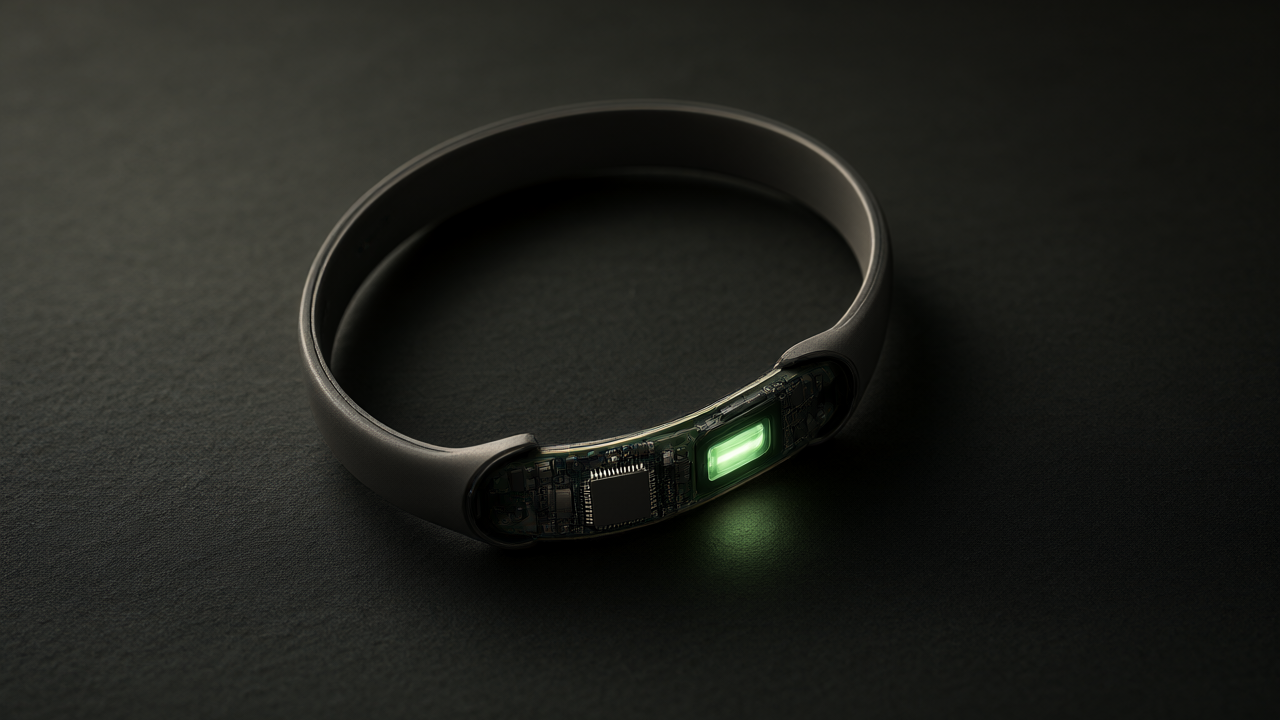
The transition from smartphone-dependent architectures to a standalone edge-computing paradigm significantly improves processing efficiency for non-invasive blood glucose inference. By executing data filtering, feature extraction, and metabolic state inference locally on an embedded STM32 microcontroller, the system achieves an average end-to-end latency of 37.8 ms, compared to 109.6 ms in cloud- or smartphone-dependent pipelines.
Technical Details
The system addresses the computational demands of monitoring dynamic physiological parameters, such as autonomic nervous system activity and hypoxic stress (indicated by SpO₂ desaturation). Traditional architectures streaming raw PPG waveform data at sampling rates up to 100 Hz via BLE saturate wireless bandwidth and accelerate battery depletion. The standalone architecture mitigates this by:
- Local Processing: Performing all inference and anomaly detection at the device node, removing the need for continuous BLE transmission.
- Data Compression: Converting millions of high-frequency raw pulse data points into low-frequency summary variables, such as minute-level glucose estimates.
- Display Optimization: Utilizing OLED technology and customized dark-mode interfaces. Because OLED pixels can be completely deactivated for “true black,” power consumption is reduced compared to LCDs, which require a constant backlight.
Background & Context
Real-time inference is critical for capturing rapid cardiovascular responses to acute stress, such as catecholamine surges driving hepatic glycogenolysis. Local edge computation ensures that model correction terms, including autonomic response coefficients and hypoxic stress modifiers, are evaluated continuously without requiring cellular or Wi-Fi connectivity.
Significance & Outlook
The trade-off between integrated display power and wireless transmission suggests that standalone devices can be more energy-efficient than tethered systems. By combining event-driven OLED activation (such as wrist-raise detection) with the disabling of the BLE module for most operational time, the architecture reduces the overall energy footprint and extends battery longevity in continuous monitoring scenarios.
Source: https://doi.org/10.21203/rs.3.rs-11184870/v1
Get our weekly technology intelligence — free
Receive an infographic that lets you judge at a glance whether each field’s analysis report is worth reading.
Subscribe Free — Weekly Tech Intelligence
By subscribing, you’ll receive Troy-Technical’s weekly technology intelligence newsletter.
- Your email and selected fields are used only to deliver the newsletter.
- We never share your information with third parties.
- You can unsubscribe anytime via the link in each email.
See our Privacy Policy for details.
Takes about a minute · Unsubscribe anytime