

Key Findings
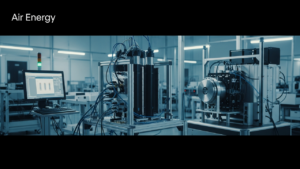
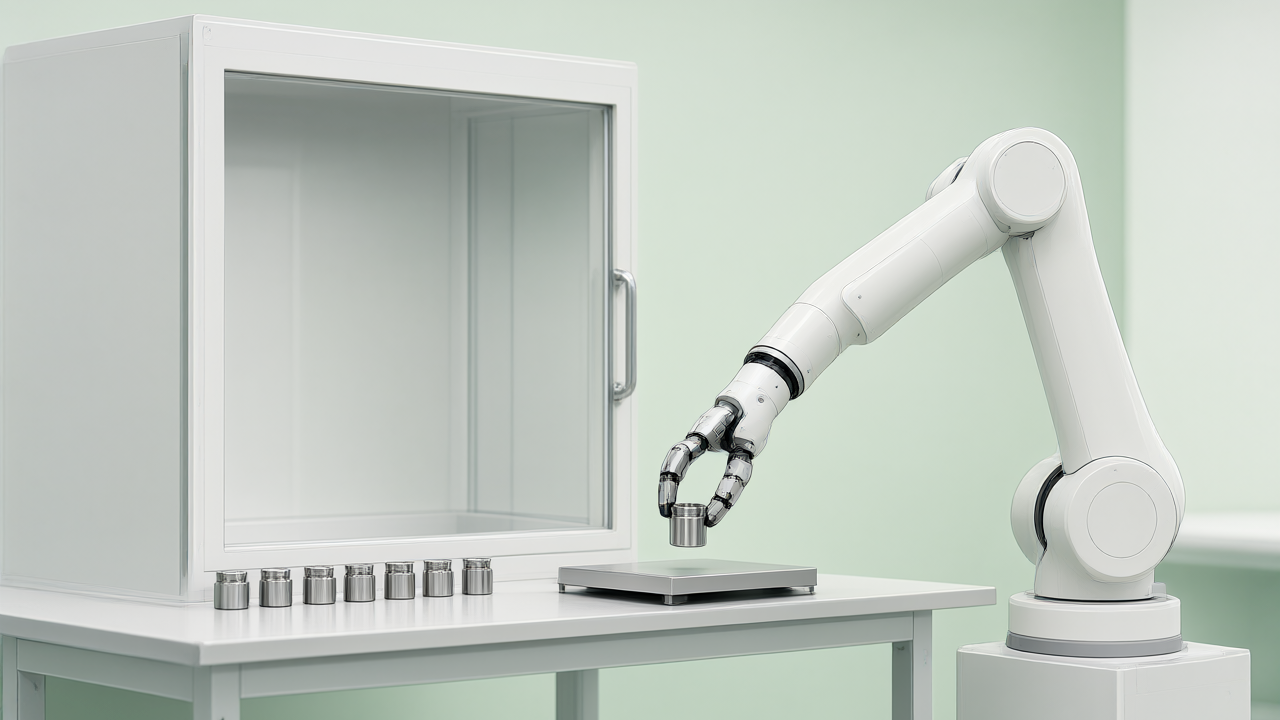
AIST, in collaboration with Denso Wave, Aichi University of Technology, and the Aichi Industrial Science and Technology Center, has developed a “human-collaborative automated experimental system” designed for the end-to-end mechanochemical synthesis of all-solid-state battery materials. The system automates the process from powder weighing to sample storage, allowing for the continuous processing of up to 10 samples with a single command.
Technical Details
The system integrates specific expertise from four partners: AIST’s ceramics and battery material technology, Denso Wave’s human-collaborative robot technology, Aichi University of Technology’s robot peripheral module development, and the Aichi Industrial Science and Technology Center’s material evaluation and industrial support infrastructure. Key technical capabilities include:
- Automated Workflow: The system handles the transport of reagent and bead storage containers to planetary ball mill containers, performs the milling process, and manages subsequent sample storage.
- Throughput: The planetary ball mill processes two samples per cycle and can execute five consecutive cycles, totaling 10 samples per command.
- Data Management: Experimental parameters—including reagent volume, bead type/quantity, rotation speed of the ball mill, and processing time—are managed as digital data. These serve as explanatory variables for Materials Informatics (MI) and Process Informatics (PI).
- Environment: All operations are executed within a glove box to prevent contamination from external air.
Background & Context
Developing high-performance solid electrolytes and electrode materials for all-solid-state batteries requires investigating a vast array of material compositions and processing conditions. Previously, these experiments were performed manually, which acted as a bottleneck in development efficiency. AIST previously developed a system in 2023 that used human-collaborative robots and automated weighing to accelerate chemical sintering processes occurring below 100°C.
Significance & Outlook
By digitizing experimental know-how and automating repetitive tasks, the system enables the systematic exploration of diverse material combinations. AIST plans to expand the system’s target materials and experimental processes for broader application in ceramics development. Starting in fiscal year 2029, AIST is considering introducing the system as a shared experimental facility for regional companies to utilize as a material evaluation and development platform.
Source: https://eetimes.itmedia.co.jp/ee/articles/2611/09/news024.html
Get our weekly technology intelligence — free
Receive an infographic that lets you judge at a glance whether each field’s analysis report is worth reading.
Subscribe Free — Weekly Tech Intelligence
By subscribing, you’ll receive Troy-Technical’s weekly technology intelligence newsletter.
- Your email and selected fields are used only to deliver the newsletter.
- We never share your information with third parties.
- You can unsubscribe anytime via the link in each email.
See our Privacy Policy for details.
Takes about a minute · Unsubscribe anytime